
A shortage of housing for asylum seekers and refugees in Europe has led governments to look for other solutions – former barracks, tents, containers and even tiny houses. The use of the Bibby Stockholm barge in the UK has been especially divisive. InfoMigrants looks at why.
Barges and cruise ships are not a new idea: for decades they have been used as accommodation for asylum seekers and refugees in Germany, the Netherlands, Scotland, Sweden, Belgium, France and Estonia. So why has there been so much opposition to one grey three-storey barge in southern England?
Until this week, Britain had been housing asylum seekers in hotels. It has begun moving them out because they were costing too much (€9 million per day, according to the Home Office). It's opting for what it says is going to be a cheaper solution of housing migrants on moored barges. (An analysis conducted by Reclaim the Sea, a group supporting migrants, said the barge was likely to cost more than hotels.)
Also read: Netherlands cruise ship set to house asylum seekers
The first of these floating accommodation vessels – 'Bibby Stockholm' – prompted a legal challenge, which failed. Local residents complained about a lack of consultation, some politicians in Dorset said they hadn’t been informed or were worried about the impact on the community and local infrastructure, while others agreed with human rights groups and refugee advocates that the plan was inhumane.
The Fire Brigades Union warned that the vessel’s narrow exits created a potential "death trap", a claim rejected by the UK's energy secretary, Grant Shapps, who said the ship had been used by Germany to house migrants, so "there's no reason why it wouldn’t be absolutely safe."

After a number of repairs and remedial works, the barge has received at least 50 asylum seekers since last week, and eventually it will house altogether around 500 young men.
A world away from luxury
The Bibby Stockholm was used in Germany from the early 1990s to house asylum seekers and people of German extraction who returned to Germany from former communist countries in eastern Europe. Dieter Norton was responsible for managing the accommodation vessels in the port of Hamburg-Altona at the time.
"Accommodating people on barges is always problematic, especially where families are involved," he tells InfoMigrants. "For single people, it’s still problematic, but I don’t see it as being quite as bad. But on a ship, you’re not able to move around much, there are no recreation rooms, there’s no place where you can somehow be part of the community. There are cabins, and there’s a canteen, and that’s it."
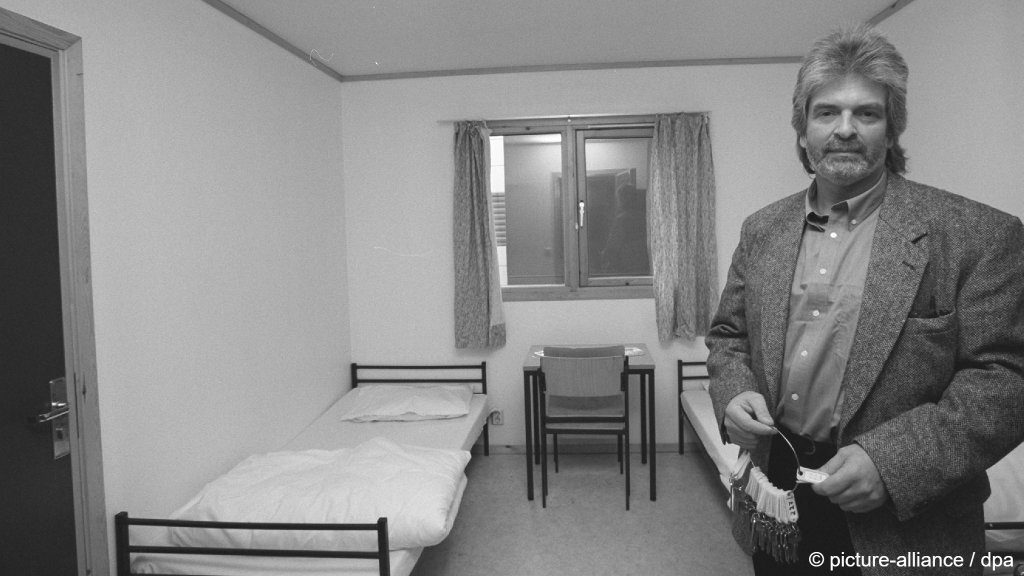
Back then, the cramped and difficult conditions on the Bibby Stockholm and the other barges berthed in Hamburg created serious problems. In an interview with the German public broadcaster NDR in August, Norton spoke of tensions among the 40 different ethnic groups, drugs, prostitution, theft and even murder.
Arijan Haidari, who was ten years old in 1999 when she lived on the barge in Hamburg, told NDR that she remembers how the beds were moved so they didn’t touch the filthy walls. "It was terrible to stick eight people in one room together – like in a prison," she said.
Things were not much better in 2008, when the Bibby Stockholm was one of two moored barges in Rotterdam in the Netherlands that were used as immigration detention facilities. The deaths of two detainees that year were linked to sub-standard health care provided on the vessels, according to the UK charity Statewatch.
Bibby Marine, the company that owns the Bibby Stockholm, paints a very different picture, advertising "luxury living on board," ensuite bathrooms and leisure facilities for its guests, who are usually workers on remote or offshore sites.
That’s partly because, when such vessels are repurposed for use as asylum seeker accommodation, the pool tables and lounge facilities are generally stripped out so that the migrants are not seen to be receiving more than their basic entitlement. As Home Office minister Sarah Dines told the BBC, people coming by irregular routes "can’t expect to stay in a four-star hotel." The government has also made it clear that the barge is meant to act as a deterrent to people hoping to seek asylum in the UK.
It feels like a prison
Even if the physical conditions were better and more comfortable, for a person working on an oil platform in the North Sea, living on a floating accommodation vessel for a few months is a different matter from the situation for an asylum seeker, says Norton.
"People who live on barges and work earn a lot of money, whereas an asylum seeker doesn’t, he is just waiting and then finds out, 'I’m going to be deported because of my status.' There’s a lot of insecurity for these people," Norton says.
The effect of containment on the psychological health of asylum seekers has been raised repeatedly, including by the migrants themselves who have reported feeling unsafe, isolated and even suicidal.
Andrea Vonkeman, head of the Dutch branch of the UN refugee agency, UNHCR, says having to stay on a ship can cause problems for people who have experienced a dangerous sea journey. "For people who have made the crossing in rickety boats under poor conditions ... reception on a cruise ship can be traumatic," Vonkeman told the Dutch Broadcasting Foundation NOS.
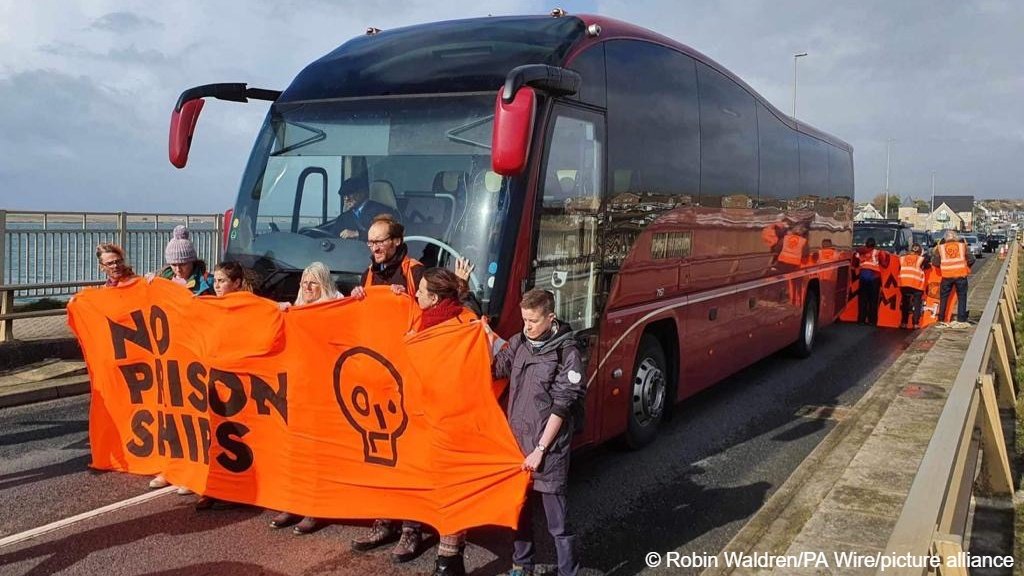
In the UK, an Iranian man in the group who spent a few days on the Bibby Stockholm said the smell and stench of seawater had been overwhelming and he would have contemplated suicide if he had had to stay "even one more day" on board.
Two men who wrote in The Guardian that they were "held" on the barge said: "The experience takes its toll. We’re all struggling mentally." They said they were terrified of being sent back there.
In early October, the Home Office issued a notice to the men due to be moved there on October 19, saying: "you are not being detained … and this is not detention accommodation."
At the same time, under the so-called 'no choice rule', the men have to live where they are told, unless they can convince the Home Office that their health and safety or security would be at risk. Steve Smith, chief executive of the refugee charity Care4Calais, says asylum seekers are being stripped of their liberty by the government.
The Refugee Council on Thursday (October 26) said more people were being sent back to the Bibby Stockholm "against their wishes."
"They say it feels like a prison," the group wrote on the media platform X.
Human Rights Watch and Just Fair, a UK social justice and human rights NGO, say "large-scale institutionalized settings … should not be used as asylum housing in the UK. Instead, people … should be supported to find their own housing in communities they choose," the organizations said in a report published in September.
Dieter Norton understands those who say the barge makes them feel imprisoned. "In my view barges are better than tents, but 30 years ago the situation was different. These days we have better alternatives. Barges are simply not suitable for asylum seekers."