
To understand irregular migration, we must look beyond the Mediterranean Sea to the shores from which the boats of death set sail. InfoMigrants speaks with smugglers and migrants on Tunisia's Kerkennah Islands.
A funeral was held in the Bir Ali Ben Khalifa village, which is situated in the city of Sfax, south of Tunisia’s capital, Tunis.
Dozens of women from the village attended, along with a handful of elderly men. But scarcely any young people could be seen in the crowd of mourners.
They are all in Europe, having fled the region in waves of migration that have drained the village of its youth, for whom the dusty landscapes and rugged paths of the region have become repellent.
The Bir Ali Ben Khalifa drought
Not long ago, Jamila bid farewell to her 13-year-old son, who boarded a boat for Italy to join his older brother and father.
She watched him set sail on a moonlit night.
At the funeral, Jamila consoled her relative, the mother of the deceased.
This scene appeared like a pale imitation of a well-directed film, set in an area ravaged by human trafficking networks, its youth emptied away in a policy of displacement that has become the norm for any young person or child who dares to deviate from the norm.
The fields of Bir Ali Ben Khalifa have dried up, the land has become thirsty, and faces pale from the dust. The climate is hot and dry, and the houses are scattered far from each other, separated by rugged terrain even difficult for four-wheel-drive vehicles to traverse.
I am haunted by one question: Is there a single reason to stay after this drought?
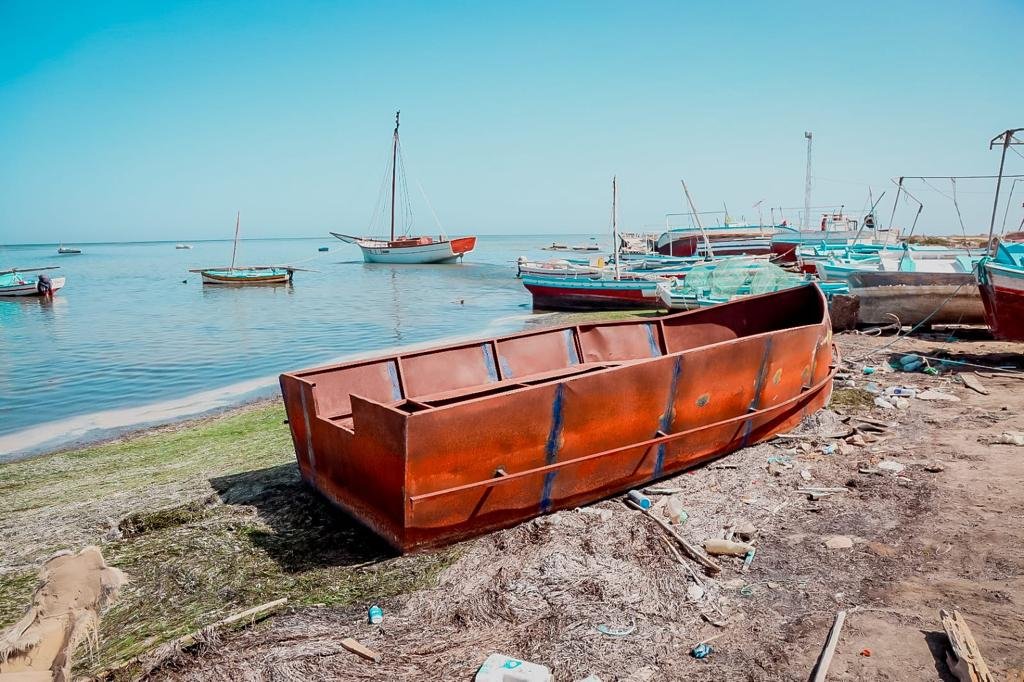
Read more: Tunisia: Navy recovers seven bodies from Mediterranean Sea
The passage permit to Kerkennah
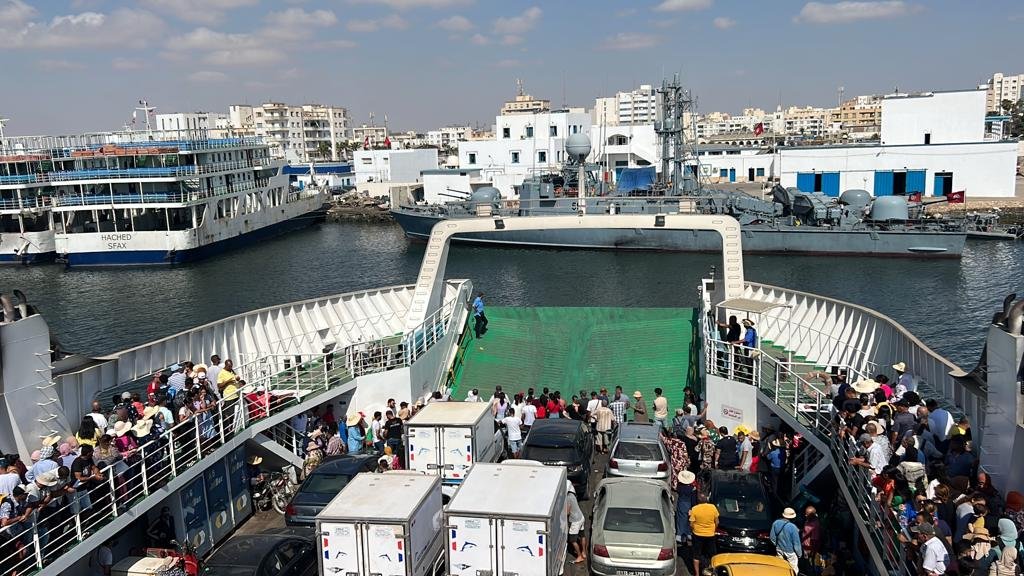
Leaving the fields behind, I boarded the ferry back to the Kerkennah Islands, located off the coast of Tunisia. Security personnel inspected all passengers at the entrance.
An officer approached our car, leaning in slightly to study our faces. With security measures for visitors to Kerkennah tightened, boarding the ferry has become a difficult and meticulous process.
The Kerkennah Islands, once a tranquil haven, has become like a European country, with access restricted to permit-holders only, although it is still part of the Republic of Tunisia.
Among the vineyards and palm trees in the scorching summer heat, Sameh*, a 17-year-old from an affluent agricultural family, huddles in an old shack, away from the watchful eyes of the security forces.
It is his third day in hiding after the implementation of a crackdown on secret migration. Despite his family's wealth, their income has declined in recent years, leaving Sameh with few options.
The teenager's motivation is not wealth or a desire to improve his circumstances, but rather a need for security and hope for the future. We accompanied Sameh through the forests of the Kerkennah Islands, which he traveled to from the Bir Ali Ben Khalifa area with hopes of crossing the sea to Europe.
Sameh already tried his luck at secret migration a year ago, but the coast guard intercepted his boat. Disappointed and 6,000 dinars (€1,000) poorer, he returned home.
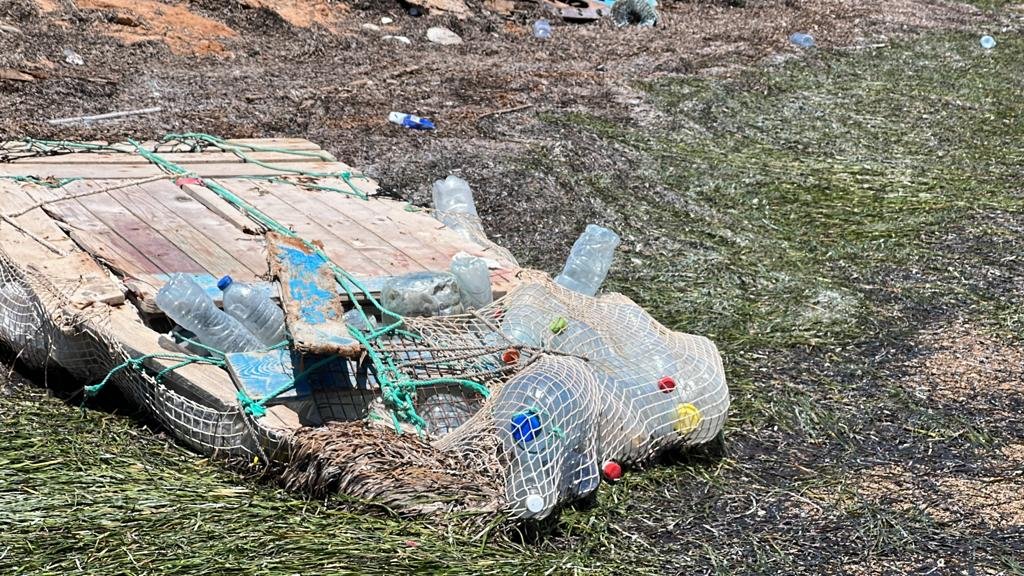
Read more: Tunisian coast guard stops 1,800 migrants on Med crossing
Sameh painfully recalls the beatings, insults and abuse he endured when he was returned to Tunisian shores after his migration attempt. On that day, he and his companions feared for their lives as their boat capsized.
But now Sameh appears confident, convinced that this time, he will reach the other side. The "harraga" (the person who smuggles migrants to Europe) had assured him that Kerkennah was a safe and reliable departure point.
"I hadn't thought about irregular migration for a year," he said. "I was working and studying here, and I was comfortable. But when I compare Tunisia and Europe, I realize that an employee can spend their whole life here just to buy a car and build a house, and nothing more.
"In Europe, however, you can get a house, a car, and start your own business in three years. For example, my cousin returned this summer with a car and is financially well-off. I researched the matter and realized that I can't succeed here, so I decided to follow my cousin's lead and migrate irregularly. I want to secure my future like they did."
To board the ferry connecting Sfax to Kerkennah, Sameh had to pay a bribe of 500 dinars (about €150). The smuggler assured him he could board without revealing his identity. Upon arrival at the Sidi Youssef station on the Kerkennah Islands, Sameh was picked up and taken to his current location in the middle of the forest, where he will wait until it is safe to depart.
Sameh spends his days among the olive trees, communicating with his friends and family members in France. They describe a better life there, with stronger rights, laws and cleanliness. Some of them, still in migrant reception centers in Italy, informed him that they are learning languages and improving their skills while waiting to leave the center.
Sameh's parents were strongly opposed to his plans to migrate, but their neighborhood had already emptied, leaving no choice but to agree to their son's desire to leave.
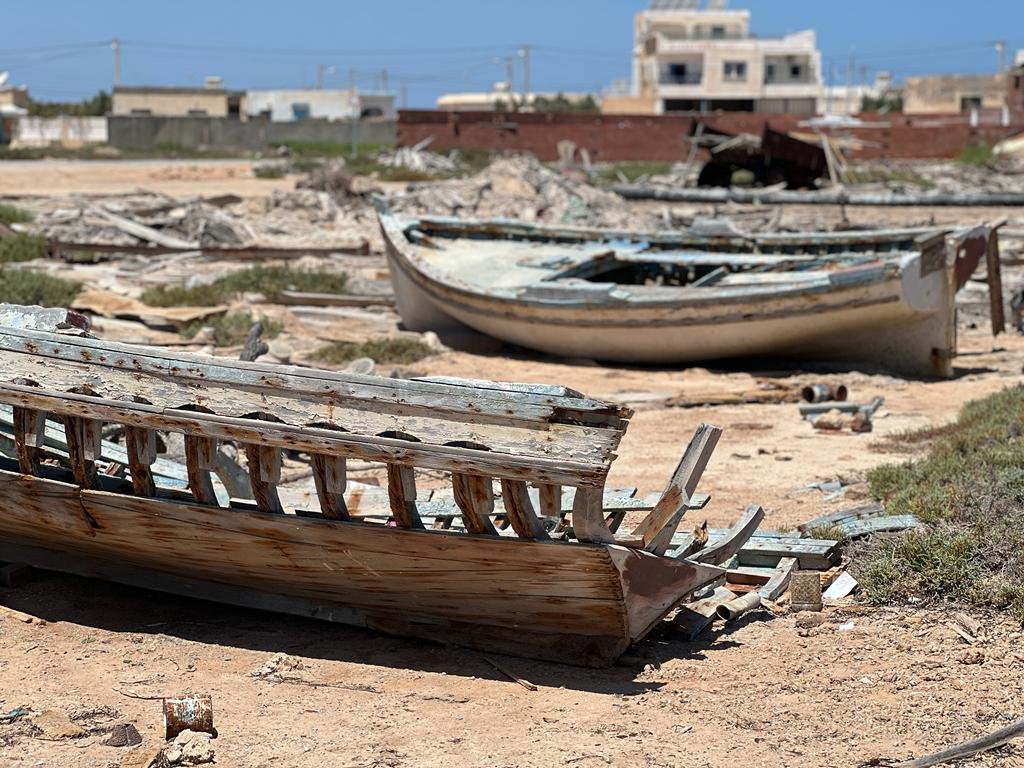
Sameh tried to migrate with a visa, but his attempts to obtain one were rejected.
The teenager chose Kerkennah as his departure point because it is only 12 kilometers from the coast of Italy. He is waiting for the weather to calm down before embarking on his journey to the Italian island of Lampedusa.
"Is there any other solution? Not at all. Here in Tunisia, we are dead too. I am a body without a soul. There is no difference. I am dead in life, and life will only return to me when I reach there," he said, explaining his decision to migrate.
"My cousin, grandfather and family are there, and I have friends who studied with me. But most of them are my cousins, and I am going to them because they will secure my living. My cousin migrated irregularly ten years ago, and he is now married with a child. This summer, he returned with a luxurious car and improved financial situation. Meanwhile, many of those who stayed in our neighborhood have not made any progress."
Sameh reached his destination three days after our meeting.
He sent us a picture of himself aboard the boat, surrounded by hundreds of irregular migrants overjoyed to have achieved their ultimate goal: arrival to Europe.
Read more: 20 migrants rescued from ship adrift off Lampedusa
'We are a state within a state'
Abdel Latif*, the Kerkennah Island sailor who brought us to Sameh, seemed proud of his work helping young Tunisians reach European shores.
Describing himself as a guardian angel for these young people, he explains that he feels he is doing God's work by helping them achieve their dreams in the face of closed visa paths.
Abdel Latif began working in irregular migration in 2011 and has successfully organized numerous trips over the years. He is involved in all aspects of the operation: scouting for clients, coordinating their travel, hiding them from the authorities and leading them on boats to Italy.
A highly experienced and knowledgeable smuggler in the areas of the Kerkennah Islands, he is also one of the oldest in the region. He has even sent his youngest son, who now lives in Italy, across the sea. Abdel Latif's deep connections in many local households give him an edge in securing trips for his clients.
Abdel Latif has been arrested twice and imprisoned on charges unrelated to irregular migration. He says his house is raided every time, but they never find anything that could link him to an irregular migration network.
Abdel Latif explained that the operation of the irregular migration network involves intermediaries who recruit migrants from the Kerkennah Islands and other regions.
The young people get to the islands in various ways: some pay a financial bribe to anyone trying to prevent them from boarding the ferry to the islands, while others are lucky enough to pass through without verifying their identity.
However, given the increased security measures, there have been cases of migrants traveling from the shore of Sidi Mansour in the Sfax region to the Kerkennah Islands by fishing boat.
After crossing over to the arrival station on the islands, located in the Sidi Youssef area, the migrants are transported and hidden among local families who now secure their livelihoods from this profession.
Additionally, some local residents rent their homes at exorbitant prices to accommodate irregular migrants until their departure.
Irregular migration facilitators set their prices and receive sums that cover the bribes they pay or the expenses of accommodation, food and transportation. Each step has a cost, Abdel Latif explained.
The financial sums involved in irregular migration can be substantial, often exceeding the capabilities of the state, Abdel Latif said. The logistical and material resources and equipment available to facilitators of irregular migration often surpass those of the state in quantity and quality.
Irregular migration and a regular return to Kerkennah
Two years ago, Nidal decided to migrate irregularly in a moment of despair and psychological exhaustion. It was not a decision he had made lightly, he said.
The 27-year-old man explained that it was not difficult to find smugglers, as some of his friends and peers worked in the field.
"We left around 7 p.m. and arrived at Lampedusa at 9 a.m. We spent 11 hours at sea, difficult hours in which we faced the possibility of death," Nidal said.
"Your main goal at that moment is to stay alive, and you wonder, 'Will I make it or not?' I reached Italy and began a new journey. I migrated not knowing what would happen or what awaited me there. I spent a long time in Italy before moving to France, where I began the struggle to find work."
Nidal spent two years working in France, where he saved money and met his girlfriend. He said life was difficult until he got his French residency papers. Once he received them, he immediately decided to return to his home island of Kerkennah to be with his family.
After two years of exile, Nidal meets us at a café in the center of the Sand district. He is happy he can travel legally whenever he wants, especially after starting his own project, which he explains in this video:
'We are angels of mercy, not human smugglers'
Kerkennah, one of the largest island groups in the Mediterranean Sea, is a major stopover destination for migrants looking to reach Europe, especially in the summer when temperatures grow warm.
The journey the migrants embark upon is extremely dangerous and marked with fraud and exploitation by smugglers.
But not everyone sees it that way. Sami*, a young man from Kerkennah, has facilitated the arrival of hundreds of Tunisian youth to Italy since 2017.
Sami argues that Kerkennah's geographical location and its shallow territorial waters not deeper than five meters make it an ideal transit point for migration to Lampedusa.
He explained that irregular migration from the Kerkennah Islands has been ongoing since the early 1990s, but has reached unprecedented levels today.
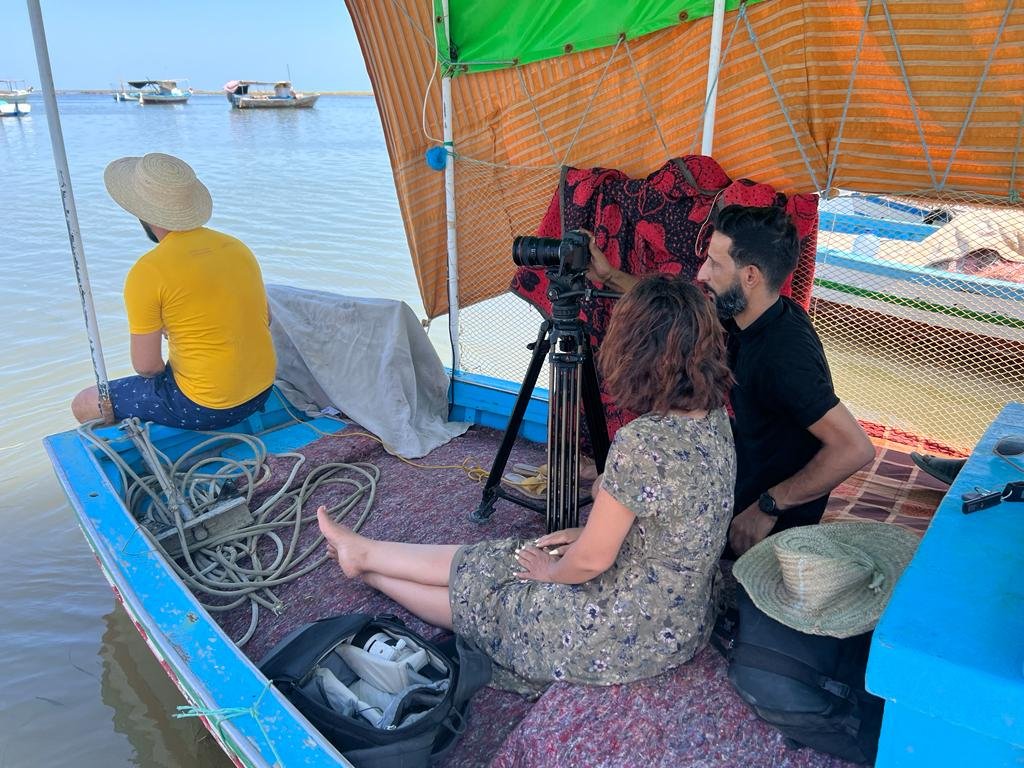
"Sometimes you're walking down the street, and potential migrants approach you. We've been sailors since we were young, since the age of 12, and we know the sea well," Sami said.
"In Kerkennah, everyone understands the sea and knows the routes. There are thousands of sailors here, but not all of them are smugglers. There are about seven or eight smugglers, and the rest are coordinators who help with the arrangements."
Sami and others like him on the Kerkennah Islands know their profession is not easy. The authorities classify them as human traffickers, and they risk imprisonment if their activities are discovered by security forces. However, they feel compelled to take on the risky job of coordinating irregular migration, Sami said.
"Most young people on the island are sailors, so if they can't find a livelihood at sea, they'll look for it elsewhere," he said. "But the big smugglers are the real beneficiaries. The rest of the population are coordinators who earn just enough to get by."
We met Sami in his small boat in one of the villages on the Kerkennah Islands. He took every precaution to stay hidden from the Tunisian security forces, which have increased coastal surveillance in recent months, especially on the islands.
Sami said he and the young people of his neighborhood pride themselves on their trustworthiness when it comes to ensuring the safety of migrants on irregular journeys. In recent years, many casualties have occurred at sea due to overcrowded boats. Sami said he and his team are committed to avoiding tragedies like this by only boarding 80 people on boats that can carry 100.
"There are criminal smugglers who do not care about the safety of their passengers," he said. "But among the migration organizers on Kerkennah Island, we work systematically, and I personally consider myself an angel of mercy because I save the children of our marginalized areas from the ordeal of staying in this country, which lacks job opportunities."
Sami explained that the demographics of those embarking on irregular migration trips have shifted increasingly and now include divorced women with their children, or entire families.
He said he thinks the constant migration has caused some Tunisian regions to become drained of their youth. What strikes him most, he said, is that the number of female migrants now equals --- and sometimes even surpasses --- the number of young male migrants.
According to Sami, this shift is due to Tunisia's difficult economic and social situation, the high cost of living and the lack of cultural centers and clubs to attract young people.
"The country has eliminated all means of entertainment and culture," he said. "As a natural consequence, irregular migration thrives. Even when they become financially comfortable, they still say, 'I want to leave here,' following the example of their peers."
In the following video, Sami explains what measures he thinks should be taken to address irregular migration.
Even if the Tunisian government has made significant efforts to combat irregular migration by enhancing international cooperation with European countries and intensifying the monitoring and surveillance of the Tunisian coasts, it continues, especially during the summer. Civil society organizations report that thousands of irregular migrants arrive on European shores daily.
Tunisia-EU Memorandum of Understanding
In July, Tunisia signed an agreement with the European Commission to tackle migration, including a long-term economic and financial aid package exceeding one billion euros and urgent assistance for Tunisia's state budget and coast guard.
The goal is to combat human trafficking and address irregular migration from Tunisia.
During a meeting with the National Security Council, Tunisia's president, Kais Saied, called irregular migration an inhumane displacement process managed by criminal networks that traffic human beings and their organs for easy profit.
*Name changed for privacy
Investigation conducted by: Mabrouka Khedir
Photography by: Rashdi Khazir
Camera: Rochdi Khedir
Translated by: Emad Hassan
Editing (English): Clare Roth