
The number of migrants reaching the Canary Islands from the coast of West Africa has continued to rise. On the tiny island of El Hierro, thousands have arrived in recents days, including children and babies.
In La Restinga, a fishing village on the small island of El Hierro, a group of migrants arrives, some collapsing from exhaustion. AFP journalists describe how one person is given a wheelchair to use by a Red Cross team helping them, just meters from a restaurant where tourists are dining.
"It's incredible to see how people can continue to eat prawns and squid while a migrant boat arrives just behind them," said Javier Iglesias, the restaurant owner.
Since the start of the year about 6,000 migrants have arrived on the smallest of the Canary Islands – around one quarter of the nearly 26,000 migrant arrivals in whole of the Spanish island group during this period. Overall numbers in the archipelago are fast approaching the record set in 2006.
Among the latest arrivals were 321 people who reached El Hierro crammed into one boat on Saturday (October 21) – the largest number to arrive in a single vessel so far.
More dangerous route
The rise in the number of migrants reaching the islands in the Atlantic in recent weeks is being attributed partly to calmer seas.
But Maria Jose Meilan, the director of the morgue in the Canary Islands’ main city, Las Palmas, said it was not normal for boats to travel as far as El Hierro, which is about 400 kilometers from the west African coast.
"The journey is much longer and more dangerous," she told AFP.
Another explanation was offered by a police source, who told the news agency that people smugglers have been sending migrant boats further away to avoid patrols in the waters off Senegal and Mauritania. This makes them more likely to end up in El Hierro, he said.
Also read: Spain spends millions to tackle Canary Islands 'migration flow'
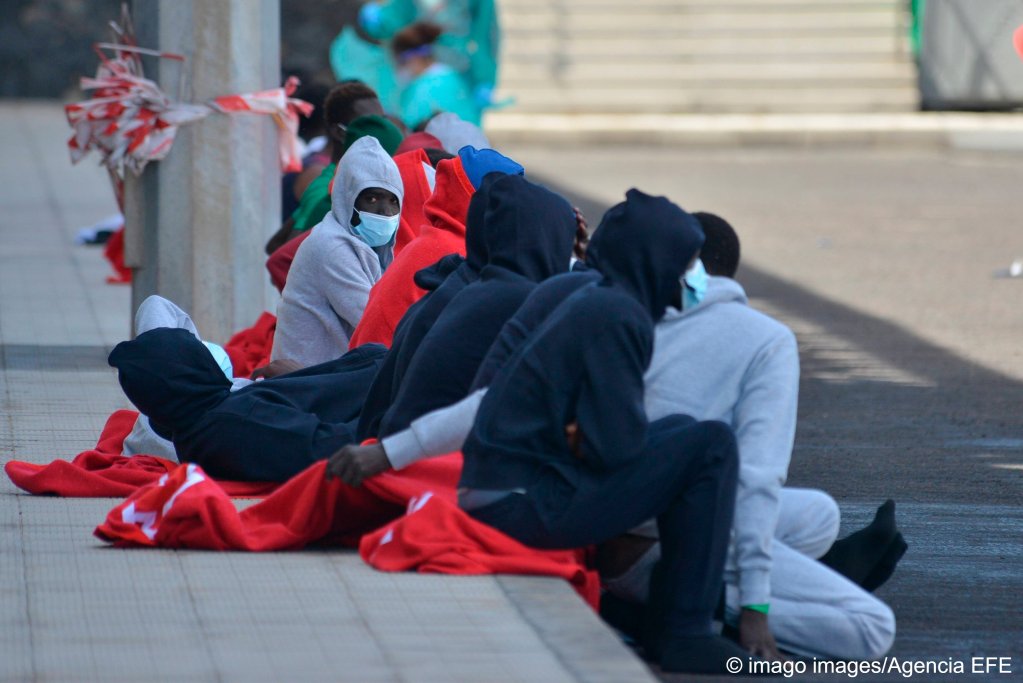
'Becoming Lampedusa'
The head of the Canary Islands’ regional government, Fernando Clavijo, is struggling to manage the situation. "El Hierro is becoming Lampedusa," he told AFP, in a reference to the Italian island in the Central Mediterranean which declared a state of emergency after thousands of migrants arrived on its shores in September.
Like the Lampedusa situation, El Hierro’s resources are insufficient to manage the large numbers. Clavijo has called on the Madrid government to give the island more financial aid to improve its reception capacity and to speed up the transfer of migrants to facilities on the Spanish mainland.
When it comes to transfers, authorities have stressed that priority will be given to the many children and teenagers on the islands, especially those without a parent or guardian. One boat that arrived in El Hierro in the early hours of Tuesday (October 24) had 15 children and a baby among its passengers, a spokesperson for Spain’s Maritime Rescue service told the news agency EFE.
Candelaria Delgado, the islands’ minister for children and youth, said Wednesday that an average of 100 minors are arriving each day on the archipelago, which she said has become "more than saturated."
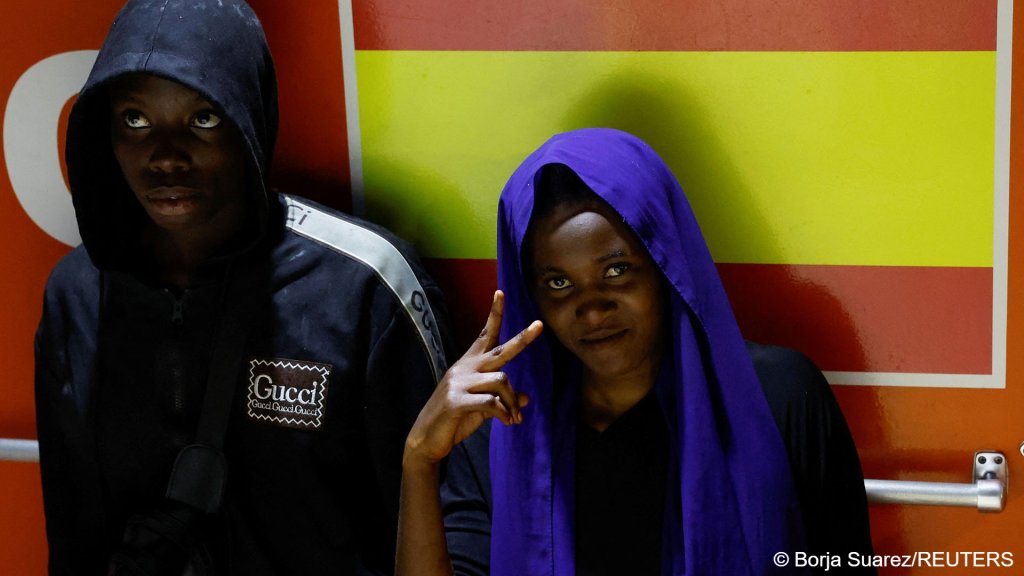
Abdou Manaf Niane, a 16-year-old from Senegal, managed to reach El Hierro in June after spending seven days at sea on a boat with 153 other people. Speaking to AFP on the island of Tenerife, where he now lives, he said little about the journey by boat. "We ate, we slept, that's all... If I had died, that's okay.”
Also read: Bodies of three Senegalese found on boat heading for Canary Islands
Some migrant boats never make it to the Canary Islands but drift further west and miss El Hierro altogether "if [they run] out of fuel or if they can't orient themselves or if they are not picked up by maritime rescuers," said Ferran Mallol, a Red Cross volunteer in La Restinga.
Two years ago, a migrant boat that departed Mauritania for the Canaries ended up drifting all the way to the island of Tobago in the Caribbean. The bodies of around a dozen people were found on board.
This article was partially based on a feature by AFP