
The route across the Mediterranean Sea to Europe has claimed many thousands of lives. It is mostly men who risk the dangerous journey, but aboard the migrant boats are also women – these are some of their stories.
Before Bintou was rescued from the boat that had been set adrift in the Mediterranean, she had been through Niger, Algeria and Libya. In Libya, smugglers held her captive and offered her as a "wife" to anyone who could pay the ransom.
"It was a kind of forced marriage arrangement. She (Bintou) told me it was better to be raped by one man than by multiple men," Candida Lobes, Médecins Sans Frontières (MSF) Communications Officer told InfoMigrants.
In her native, Cameroon, Bintou was the youngest of 15 children. She was forced to marry at a young age because the marriage offered her family some financial security. Escaping Cameroon with her two daughters, aged 20 and 18, was the only way she could protect them from suffering the same fate.
Lobes was on board the MSF Geo Barents ship that rescued Bintou and her two daughters last December.
At a recent exhibit entitled "Tales of Women at Sea" in Ferrera, Italy, the stories of women like Bintou were retold through photos and voice recordings, where they shared their stories in their own words.
"Most of the time, these women are traveling with their children. They escape a forced marriage, an abusive husband, and extreme poverty. It’s like a cage. Taking your chances crossing the Mediterranean is sometimes better," said Lobes.
They escape a forced marriage, an abusive husband, and extreme poverty. It’s like a cage. Taking your chances crossing the Mediterranean is sometimes better.
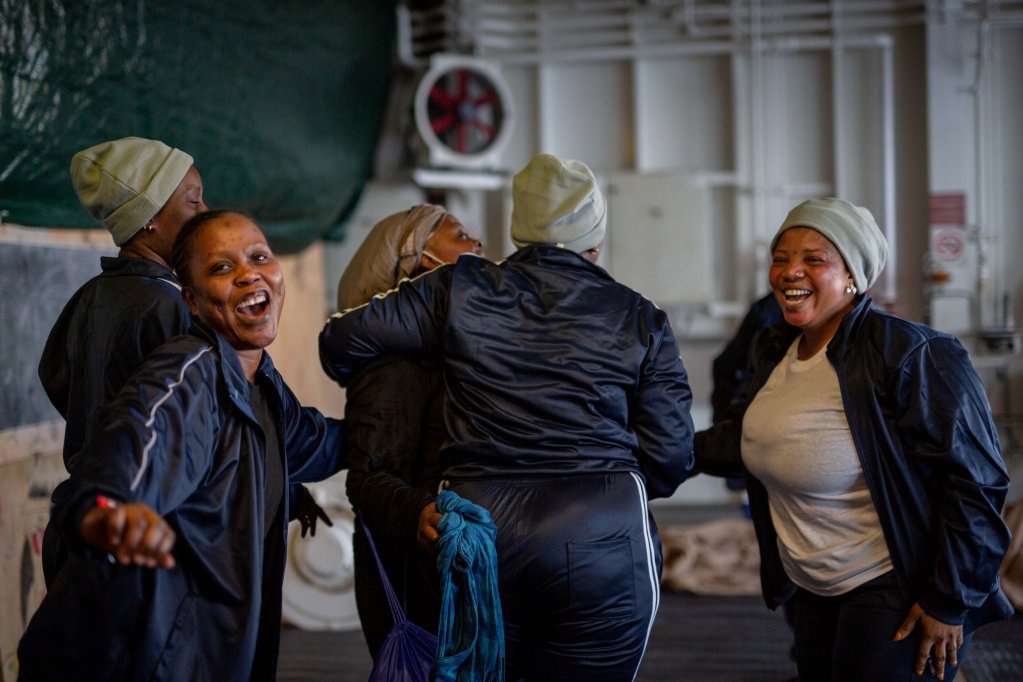
"These stories of these women are sad, but these are also stories of empowerment and freedom," added Lobes.
Giving birth at sea
Decrichelle, 32, was also among those rescued last December. The beatings she endured at the hands of her husband had sent her to the hospital so many times that she had lost count. Her best friend told her that she had to leave before he actually killed her.
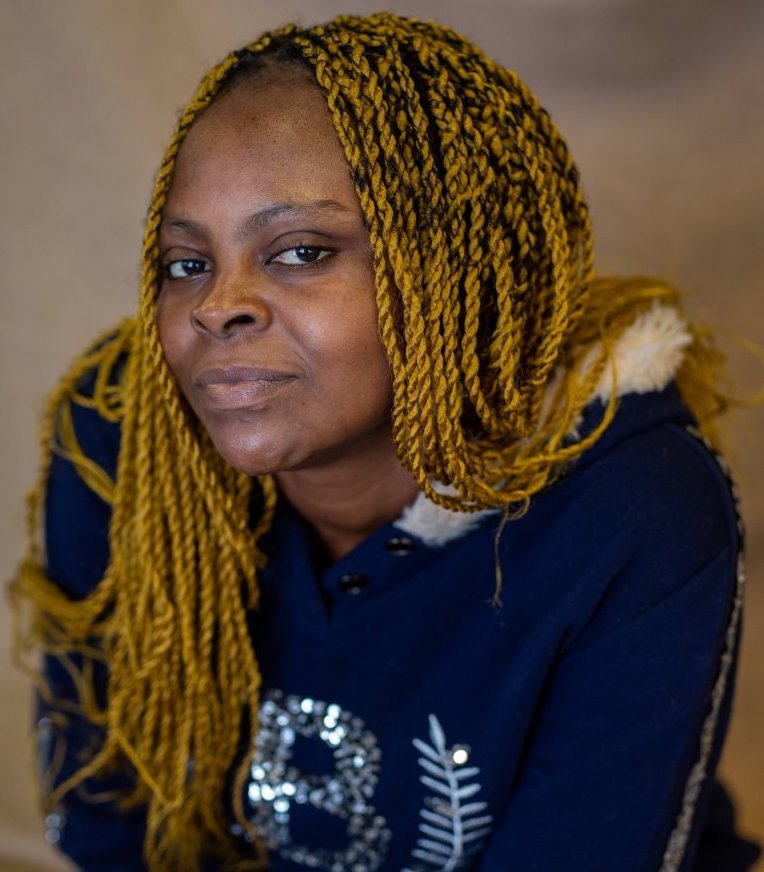
Decrichelle left Ivory Coast and crossed through the desert with her 6-month-old baby, who died along the way. "She had to bury her baby in the desert. When she was rescued, she said she had nothing," said Lobes.
Another woman, Fatima, had escaped from Libya and was heavily pregnant. She ended up giving birth on board the Geo Barents ship. Fatima delivered a healthy baby boy weighing four kilograms after seven hours of labor.
Also read: Video: Mediterranean migrant deaths at highest in years
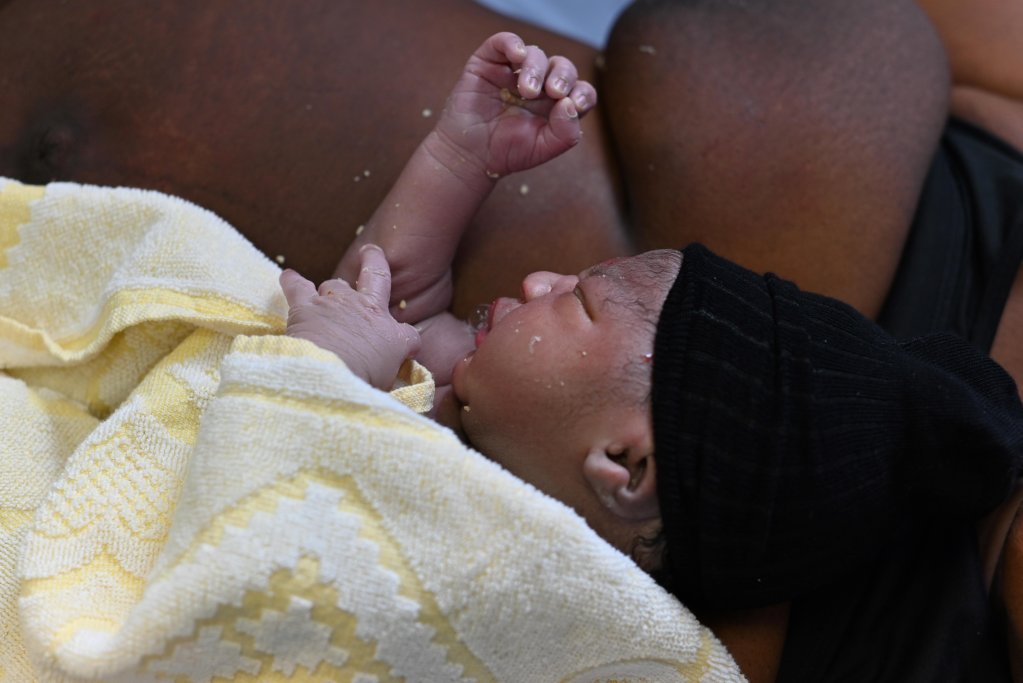
"Some of the pregnancies happen in Libya and are not from consensual relations. Unless the women tell us, we don’t ask for details because we don’t want to open up another traumatic experience," Lobes explained.
Changing migrant patterns
Data provided by the International Organization for Migration (IOM) showed that about 114,000 people arrived in Italy by sea from January to August of this year. Of this number, roughly 10% – about 12,400 – were women. Most of the women were nationals of the Ivory Coast (4,600) and Guinea (2,800) coming from Tunisia.
According to international organizations working at the point of arrival in Italy, migration patterns are shifting. Whereas most arrivals from the sea were previously from Libya, now, they are seeing more arrivals from Tunisia.
"From November 2022, most of the arrivals from Tunisia were nationals from Africa, namely Ivory Coast and Guinea," Flavio Di Giacomo, spokesperson for IOM Italy, told InfoMigrants.
"Many migrants who arrive in Italy from Tunisia have been living and working there for a number of years. But life is not easy as a Black person now in Tunisia. This is a clear situation that has been documented. If you are a Black woman, there are different vulnerabilities that you are exposed to," Di Giacomo added.
Racially motivated attacks targeted against black African migrants and students have been escalating since an inflammatory speech made by Tunisian President Kais Saied last February.
Also read: Tunisia expels hundreds of sub-Saharan African migrants from Sfax amid crackdown
Nearly invisible
The "irregular migrant" is typically characterized as a young, able-bodied man, and statistics show that it is predominantly men who attempt dangerous migrant routes.
Data about women traveling along irregular migrant paths is scarce. According to a report by WatchTheMed Alarm Phone, a 24/7 phone hotline for people in distress in the Mediterranean Sea, the little information about women migrants is often framed around gendered stereotypes of being "subordinate, passive victims who (...) lack political agency."
According to the IOM, women face a greater risk of death when crossing the Mediterranean. On boats, women and children are often placed below deck or in the middle to protect them during the crossing. However, if the ship runs into distress, this makes it more difficult to escape.
Other anecdotal factors such as weaker swimming skills, heavier clothing and traveling with children reportedly lead to a higher risk of drowning.
Since the IOM began collecting data about missing migrants in 2014, there have been 1,234 recorded deaths of women migrants. More than half of these fatalities were linked to attempts to cross the Mediterranean.
The actual figure of deaths of migrant women is likely higher because of the absence of data about the dead. According to the IOM Missing Migrants Project, less than a third of the records of dead or missing migrants in its database include any information about the sex of the deceased person.