
An administrative court in Paris has lifted the ban on distributing food to migrants in certain areas of the city. The ban came into effect on October 10 and was legally challenged by associations working with migrants in the French capital.
There was relief among migrant aid workers in Paris. On Tuesday, October 17, the administrative tribunal suspended the ban on distribution of food to migrants in two areas in the 10th and 19th arrondissements in the city. The bans had, according to the organizations working with migrants, prevented between 200 and 500 people accessing food each evening.
The ban on food distribution came into effect on October 10 and was challenged immediately by organizations including Utopia 56, The League of the Rights of Man (La Ligue des droits de l’homme), and the Federation for charity workers (Fédération des acteurs de la solidarité). It was designed to cover nine different spots in these two areas, Stalingrad and Jaurès in the north of the city.
Two of the organizations most affected were Solidarité migrants Wilson and La Chorba which both worked giving out food in the areas most evenings in the week. Philippe Caro from Solidarité migrants Wilson pointed out that since the police couldn't ban food distribution in all areas of Paris simultaneously, they were effectively just displacing the problem to another location. "Distributions will continue to take place, just on the edges of where we are still allowed," Caro explained.
'We are really happy about this decision'
Reacting to the lifting of the ban, the coordinator for Utopia 56 in Paris, Océane Marache, told InfoMigrants "this is what we hoped for. We are really happy about this decision."
Also read: Housing, food, asylum --newcomers in the north of France need information
Marache added that she thought it was "crazy that we had reached this point [of judges placing a ban on food distribution] and that we needed to devote our energies in fighting this through the courts, when our energies would be better used helping people and distributing charity."
Utopia 56 declared it a "victory" on their feed on the platform X (formerly known as Twitter).
Disturbance of public order cited as reason for ban
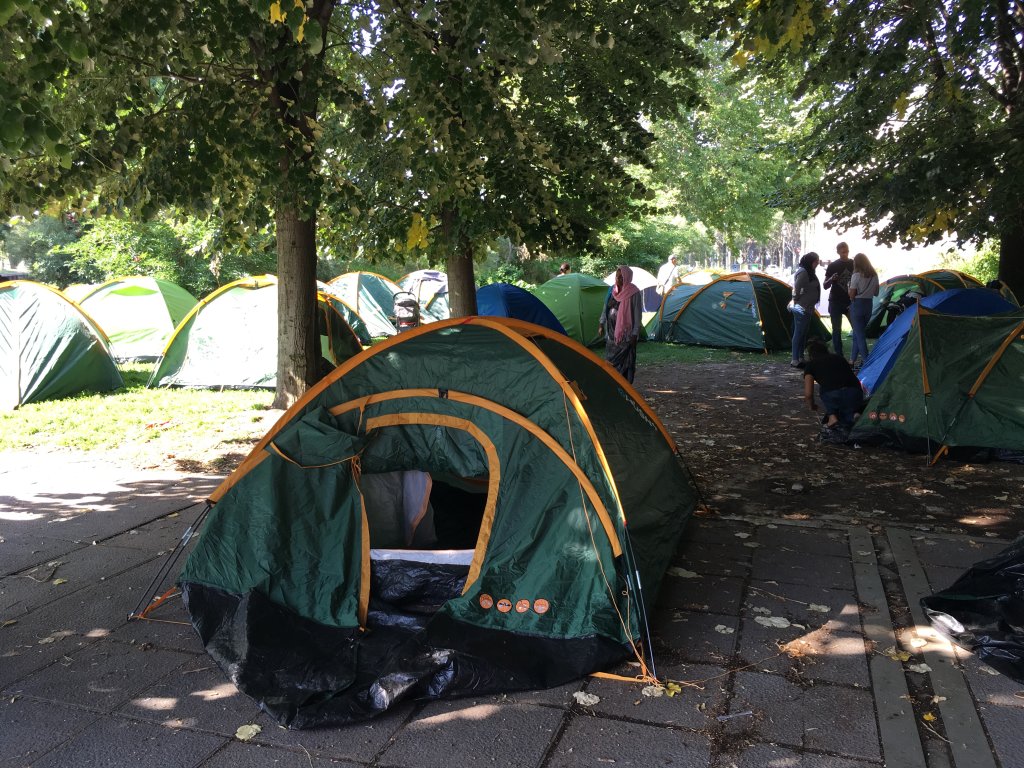
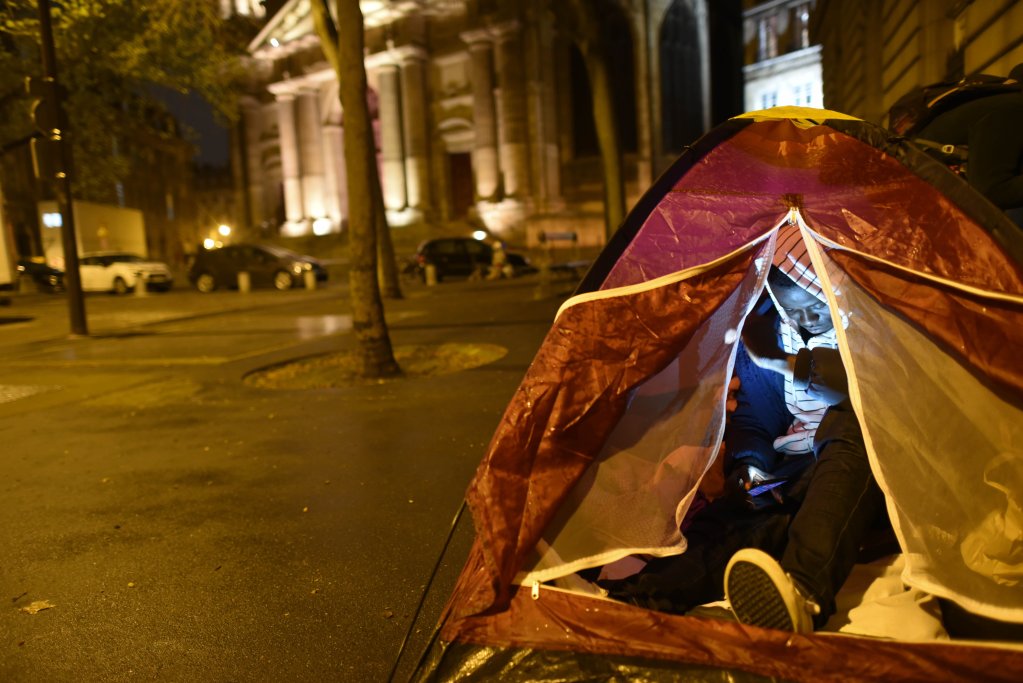
The ban was signed off by the Paris Police with the reasoning that, according to documents lodged at the Préfecture, police HQ, "the food distribution points were encouraging informal tent settlements to spring up along the pavements around boulevard de la Villette." Migrants, homeless people and drug addicts, were according to the police, populating these tent camps. Police also said that the tent camps were encouraging gatherings, fights and unrest to break out in the area and that it was attracting the presence of drug addicts and leading to public order offenses. The initial ban was set to last until November 10.
Also read: Paris, support for migrants sleeping in Villemin garden
The judge who lifted the ban, said that that problems with public order which had been used by the police to justify the ban in the first place did not constitute the kind of problem they were indicating. In her view, "a ban is not necessary to preserve public order."
However, organizations working with migrants fear bans of this kind might reappear as Paris approaches the dates next summer 2024, when it is due to host the Olympic Games.
Philippe Caro, a member of the organization Solidarité migrants Wilson, that also works with migrants in the area, commented that trying to ban access to a fundamental need like food was just "awful." When the ban was announced, Caro told InfoMigrants "There you go, this is France's welcome policy. Leave people in the street and then try and prevent them from eating and drinking."
Other organizations expressed their "shock" and "shame" at news of the ban coming into force.
Fears of further bans as Olympic Games approach
Océane Marache from Utopia 56 said that she worried that other forces would attempt similar bans as next summer draws closer. "The authorities keep saying that food distribution points encourage tent camps, but that is just not true. I really hope that Paris doesn’t turn into the kind of situation that we all had to work with in Calais over the last few years."
Also read: Migrants in Paris, sometimes we leave without having eaten for the day
In fact, in Calais, since the end of 2020, the authorities have placed temporary anti-distribution bans, to prevent migrants from gravitating to certain fixed points in the town. These raids and arrests on distribution points just end up sowing fear in migrant communities, "it makes them alone, and tires them out and exacerbates hunger and thirst for people who are already living on the street," explained Marache.
"These kinds of bans and methods end up engendering violence, distress and crime as it causes people to leave an even more precarious life, with no real support," stated Utopia 56 in a press release.
Similar policy ended in Calais in 2022
In September 2022, after two years of these kinds of bans in Calais, a court in Lille, the administrative town for the region, put an end to these kinds of bans, calling them "clearly ill-adapted and disproportionate."
Also read: Help for migrants in France, a list of organizations
Caro thinks that French migration policy has become increasingly tough in recent months, partly out of a wish to get everything running smoothly ahead of the Olympics next year and partly in reaction to the thousands of migrants who arrived in a short space of time on the Italian island of Lampedusa in September. "When the government puts these kinds of policies in place, they are not just attacking the migrants, but also the volunteers who try to help them."
Caro complained about volunteers being fined €135 if found giving out food on the pavements. "The government speaks about 'charitable crimes' but what we are doing is being fraternal," said Caro.
For migrants who live on the streets or are unregistered, food distribution points are vital and represent often their only lifeline for survival. As soon as the court lifted the ban in Paris, distributions started up in two areas of Paris, Jaurès and Stalingrad. "Morning, noon and night, migrants are always welcome [at these points]," Marache told InfoMigrants.
This article was based on two French articles written about the beginning and the end of the ban by Charlotte Boitaux and Marléne Panara. They were translated and rearranged by Emma Wallis