
Many countries in Europe are experiencing demographic decline, which in turn contributes to job vacancies and a downturn in the economy. The EU is hoping that by opening more legal migration paths, these trends could be reversed. It is a hot topic across the bloc, including in Germany.
European countries are grappling a myriad of problems related to demographics. Between now and the year 2100, the working age population is expected to drop across the continent by 57 million. According to figures from Eurobarometer, EU citizens will be particularly affected by this demographic decline, reported ANSA.
These predictions are just some of the big themes being addressed at the International Monetary Fund (IMF) and World Bank's annual meetings, which are being held in Marrakech, Morocco this week. (October 9 - 15)
Also read: Migrants in Italy produce wealth, while becoming poorer
Also this week (October 11), the European Commission launched its latest plan to reverse the demographic decline across the bloc. It intends to provide incentives for people in Europe to have more children, and also create more legal migration routes into the continent.
New strategy
The new strategy focuses on families, youth, the elderly and migrants explained Vice-President of the European Commission for Democracy and Demography Dubravka Suica to ANSA in an interview. Suica said that it is undisputed that countries in the bloc need more workers in order to be competitive.
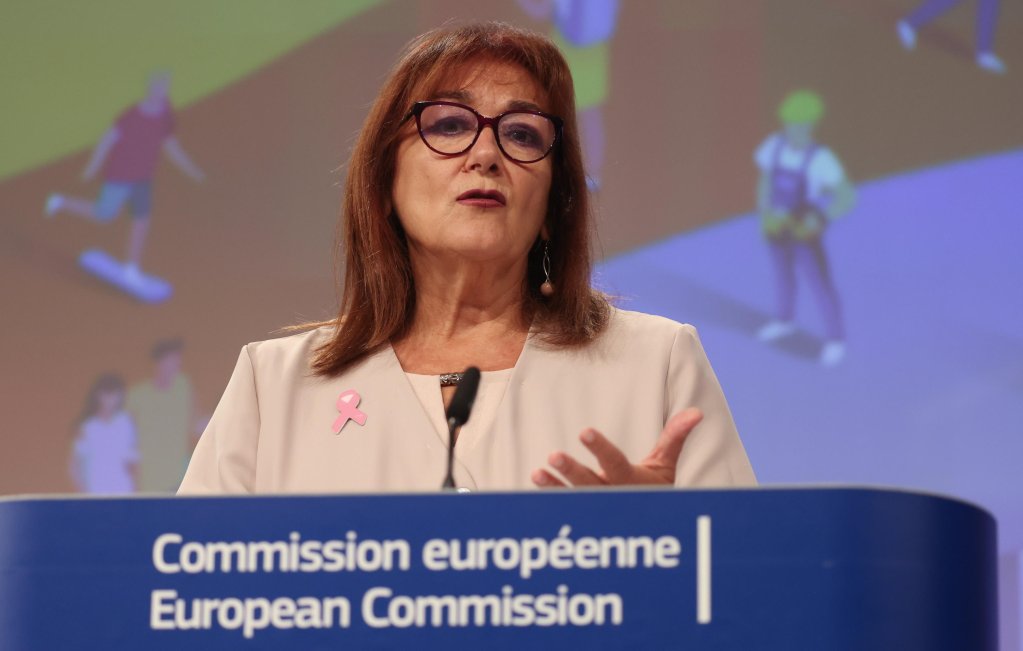
The Commissioner indicated that in the short term, European countries should look to open up more legal paths for migrants with training opportunities for the kinds of vacancies that countries are hoping to fill, while also facilitating additional training for those coming to Europe on those legal pathways.
The toolbox for the EU-27 has been approved by the commissioners but is not legally binding.
Also read: Eastern Europe, labor migration on the rise
Suica added that this would only be the first step. Three of the four pillars of the plan address how families, youth and the elderly can live, study, work and access services within Europe.
Increased services also aim to improve the balance between work and private life for parents and reevaluate the skills present among the ever-growing elderly population, who may have completely or partially retired from the job market but still have huge capital to contribute to the functioning of society.
'Labor market needs legal migration'
The fourth pillar addresses migration policy within the bloc. Suica noted that reversing current European demographics was incredibly important, where the average number of children per woman stands at 1.5, and in some countries like Italy is even lower.
Over the next 25 years, which is how long she thinks it will take to make these reversals, Suica hopes that the EU average could increase to 2.1.
While that was being achieved within the European population, explained Suica, the bloc needed legal migration in order to meet the labor demands within the market.
As well as increasing legal pathways into the bloc, the EU hopes to continue making agreements with third countries, similar to the one it recently signed with Tunisia.
Through these kinds of agreements, Europe hopes that migration will not only be managed but also training programs can be implemented to help feed these legal pathways.
Meanwhile, in Germany, the debate about how best to manage migration also continues. Germany hosts the greatest number of asylum seekers and refugees in the bloc, although it also has the greatest overall population within the 27 member states of the EU.
Also read: Ukrainian refugees push German cities to their limits
Migration in Germany is 'too high,' says Scholz
German Chancellor Olaf Scholz repeated again this week that migration to the country had become "too high." This sentiment appears to be echoed in the electorate too.
Recent elections last weekend in two key states, Bavaria and Hesse, registered a swing to the right and towards parties that say they would be stricter on migration issues.
A recent study in Germany now found that the majority of Germans now believe that migration could be seen as a "threat" to Germany and its society.
In an interview with the weekly economic news portal Wirtschafts Woche (WiWo), published on October 13, migration policy expert Hannes Schammann, who runs the Migration Policy Research Group at the University of Hildesheim, said that just looking at ways to reduce migration to Germany or any other European country was not the way forward.
Instead, Schammann says that the country needs to stop trying to contain migration with “simplified” solutions and instead admit that it is a "very complex theme."
Schammann believes that it is pointless to stop irregular migrants from crossing borders without putting in place more legal routes, so that migrants have a valid perspective of getting a job for which they are qualified when they arrive.
Also read: Is Germany's skilled labor shortage a myth?
Migration is a 'complex theme'
This would, he added, also help wider society to start regarding migration and migrants in a more positive light, as they would be coming to become part of host societies rather than just representing a social issue that needs dealing with.
Schammann also commented on the recent political debate in Germany over whether to limit the amount of money given in cash to asylum seekers, with some politicians suggesting that instead they should be given cards which they could only spend on items that the money is intended for, such as subsistence and food, rather than sending it home to their families.
Also read: Italy, an increase in migrants could lower public debts
The professor told WiWo that these kinds of policies needed more evidence supporting the theories before being implemented.
He said that he found that "some migration laws are brought in so quickly without really testing them out, that we don't know whether they are going to have the effect we had hoped for."
Schammann also stressed that the old "pull and push factor theories are now outdated."
He explained that since over half of the migrants arriving in Germany actually have a good chance of becoming recognized asylum seekers and later be given refugee status, the idea of sorting people at the EU's borders between those who have a chance of asylum and those that do not wouldn't do much to help the general numbers meriting asylum within the bloc.
"It is just not possible for liberal democracies to totally shut their borders," added the professor.