
More than two years after the Taliban takeover of Afghanistan, many Afghans still hoping to find a way to apply for asylum in Europe and beyond are leading increasingly precarious lives in neighboring countries. While those in Tajikistan face abject poverty, Afghans in Pakistan are now facing a major deportation campaign.
Pakistan has announced a major crackdown on people who are in the country without permits, vowing to expel such foreigners by November.
Caretaker Interior Minister Sarfraz Bugti said this policy was not aimed at the country's estimated 1.7 million irregular Afghan migrants in particular, stressing that it was designed to apply to people of all nationalities living in Pakistan without papers.
The vast majority of irregular foreign nationals in the country, however, are Afghans.
Bugti added that Afghans who have registered with Pakistani authorities do not need to worry about the crackdown.
But he suggested that migrants living in Pakistan illegally -- including Afghans -- should go back to their countries voluntarily before the end of the month to avoid forced deportation and other consequences.
Reward for telling on Afghan neighbors
The interior minister said that as part of the scheme, the government plans to confiscate the property and assets of irregular migrants in Pakistan if they do not voluntarily return in the course of the month.
A special phone line to tip off authorities about migrants without permits will be set up, offering rewards to members of the public to hand over names.
Pakistani authorities already arrest and deport Afghans caught sneaking into the country without valid papers as a matter of course. But Bugti’s announcement marks the first time the government has announced an official crackdown on irregular immigration.
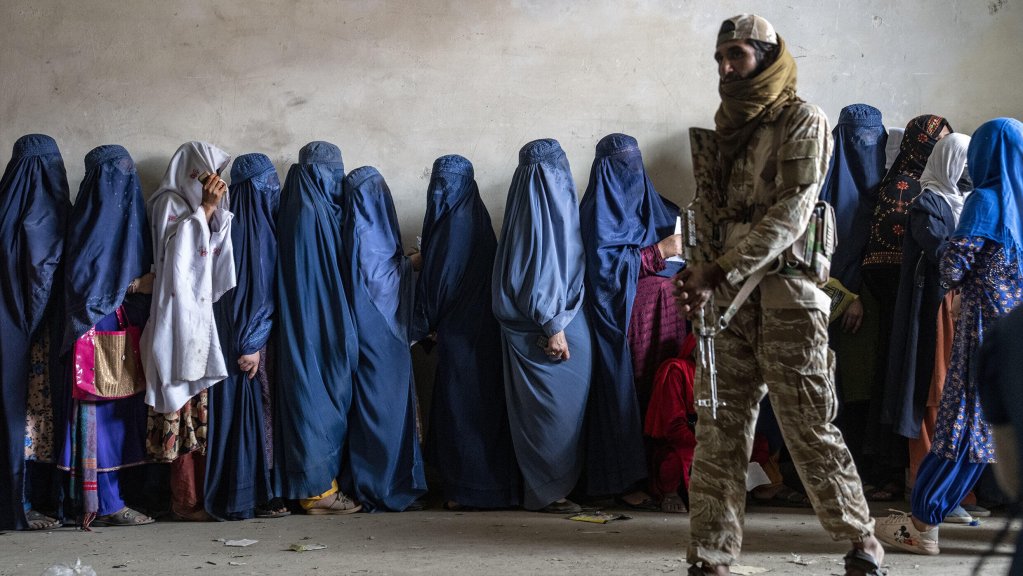
Pakistan has one of the world's biggest refugee populations -- there are currently 4.4 million Afghans living in Pakistan, with two in five of them unregistered, according to the government.
However, United Nations figures say that about half of Afghans in Pakistan actually have legal status to remain.
Terrorism at heart of deportation plan
This campaign comes after relations between Pakistan and neighboring Afghanistan, which is run by the Taliban, have come under increasing strain.
Pakistan claims that militants associated with the Taliban are responsible for attacks on Pakistani soil, entering the country across the shared border measuring some 2,600 kilometers.
The government says assailants then return to Afghanistan, where they are given shelter. According to the interior ministry, more than half of the 24 suicide attacks committed in Pakistan to date this year were masterminded by Taliban-affiliated militants in Afghanistan.
The chief spokesman for the Taliban government, Zabihullah Mujahid, said the plans were "unacceptable," claiming Pakistan is targeting Afghan refugees regardless of whether they have proper documentation to be in the country or not.
"Afghan refugees are not involved in Pakistan's security problems. As long as they leave Pakistan voluntarily, that country should tolerate them," Mujahid said on the social media platform X (formerly known as Twitter) referring to long-running schemes of European countries slowly evacuating people from the region.
In 2021, Afghanistan's Taliban rulers announced a pardon for Afghans who fled to other countries, but most who have not successfully managed to be granted asylum in the EU, the United States, Mexico or other countries continue to hope to find ways of emigrating while their lives are parked in countries like Pakistan and Tajikistan.
Read more: Afghans at risk: Where to seek help
Facing deportation after 30 years in Pakistan
Among those likely to be affected is Fazal Rehman, an Afghan fruit seller living in the northwestern city of Peshawar.
The 57-year-old told The Associated Press (AP) he first arrived in Pakistan 30 years ago, adding that his children had never been to Afghanistan.
"We request the Pakistan government not to expel us in such a hasty way and allow us either to live here peacefully," he said, adding that at least, Afghan foreigners without documents should be given more time to prepare to go back.
When asked why his immigration status was still irregular after all those years, Rehman told AP that he had never felt the need to register with Pakistani authorities.
He now fears it may be too late.
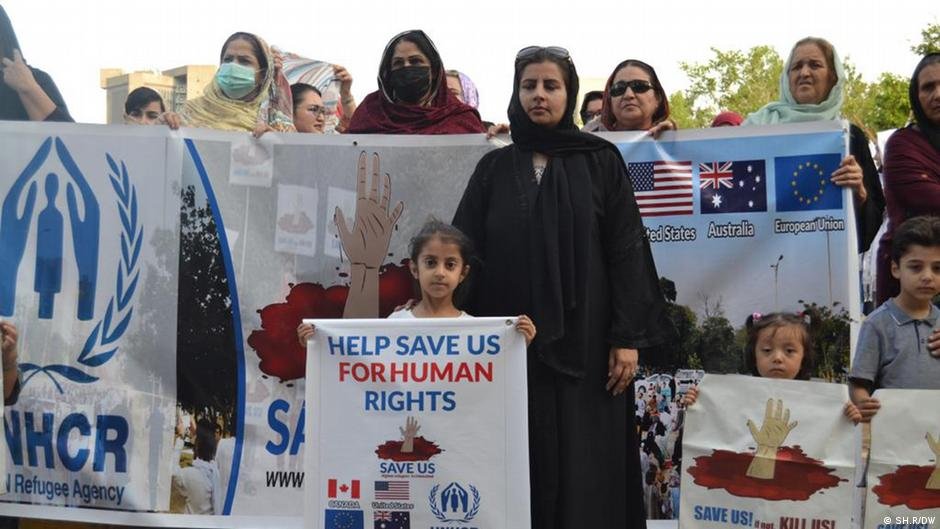
Read more: Afghan refugee: 'I am safe, not a slave, thanks only to humanitarian corridors'
Pakistan: New entrance rules for Afghan nationals
The Pakistani government meanwhile also announced that starting November 1, only Afghans with valid passports and visas will be granted entry to Pakistan.
For many years, Afghans entering Pakistan on its land borders have been allowed to use their national identity cards as their travel document.
In Afghanistan, there is a long wait for nationals seeking to get passports, and many cannot afford it. On top of that, obtaining a visa for Pakistan can also take months.
Read more: Afghan boxer fights for a new life in Pakistan
Uncertainty in Tajikistan, too
The situation meanwhile is not much better for Afghans in Tajikistan -- another country where many who managed to flee the Taliban wait to be granted protection elsewhere in the world.
The UNHCR estimates around that 10,000 Afghan refugees live in Tajikistan, which is the poorest of the former Soviet republics in Central Asia.
The country struggles to provide many of the basics for its own population, leaving Afghans to fend for themselves in even greater poverty.
Afghan refugees are also not allowed to live in any of the major cities, which further limits any economic activities they might wish to embark on. Many do so anyway -- illegally, according to the country's laws.
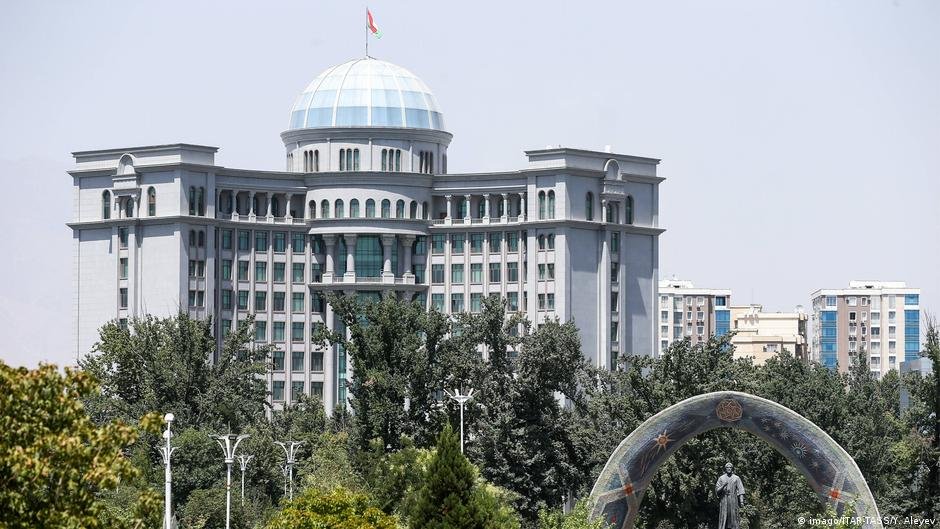
The government says this is to prevent the influence of the Taliban from filtering into urban areas, as Tajikistan, too, observes an uptick in conflict along the Afghan border.
However, those who have fled to Tajikistan since the Taliban takeover of power in August 2021 have no desire to be affiliated with the Islamist group, which is known for grave human rights abuses.
Despite this, there have also been recent reports of forced deportations of people back to Afghanistan, according to UNHCR.
Read more: UNHCR criticizes Tajikistan for 'illegal' repatriations of Afghan refugees
No money to pay for school
The Tajik government in Dushanbe -- itself renowned for repressing free speech and largely only allowing government-affiliated news to be spread -- claims that refugees have many of the same rights as Tajik citizens.
Colonel Boimakhmad Radjazoda, who heads the refugee department in the interior ministry, says the government is doing its utmost.
"They have access to medical care, we've opened a school for Afghans and we can provide them with clothes, food and medicines," he told the AFP news agency.
However, many of the Afghans in the country can't even afford to send their children to school. One Afghan refugee told AFP that his family survives on the money from the sale of their house in Kabul, which they cannot return to.
When that money runs out, there's no plan B.
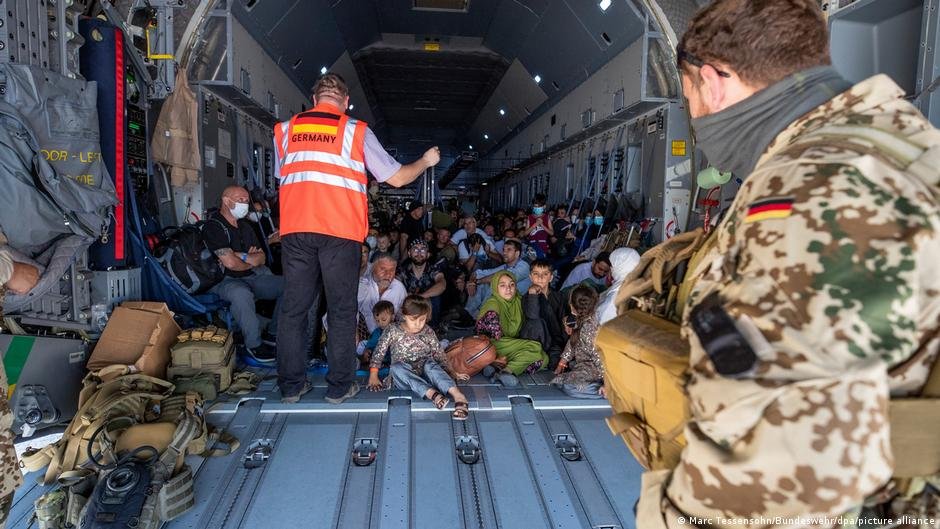
Read more: Afghanistan: What happened to Germany's local staff?
with AP, AFP