
Talking is continuing in different forums in an attempt to resolve the deadlock over the EU migration pact. Nine EU nations met in Malta on Friday, just a day after EU interior ministers met in Brussels. Some breakthroughs have been made, but blocks remain.
Leaders from Malta, France, Greece, Italy, Croatia, Cyprus, Portugal, Slovenia and Spain met in Malta on Friday (September 29) to discuss common challenges the countries face, including migration.
The meeting comes just a day after Thursday's meeting in Brussels between EU interior ministers, held with the aim of breaking the continuing deadlock and making progress on the EU migration pact.
During Thursday's meeting, Germany said it will vote in favor of a troubled compromise proposal on how to regulate migration to the EU – despite lingering concerns. But Poland says it will uphold its veto over the pact.
'I will uphold my veto on illegal migration'
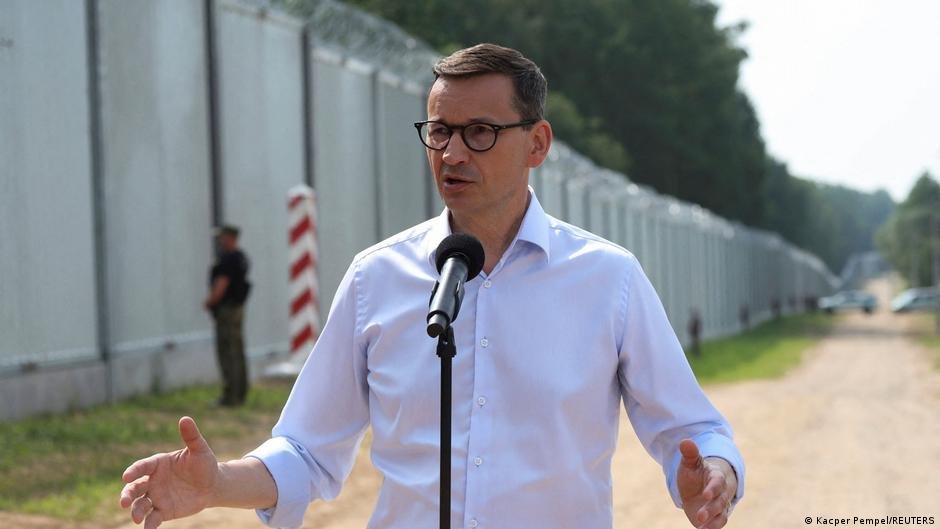
In a televised statement on Friday, Poland's Prime Minister Mateusz Morawiecki said "I am going to the European Council next week where I will uphold my veto on illegal migration. This is an attempt to attack not only the sovereignty of Poland and other member states, but also an attempt to destabilize the EU in a non-democratic manner."
One of the main campaign promises of Poland's ruling Law and Justice (PiS) party, which faces elections on October 15, is to protect the country on the EU's external border from irregular immigration. It announced a referendum on the issue on the same day as the vote.
Poland's pledge to torpedo the thorny migration reform comes a day after the interior ministers finally made progress. At Thursday's meeting in Brussels, German Interior Minister Nancy Faeser said Germany was now ready to agree to the asylum reform.
Germany maintains call for better family protection
Germany had rejected a previous proposal of the reform, calling repeatedly for better protection of families. "We're going to continue to push for this," Faeser said on Thursday, addressing fellow EU ministers.
Luxembourg's Immigration Minister Jean Asselborn said his country backs Germany's call for better protection for families together with Ireland and Portugal. Faeser regretted however that there was no "broad majority" among EU states for this.
The measures would include setting up processing centers on the EU's external borders where people would be screened when they arrive and include the option to detain people until their asylum claims are assessed.
The controversial measures were a bone of contention in a sweeping migration reform aiming to limit migration to the bloc that was first unveiled three years ago.
Rise in frustration over spike in irregular migration
Paralysis on the issue has caused frustration in the 27-nation bloc. But the recent arrival of thousands of asylum seekers on the Italian island of Lampedusa gave fresh impetus to reach a deal.
As well as the EU-wide meetings, leaders of southern European countries often meet to discuss the challenges they face in particular on the EU's southern borders. On Friday (September 29), those talks continued when European Commission President Ursula von der Leyen joined leaders like French President Emmanuel Macron and Italian Premier Giorgia Meloni in Malta.
One of the topics up for discussion was the possibility of reigniting a naval mission in the Mediterranean. Italy also continues to push for other nations to show more solidarity in terms of relocating the hundreds of thousands of migrants who have arrived in Italy since the beginning of the year.
Some 200,000 migrants arrived in the European Union without papers from January to September 25. This already surpassed last year's full total of around 190,000. Around 65% of all arrivals -- more than 130,000 -- were registered on Italian shores.
Read more: EU asylum reform ignores volatility of escape routes, experts say
Controversial migration deals
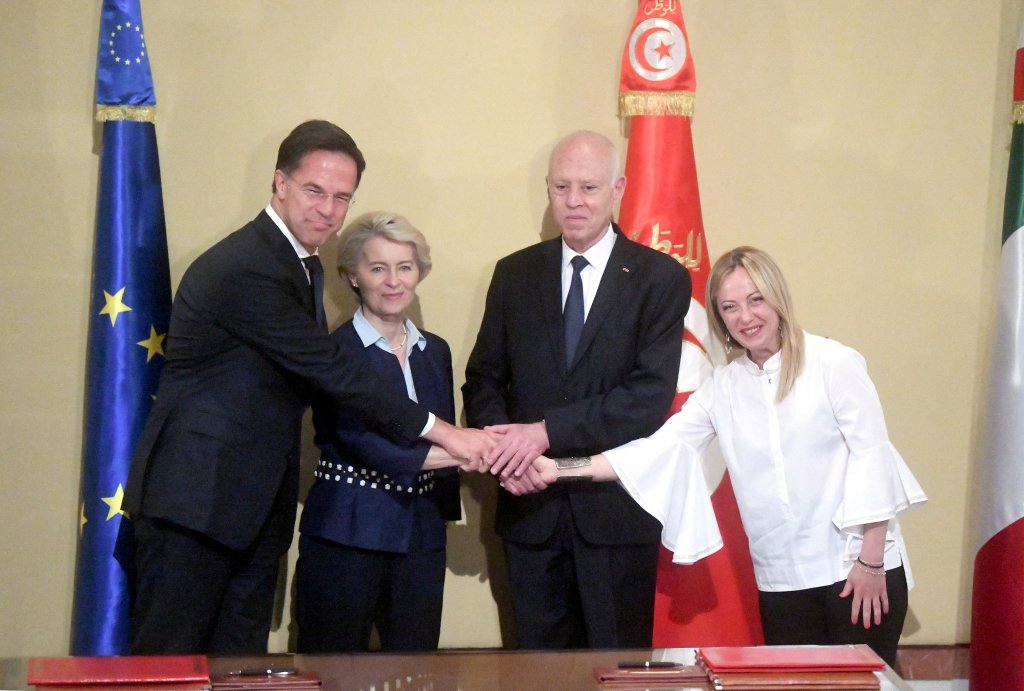
Another migration issue that was on the table at Thursday's meeting in Brussels is a controversial pact between the EU and the Tunisian government that partly aims to reduce the number of migrants crossing the Mediterranean towards Italy.
The deal, struck in July, has been criticized for being signed amid allegations of rights violations by the Tunisian government as well as for having had little impact so far on the actual number of arrivals in Italy.
Last week, however, the European Parliament put talks with the Tunisian government about the proposed agreement on hold because of a standoff between EU member states. Poland and Hungary in particular have been standing up against the majority of the bloc.
Less contentious is the prolongation of an exemption for Ukrainian refugees who are allowed to stay in the EU without having to apply for asylum, according to news agency dpa. EU ministers are expected to extend the waiver until March 2025.
Read more: Migration as a weapon: Is Tunisia blackmailing the EU?
What's in the pact proposals?
The aim of the migration pact is to have EU countries share the burden of irregular migration, either by taking in some of the migrants who mainly arrive in Italy or Greece or contributing money to those that do.
The new proposals also provide a "crisis regulation" clause --special rules for EU states that are under particularly high migration pressure. These include allowing asylum seekers to be held longer under detention-like conditions when registering at the external border, and lowering standards for accommodation and care.
Also read: Lack of EU unity on asylum keeps refugees at the margins
The text, drawn up by the European Commission, is in part a bid to forge Europe-wide solidarity in case of a repeat of the massive 2015/16 arrival of asylum seekers, most of whom were Syrians fleeing their civil war.
Key proposals include lengthening the detention period of irregular migrants arriving on EU soil from 12 weeks to 20 weeks and accelerating evaluations of asylum applications. The EU hopes to pass the reform this year before it faces elections in June 2024. But its new proposals, meant to find consensus, have also attracted huge amounts of criticism, from member states themselves and NGOs.
NGOs, MEPs warn of consequences
Critics accuse the EU of shutting itself off from asylum seekers and shirking responsibility. This week, a number of NGOs renewed their criticism, saying Germany's decision to agree with the reform was "catastrophic," among other things.
SOS Humanity, whose Humanity 1 migrant rescue vessel is operating in the dangerous central Mediterranean, on Thursday called on Germany to instigate a joint EU sea rescue program for the central Mediterranean and to stop financing Tunisia's and Libya's coast guards, which intercept and return migrants to Tunisian shores on behalf of the EU.
The human rights organization, Amnesty International, meanwhile, called the reform proposals a "betrayal of the rights of people fleeing" that would "pave the way for a de facto abolition of European asylum law," Amnesty's deputy General Secretary in Germany Julia Duchrow is quoted in a press release.
"These proposals will not solve the existing challenges of European asylum policy, but will further exacerbate them and advance the disintegration of the European Union under the rule of law." Duchrow also called on the German government not to "buckle under the anti-human rhetoric of recent weeks."
Other NGOs, including medical charity Doctors without Borders (MSF) and the International Rescue Committee, also criticized the reform. Back in July, 55 NGOs, in a joint appeal, called on the German government to vote against the crisis regulation. At the European level, more than 100 organizations signed a similar appeal.
Damian Boeselager, a German member of the European Parliament for the Greens/EFA parliamentary group, said the final outcome would "weaken the European asylum system as a whole" through more mass detention and lower standards of protection.
"If it sees the light of day, the crisis regulation will be a carte blanche for individual states to circumvent their obligations under EU law," Boeselager said in a press release. "EU countries would be allowed to detain people, including families and children, at their borders for a longer period of time. Basically, this would legalize the current Greek island model, where remote spaces in individual countries are used as prison camps for asylum seekers."
with dpa, AFP, AP, Reuters