
Germany is seeing a shift in the language used around the country's migration policy, but how far does this reflect a social and political change?
Attitudes towards refugees are shifting, or so it may seem when you read the headlines in German newspapers and observe recent political rhetoric. The newspapers and broadcasters are full of discussions around a migrant cap, a rise in crime, adding more controls at the eastern borders, as well as an increase in attacks on migrants and migrant accommodation.
Last week German opposition lawmakers called for a migration crackdown during a heated debate in parliament on the country's migration policy. Recent polls show rising support for the parties taking a tougher stance on migration and high profile politicians have been using terms like "record migration" or "migration crisis". This kind of language and the more it appears in the media can have far reaching consequences for society.
Germany hosts the greatest number of refugees in the European Union. It also has the largest population in the bloc. At the end of June 2023, a total of 3.26 million people are registered in Germany's Central Register of Foreigners as being part of the asylum process. While the headlines may indicate a repeat events in 2015 / 2016 when more than a million people arrived in Germany, the number of actual arrivals are not even half as high as back then.
This is mainly because after 2015, the German government took steps to reduce the number of asylum seekers entering the country -- including introducing new laws and policies such as supporting the EU-Turkey deal which made getting asylum more difficult and allowed for more Syrian refugees to be hosted in Turkey rather than traveling onward to Europe.
Also read: Germany: Heated migration debate amid increase in migrant arrivals
Attacks against refugees
In 2015/2016, with the large number of arrivals, there was also a rise in violence towards migrants and refugee accommodation. This also happened in the 1990s, when refugee policy was at the center of political debates during the Balkan war, then too some homes for asylum seekers were set alight by far-right extremists.
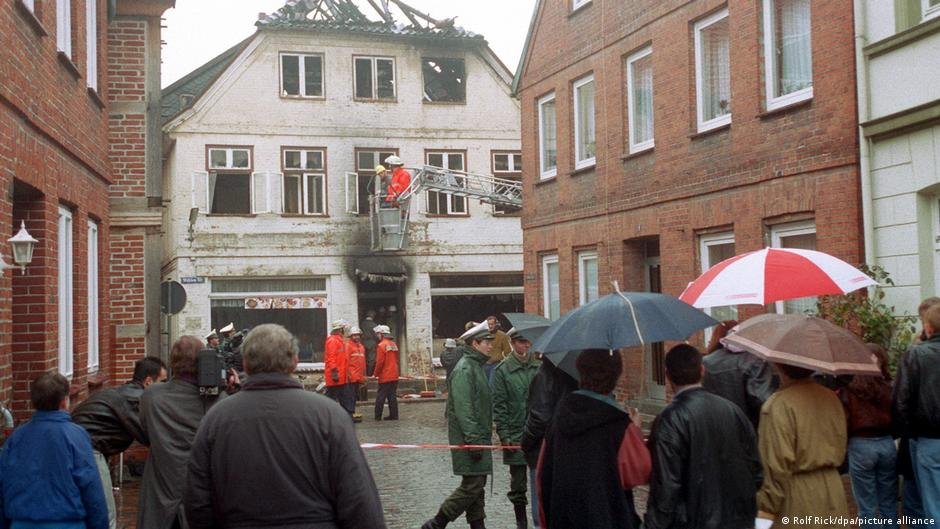
In the first half of 2023, according to preliminary data, there were over 700 attacks against migrants, asylum seekers and refugees and 80 attacks on their shelters. This is a significant increase compared to the same period last year: in the first half of 2022, there were 544 attacks against refugees and 52 attacks against their shelters.
According to the German government, there were a total of 1,420 politically motivated attacks on asylum seekers and refugees in 2022. Most of these crimes (83%) were politically motivated and alleged to have been carried out by people with far-right beliefs. With an increase of 69%, the number of crimes against asylum shelters, which had already risen to 120 in 2022, increased significantly compared to the previous year (2021). The number of violent crimes against migrants, asylum seekers and refugees also increased, rising by 22% to 278.
Also read: German authorities investigate fatal fire at refugee accommodation
Rise of right-wing extremism
There are not just physical attacks on the rise, but far-right rhetoric is becoming increasingly brazen in Germany where this had previously been more taboo, due to the country's past and the Nazi dictatorship. A recent study by a team at Bielefeld University commissioned by the Social Democratic Friedrich Ebert Foundation, found that one in 12 people in Germany now holds a right-wing extremist worldview.
The rise in far-right views among the population, has also been partly attributed to parties such as the AfD (Alternative for Germany) bringing extremist right-wing views into the mainstream. Belonging to far-right parties however, also means that the presence of such views can now also be measured more easily, according to the German information platform Migration Media Service.
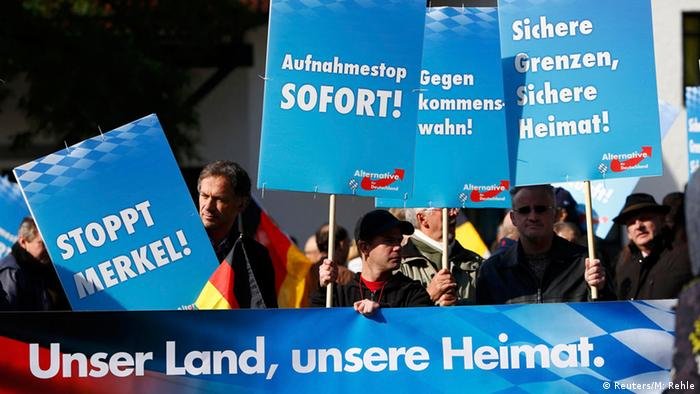
In the first half of 2023, there were 112 far-right demonstrations, three times as many as in the same period in the previous year. According to the Migration Media Service, one of the key difference this year has also been the focus on migrants and asylum seekers and their accommodation during these marches.
Also read: Germany: Anti-immigration party causes political earthquake with local election victory
Media coverage
In a 2021 study published by the University of Mainz' Institut für Publizistik, coverage of migration and refugee issues was analyzed across Germany's six largest daily newspapers and TV broadcasters between 2016-2020. The study found that German news coverage on migration and refugees was predominantly negative, emphasizing danger and indicating confrontation between migrants and the population. Although the extent to which the coverage highlighted negative associations varied, right leaning publications and outlets generally did this to a greater extent.
Media researcher Thomas Hestermann's 2020 report for the Migration Media Service, found a similar pattern. His research shows that the German media primarily covered violence, crime, the costs of integration, while largely ignoring positive aspects of immigration, aside from stories about the labor market and welfare state issues.
Hestermann's 2022 research on crime reporting for the Migration Media Service shows that non-German crime suspects will get 16 times more media attention than German citizens, especially in relation to violent offenses. Comparing his research from 2019 also shows that there has been a sharp increase in how often German media cited the nationality of a suspect over the last few years. In 2019, almost a third (31.4%) of television reports on violent crimes referred to the suspects' nationality, compared to 17.9% in 2017.
Also read: Germany: Crime statistics and migration
Looking to the future
Some in Germany worry about anti-migrant attitudes hardening. At the same time, Germany is facing a skilled worker shortage, which means more immigration is going to be necessary to fill these jobs.
The populism and racist rhetoric of parties like the AfD could potentially deter skilled workers from moving to Germany, especially when this is covered by media outlets abroad. However, speaking to DW, Ulrich Kober, director of the Democracy and Social Cohesion program at the Bertelsmann Foundation, --an independent think tank which offers "transatlantic perspectives" on the economy, society and politics, points out that the reasons why people choose to migrate are very complex and factors such as economic opportunities and living standards also play a major role.
According to figures from the Federal Statistical Office, Destatis, in 2022 about 20.2 million people in Germany had either immigrated themselves or were born to immigrant parents. With a growing immigrant population, Germany can expect more changes in both attitude and policies in the near future. In a society that can sometimes seem resistant to big changes, that works hard to keep the status quo for fear of slipping into extremism, this might be a tough transition for the country to make, but change is already underway.
Also read: Rise of Germany's far right may deter skilled workers