
Despite having invested millions in a partnership with Tunisia to control migration, the EU has kept silent since authorities there began rounding up migrants nearly two months ago. Peter Stano, European Commission spokesperson for foreign affairs and security policy, agreed to an interview with InfoMigrants.
Nearly two months have passed since Tunisian authorities first began rounding up sub-Saharan migrants in Sfax. Hundreds of exiles were deported to the Algerian and Libyan border zones where they stayed for several weeks in the desert, without water or food. Faced with the growing humanitarian scandal, the increasing number of deaths, and denunciations from the UN and NGOs, Tunis finally repatriated some of these migrants to camps managed by the International Organization for Migration (IOM).
After signing a migration agreement with Tunisia last July which included €105 million in EU aid for the strengthening of Tunisia’s external borders, the EU neglected to comment on the deportation of migrants orchestrated by Tunis, despite extensive media coverage.
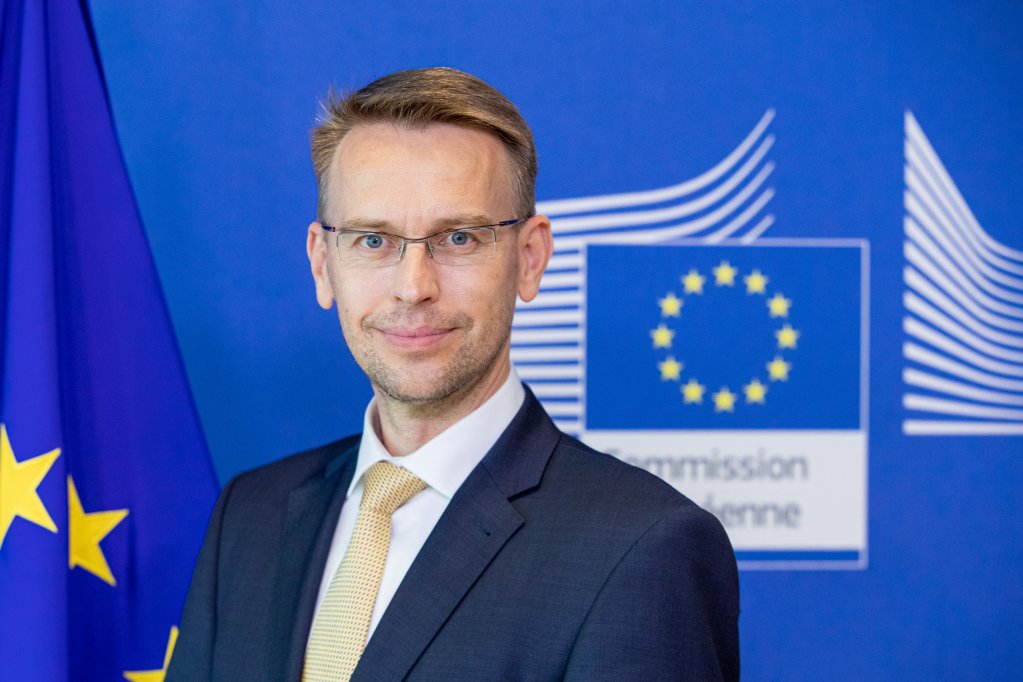
InfoMigrants spoke to the European Commission's spokesperson for foreign affairs and security policy, Peter Stano.
InfoMigrants : The EU signed a strategic partnership with Tunisia on July 16 to improve border management which included €105 million. What will this sum finance in concrete terms?
Peter Stano : On 16 July the EU and Tunisia agreed on a Memorandum of Understanding on a strategic and comprehensive partnership covering not only migration but also economic development, investment and trade, renewable energy, and people to people contacts.
The amount of €105 million that you mention is an indicative allocation for 2023 covering the management of migration and the prevention of loss of life at sea (including fighting against smugglers and human traffickers, strengthening border management, registration and voluntary return in full respect of human rights).
IM : Does the EU have any say over the equipment financed? Could there be a program to train and equip Tunisia's coast guard and navy, like in Libya for example?
PT: The activities of the €105 million package for Tunisia in 2023 are being defined and will be fully aligned with the existing EU human rights strategies and action plans.
Read more: Tunisia and Libya share responsibility for hundreds of migrants at border
IM : At the time of signing, the European Commissioner for Home Affairs Ylva Johansson said the EU would 'continue to criticize' Tunisia for human rights abuses. Is President Kais Saied's February speech, in which he claimed migration from sub-Saharan Africa to his country is aimed at 'changing Tunisia’s demographic composition' and bringing crime, problematic for the EU?
PT: Respect for human rights and democratic principles are at the heart of the EU’s partnerships with third countries, including Tunisia.This is also enshrined in the Association Agreement between the EU and Tunisia (Article 2), which is the overarching legal framework for our bilateral relations.
Also read: EU and Tunisia sign agreement to fight illegal migration
Commissioner Johansson highlighted that the latest developments confirm the relevance of the reinforced migration partnership with Tunisia, focused on the respect for fundamental rights. As with all our partners, as with Tunisia, we are raising all issues of common concerns.
This rights-based approach is at the heart of our partnership with Tunisia and at the core of our Association Agreement. It is also reflected in the recently signed Memorandum of Understanding which provides that actions need to be in line with international law and the respect for human dignity.
IM: We are in direct contact with sub-Saharan migrants who were rounded up in Sfax in early July and taken by the Tunisian guard into the desert, to the Algerian or Libyan border. Many have been beaten, had their papers confiscated and had their money stolen by the authorities. Our team of journalists has already counted 27 deaths in the desert since the beginning of July, although NGO estimates are higher. This information has been confirmed by numerous media outlets, including Libération and Le Monde, as well as Inkyfada and NGOs such as the Tunisian Red Crescent. What is Commissioner Yvla Johansson's reaction to this situation which concerns at least 1,200 migrants?
PT: The EU will continue to closely monitor the situation of migrants at the Tunisian-Libyan border and elsewhere in the two countries. We urge our partners to make sure that such events do not happen again and to ensure the safety and dignity of human life. We are ready to support as necessary.
Read more: Tunisia: Sub-Saharan Africans held captive in school building
We are in contact with the Tunisian authorities and are coordinating with our local, European and international partners on the ground, which are closely liaising with the Tunisian Red Crescent, to ensure swift, efficient and well targeted support to those in need with the provision of water, food, non-food items and medical assistance.
Our ongoing programs are contributing to the international efforts to provide immediate assistance and protection to persons in need. EU assistance is currently provided through ongoing (EUTF/NDICI/AMIF) programs implemented with local NGOs and UN partners (UNHCR, IOM).
IM: The Tunisian Interior minister and the president reject accusations of mistreatment of Black people, declaring it to be fake news. Is there a paradox in the European Union financing the management of Tunisia's borders when the country is guilty of violence and fails to respect human rights or the Geneva Convention which it has ratified?
PT: Migration management should be carried out in a manner that ensures compliance with fundamental rights and international obligations. Those principles are at the foundation of our comprehensive partnership with Tunisia, which aims to accompany the country’s inclusive socio-economic development and to address migration in a sustainable way. EU-funded programs involve robust monitoring systems and are implemented by local, European or international partners.