
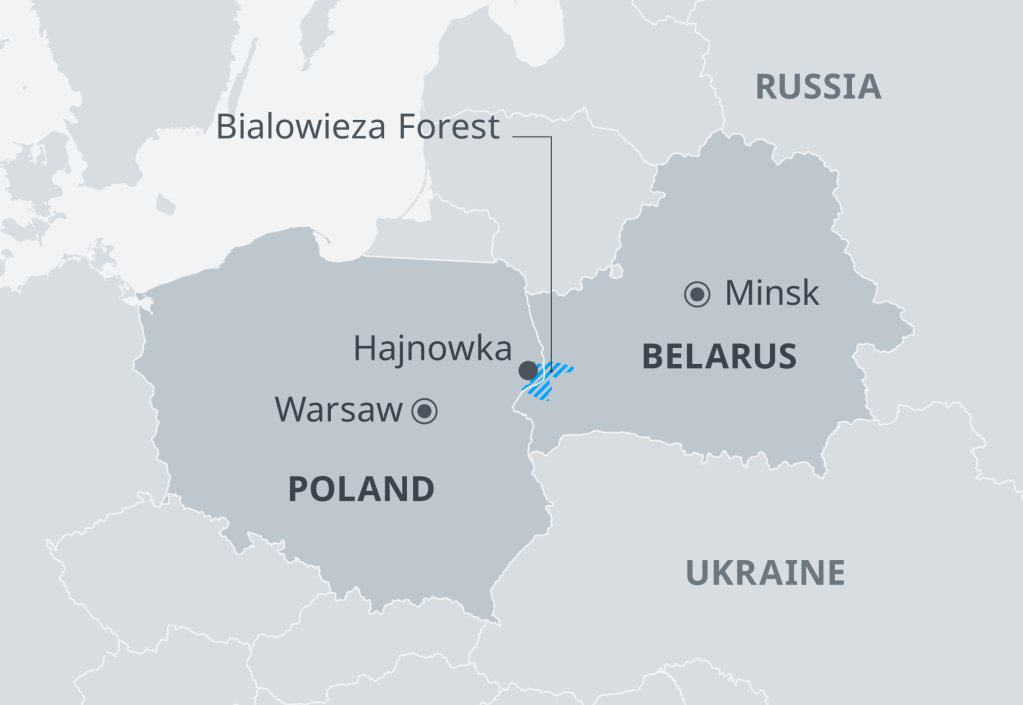
The reality of the situation of migrants stuck at the border between Poland and Belarus is often shrouded in mystery. This was especially true when the crisis on this migrant route first started in 2021. Combining elements of fact and fiction, a new film now hopes to shed light on these gaps of information.
"Green Border" by director Agnieszka Holland details how the migrant emergency on the Polish-Belarusian border first unfolded at the the height of the global COVID-19 pandemic in 2021. However, the film is not a documentary but rather a fictional recreation of how events unfolded.
After Polish authorities effectively enforced a media blackout at the time, denying access to news and media organizations hoping to report on the developments, there was little information available about the actual situation in the swampy borderlands. In the midst of the restrictions, at least 17 people were reported to have died in the region, and it was believed that hypothermia was the cause of their deaths.
Holland's black-and-white movie fills that gap and highlights the ways in which activists and charitable organizations stepped in at the time to assist people stuck on either side of the fortified border between the two east European countries.
"We had to try to capture it in all (its) possible complexity and give justice and a voice to those who have been silenced and are voiceless," Holland said about her work.
"Green Border" celebrated its premiere earlier this week at the Venice Film Festival, where it is also nominated for the Golden Lion award.
Narratives between fact and fiction
The film follows a family from Syria and a woman from Afghanistan who end up being pushed from one side of the border to the other repeatedly, as neither government seems to want to take responsibility for those stuck in the area.
They are seen suffering brutality at the hands of guards on either side, as both Polish and Belarusian authorities deny the use of force as well as the practice of such illegal pushbacks.
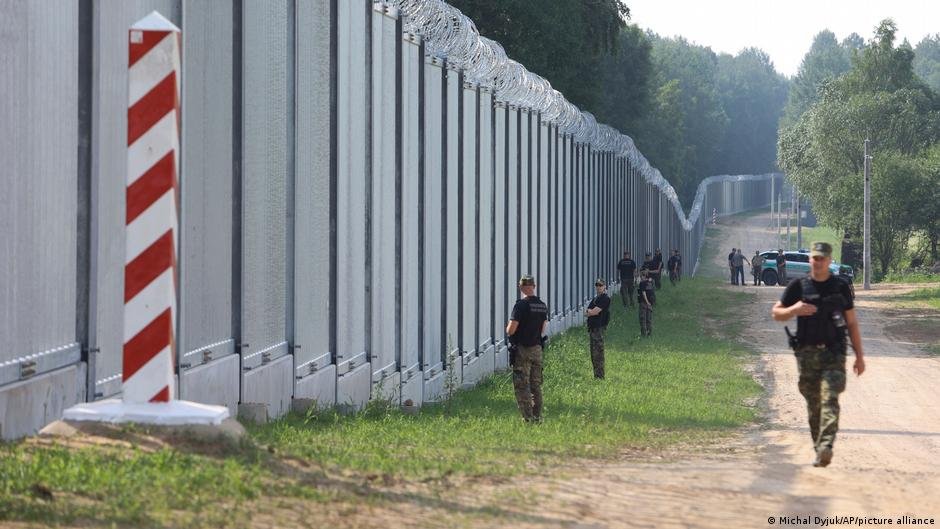
However, the movie also looks at the realities of a Polish border guard, who feels in conflict with pushing back starving people at the border of his country.
In the absence of sufficient humanitarian assistance from either government, charities and NGOs step in to feed, clothe and comfort the migrants stuck in limbo along the border.
Holland decided to cast some of the real people who assisted the migrants, deliberately blurring the lines between fact and fiction.
Read more: EU border pushbacks: A 'shadow' migration policy?
Criticism against depiction of Polish authorities
Holland says she decided to make a film about the plight of migrants at the border precisely because "(i)t was impossible for the documentary makers and the journalists to go there."
"But we can re-create and do something that I know how to do: make a fictional film about events which are going on right now," the 74-year-old director further explained.
However, her efforts at exploring the events along the Polish-Belarusian border over two years ago don't appear to be universally appreciated: Poland's justice minister, Zbigniew Ziobro, compared the film to Nazi propaganda on the social media platform X, formerly known as Twitter.
"In the Third Reich, the Germans produced propaganda films showing Poles as bandits and murderers. Today they have Agnieszka Holland for that," Ziobro wrote.
Read more: Poland's ruling party 'instrumentalizes' migrants for electoral gain
Belarus' 'hybrid' war
Holland herself however said in a recent interview with Newsweek that such rhetoric is merely an attempt of populist politicians in Poland hoping to win support for the upcoming elections next month.
"I understood that a training camp of cruelty was being established on the border. In my opinion, it was a purely political decision," she said, describing Poland's overall approach to migration as "short-sighted" and "inhumane."
However, there is more than just domestic politics involved in the migration drama at Poland's border, which has flared up time and again since migrants first started flocking to the region in 2021.
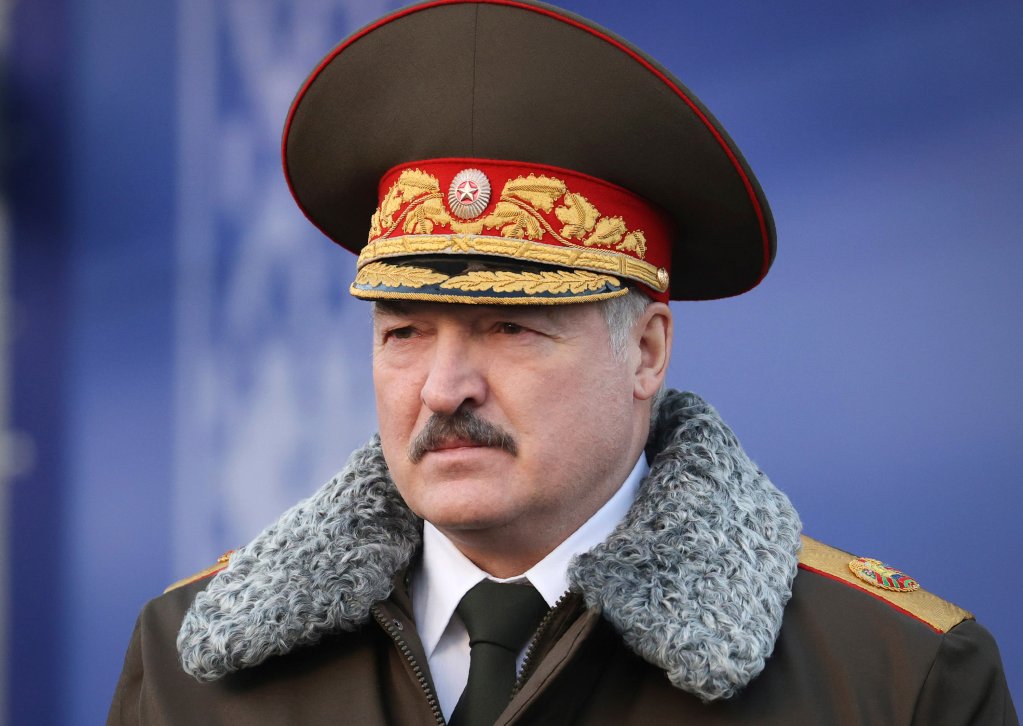
Belarus, Poland's neighbor and a close ally of Russia, facilitated the movement of migrants to the EU's eastern border, even opening travel agencies in the Middle East. Belarus' president Alexander Lukashenko is believed to have masterminded this strategy personally as an extension of what the EU has since come to refer to as a "hybrid form of warfare."
Read more: Latvia increases defences against 'hybrid threat' from Belarus
The European Union says that this was designed to create a crisis along the bloc's eastern flank, causing division among member states.
Poland and the Baltic countries to its north have since fortified their border protections, with Warsaw recently pledging another 10,000 guards to protect the border.
Read more: Poland accuses Belarus and Russia of deliberately 'prepping migration crisis'
A fight for European core values
Holland is a widely celebrated director around the globe whose previous works have often focused on contemporary history — with a focus on World War II and the ensuing world order, often told from a Polish perspective.
The Polish director criticizes strongly the treatment of migrants from the Middle East and Africa along the border, which she believes was in complete disregard of the EU"s core values and a sign of growing isolationism across the bloc:
"If we go further on this road ... the European Union, Europe, the continent of freedom, democracy (and) human rights will disappear. It will change into some kind of a fortress," she said.
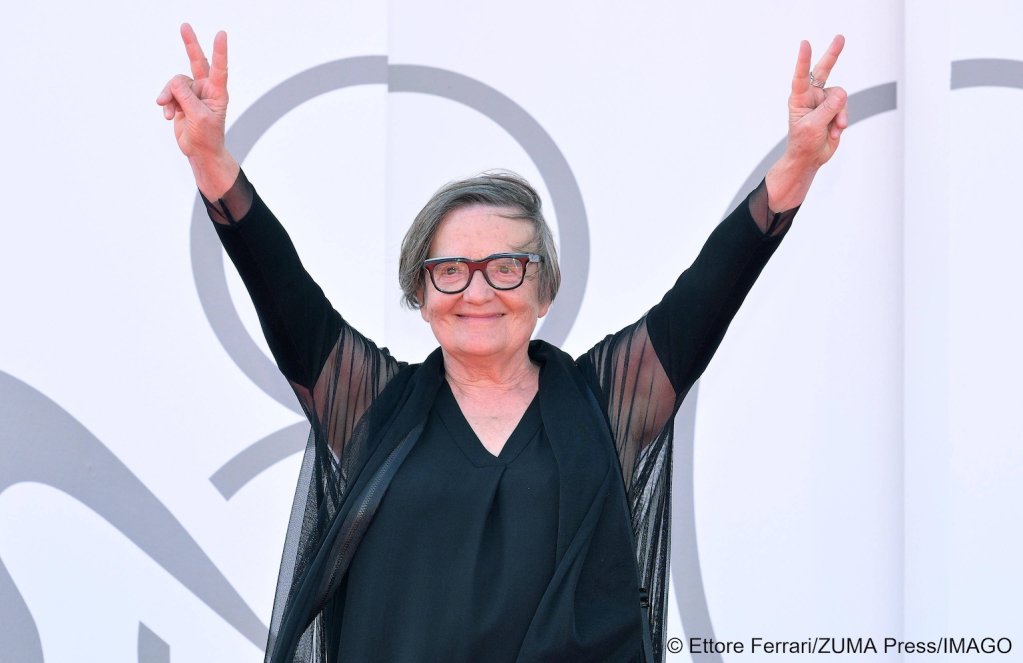
Holland also stressed that this treatment stood in contrast to the warm welcome of more than a million war refugees fleeing the Russian invasion of Ukraine the following year -- while stressing that this should be the way forward in her view:
"I don"t want Europe to abandon all values that Ukrainian soldiers now are fighting for," she said. "Human rights. The dignity of every human being. Democracy. Equality. Brotherhood. Solidarity."
However, one of the lead characters in the documentary, Maja Ostaszewska, who actually went into the forests along the Polish-Belarusian border in 2021 to try to help the migrants stuck there, says that "Green Border" is not trying to make a political statement but rather hoping to look at the border crisis from a holistic view:
"What would you do if someone came knocking on your door?" Ostaszewska told the Reuters news agency.
"You can open your door, you can help, or you can decide to pretend not to see."
with Reuters, AP
Read more: Poland unveils referendum on EU migrant policy