
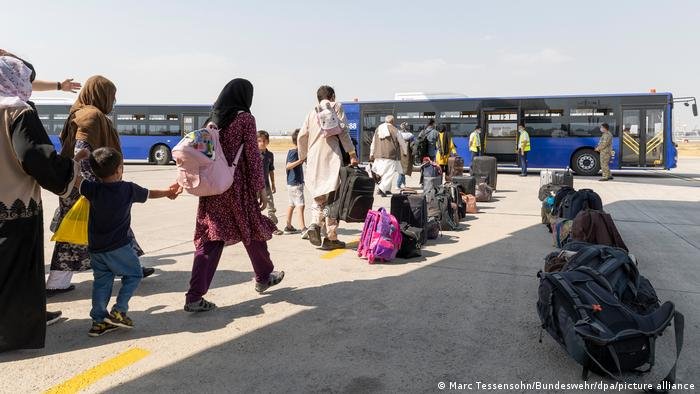
Germany says it has taken in more vulnerable people from Afghanistan than any other EU state since the Taliban takeover two years ago. However, thousands more continue to suffer as they remain trapped in the country.
Since the Taliban violently took over power in Kabul two years ago, more than 30,300 Afghans have entered Germany on the initial evacuation flights and subsequent admission programs.
"Among them were more than 4,100 former local Afghan forces, who along with their family members make up a total of 19,300 people," the immigration office, BAMF, told the daily Die Welt newspaper on Wednesday.
Read more: Afghanistan: What happened to Germany's local staff?
The office added that another 2,600 were identified by Germany as being directly affected by the takeover of the Taliban regime and brought to Germany along with their family members, totalling another 11,000 admissions.
These individuals, says BAMF, worked in human rights, civil society, media, culture and science before the return of Taliban.
"In an EU-wide comparison, Germany has therefore facilitated by far the highest number of entries of vulnerable Afghan nationals in recent years," BAMF added.
Thousands of Afghans, however, are still waiting to leave the country for Germany.
Read more: German evacuation program for Afghanistan mired in delays
Five times more Afghans in Germany
Since August 2021, the total number of people from Afghanistan living in Germany has gradually risen to around 395,655, according to BAMF, which based the number on information about Afghan nationals recorded in the Central Register of Foreigners by the end of June 2023.
At the end of 2013 — fewer than eight years before the Taliban takeover — that number was just under 67,000.
In recent years, Afghans have overtaken Syrian nationals as the highest single demographic seeking protection in Germany.
However, despite the high acceptance rate, evacuations from Afghanistan have been mired in a series of delays amid accusations of people abusing various programs launched by the German government.
Read more: Fearing for their children: Over 100 evacuated Afghans protest outside ministry in Berlin
The fall of Kabul
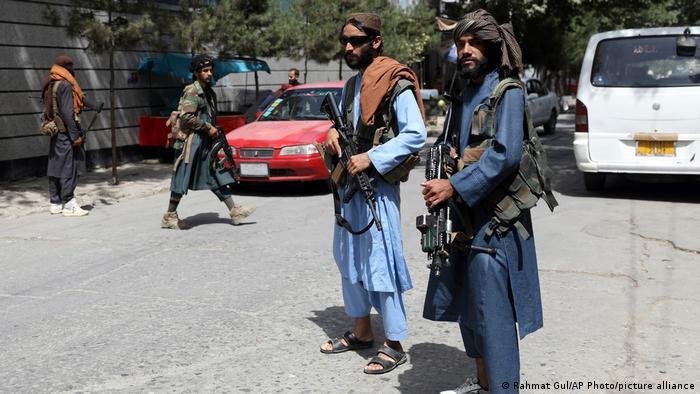
On August 15, 2021, the Taliban seized control over Afghanistan by marching into the capital Kabul. They encountered almost no resistance, as Afghan forces were unable to hold back the onslaught of the Islamist movement.
Foreign powers at the time were in the process of withdrawing from Afghanistan after spending two decades there trying to build a democratic state.
The presence of American forces in the country was the longest single deployment of military personnel in US history, costing over two trillion US dollars under the oversight of four different US presidents.
The true cost of war
The war in Afghanistan, which began as a counter-terrorism offensive in 2001 in response to the 9/11 attacks on the United States of America, cost the lives of at least 2,324 US troops and 1,144 allied troops, with nearly another 4,000 contractors working primarily for the US also losing their lives.
However, Afghans bore the brunt of the destruction, with at least 125,000 Afghans losing their lives in 20 years — though the actual number is believed to be significantly higher. In neighboring countries, primarily in Pakistan, at least another 67,000 people are believed to have died because of the conflict.
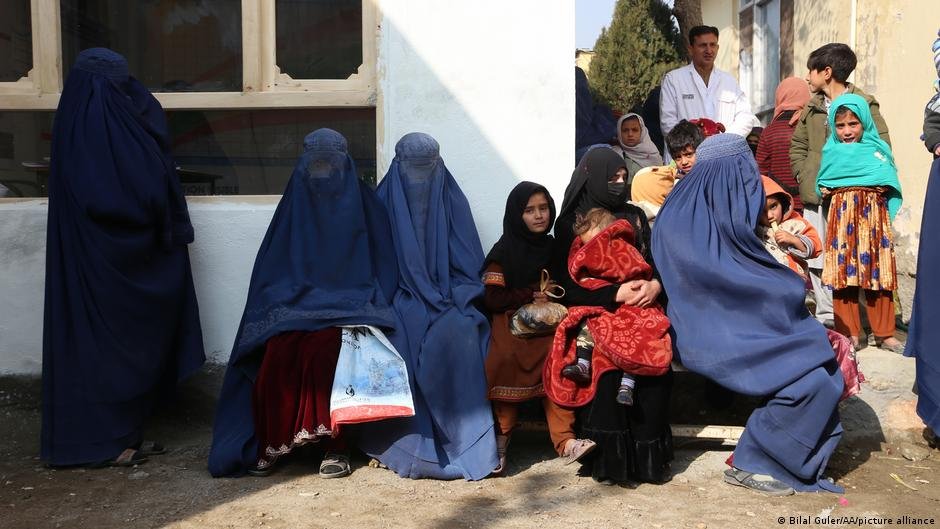
Following the return of the Taliban in August 2021, thousands of Afghans have tried to leave the country in fear of reprisals, with summary executions and other grave human right abuses being reported across the country.
Read more: Running from the Taliban: More Afghan women granted refugee status in Germany
New realities for Afghans across the world
The US, UK and Germany in particular have been focusing their efforts on getting as many vulnerable individuals and their families out of Afghanistan as possible, running above all into the logistical issue of not being able to fly in or out of the country anymore, thus having to resort to working closely with authorities in neighboring Pakistan and Tajikistan.
Many Afghan refugees meanwhile are "parked out" in the Balkans, in particular Albania, as their onward travel to other countries to seek asylum has been delayed, chiefly for bureaucratic reasons arising in the midst of the COVID-19 pandemic.
Read more: Afghan refugees in Albania on a never-ending journey
Meanwhile, life has changed dramatically for those who cannot leave Afghanistan. Women in particular say they fear they may never enjoy their freedom again, as all the liberties won over the past two decades have been rolled back by the country's new rulers.
The Taliban meanwhile, whose rule over Afghanistan is not recognized by any other country in world, marked the second anniversary of their return on August 15.
Read more: Afghan women fear for the future of their country
with KNA