
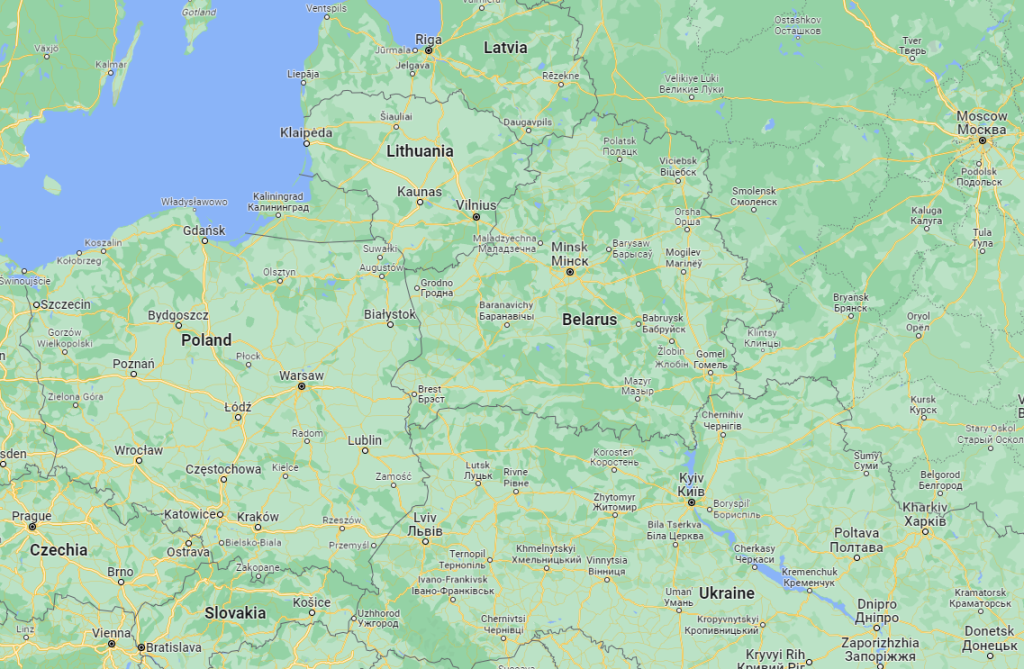
Poland says it's planning to move up to 10,000 additional soldiers to the border with Belarus amid mounting tensions in the region. The announcement comes after Polish politicians in late July had said they may close Belarus' borders with the EU in the event of an incident involving the Russian Wagner paramilitary group.
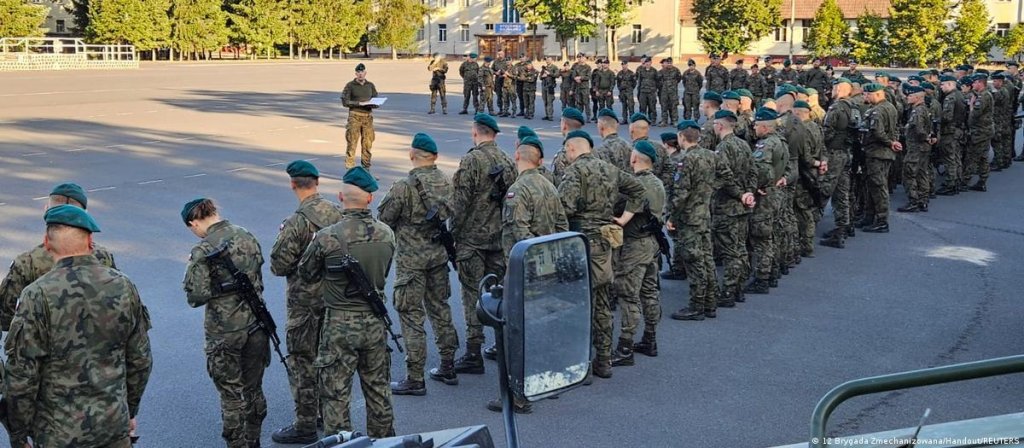
Two weeks after Poland had vowed to protect its EU border with Belarus, Polish Defense Minister Mariusz Blaszczak on Thursday (August 10) said the EU member state is planning to move up to 10,000 additional troops to its eastern border with Belarus to support Polish border guard stationed there. The region had become a key migrant route into Europe in recent years.
"About 10,000 soldiers will be on the border, of which 4,000 will directly support the Border Guard and 6,000 will be in the reserve," Blaszczak said in an interview with public radio in Poland.
"We move the army closer to the border with Belarus to scare away the aggressor, so that they do not dare to attack us," Blaszczak said.
On Wednesday, Deputy interior minister Maciej Wasik had already said that Poland would send 2,000 additional troops to its frontier with Belarus, news agency Reuters reported.
In late July, Poland's Interior Minister Mariusz Kaminski said that EU and NATO members Poland, Lithuania and Latvia may jointly decide to shut their borders with Russian ally Belarus in case of "serious incidents involving the Wagner Group" along the three countries' borders with Belarus.
Lithuania's President, among others, echoed the statement.
Build-up of tensions along border
The announcement came on the heels of battle-hardened Wagner mercenaries moving to Belarus after their failed revolt last month and, more recently, Russian President Putin accusing Poland of wanting to attack Belarus and annex western Ukraine, which Poland squarely denies.
Poland subsequently started to bolster security along its eastern border in July, sending 500 police forces as well as 5,000 border guards and 2,000 soldiers there.
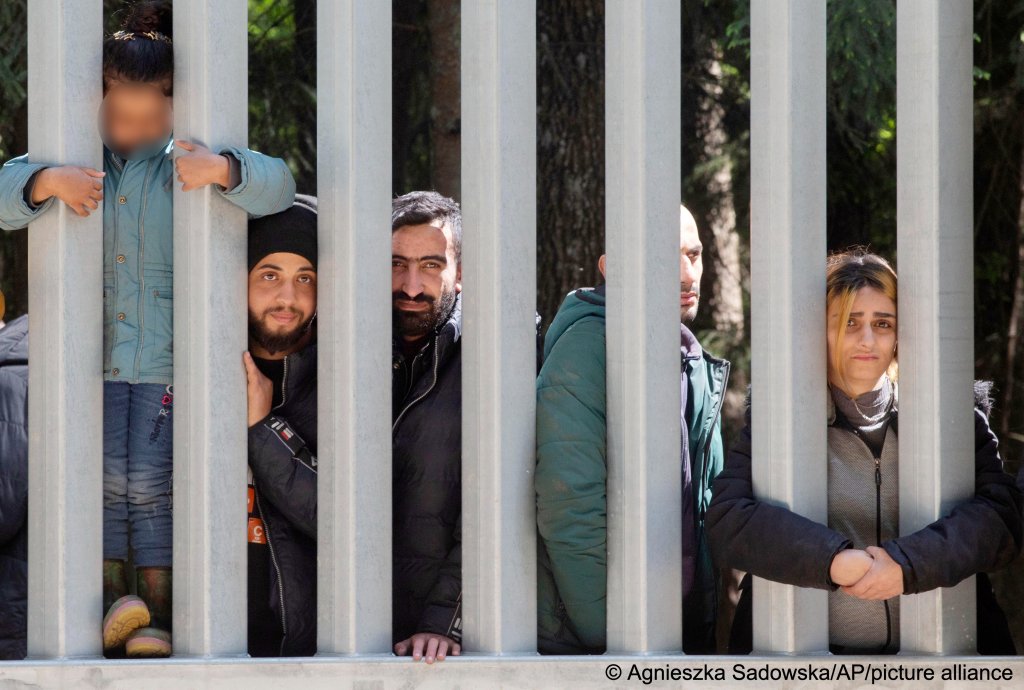
Warsaw says it would also continue to fortify its border with Belarus, where a 5.5-meter-high fence has been built since 2022, now covering close to half of the entire border between the two nations.
According to Reuters, road traffic between Poland and Belarus has also been curbed since the diplomatic standoff gained momentum in February.
Sabre-rattling along the EU's eastern flank
Putin also said that any aggression against Belarus, whose ruler Alexander Lukashenko is a close ally of Russia, would be considered an attack on Russia, according to Reuters.
Tensions further increased earlier this month when two Belarusian military helicopters reportedly entered Polish airspace.
Belarus denied any such border violations, while continuing its military exercises near the border as recently as this week.
High level of irregular border crossings
The Poland-Belarus border area is also a part of a highly active migration route -- despite a fortified fence, border closures and other measures being taken to curb any increase in migrant numbers.
Since the beginning of the year, authorities registered more than 19,000 irregular attempts to cross into Poland from Belarus, according to the head of Poland's Border Guard.
Last year, Polish authorities registered 16,000 arrivals.
'Hybrid warfare'
Poland's Deputy Prime Minister Jaroslaw Kaczynski and other Polish politicians have accused Lukashenko and Putin for being directly responsible for the rise in ongoing irregular border crossings along the 400-kilometer-long Polish-Belarusian border.
A number of EU leaders have also echoed similar sentiments, saying that the two strongmen are facilitating these border breaches in a bid to destabilize the EU's eastern flank. Some leaders, including the President of the European Commission Ursula von der Leyen, have referred to these alleged tactics as a form of "hybrid warfare."
According to recent investigations, including one by the Balkan news platform Balkan Insight, the two governments are accused of flying in people from the Middle East and Africa, attempting to push them across the border.
Balkan Insight found in particular that most migrants along the border fly into Russia first before starting their journey toward the Belarusian capital Minsk, from where they generally tend to contact a second smuggler to get them across the border into Poland.
Belarus and Russia meanwhile have repeatedly denied these claims.
Humanitarian crisis
Since May 2021, thousands of migrants have been trying to reach Poland, Lithuania and Latvia via Belarus, sparking a humanitarian crisis among those who remained stranded along the EU external border, who -- sometimes for weeks -- would be exposed to freezing weather conditions.
Grupa Granica, an NGO network monitoring the situation of migrants at the Polish-Belarusian border, says that at least 37 migrants have died in the border region since August 2021.
In April this year, Doctors Without Borders (MSF) said at least 16 people were seriously hurt after attempting to cross the barbed-wire border fence.
Read more: Poland says Belarus, Russia behind new migrants influx
With Reuters