
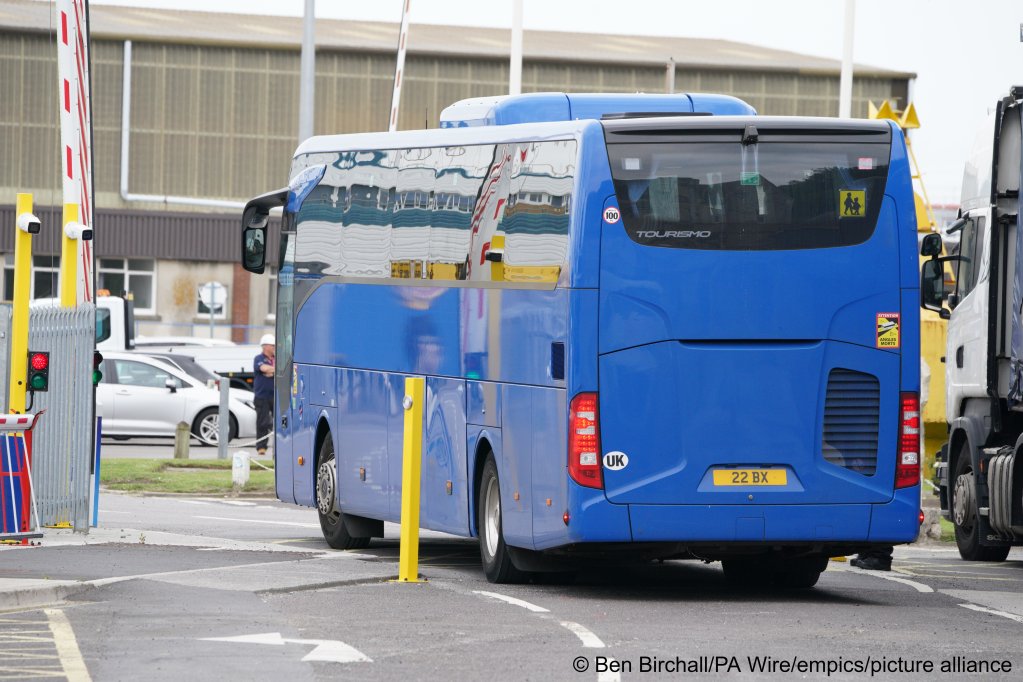
On Monday, 15 asylum seekers were transferred on to the Bibby Stockholm barge, moored in Portland Harbor in Dorset, England. The barge ultimately has capacity to house 500.
On Monday (August 7), a small group of 15 asylum seekers were transferred on to the floating accommodation barge, the Bibby Stockholm, moored in Portland Harbor, Dorset. The barge has capacity for 500, and has been hailed as the start of the government's plan to reduce the need for hotel accommodation for migrants and asylum seekers in the UK.
The first transfers arrived a few days later than planned, after fire services complained last week that the barge had not been properly checked regarding safety standards, resulting in the ensuing delay.
Earlier in the year, when the news that the government would be deploying the barge to ease the reliance on expensive hotel accommodation broke, there were hopes that the transfers would start "at the beginning of the summer."
The barge is made up of three stories of bedrooms accommodating bunk beds, so ultimately residents will be expected to share two to a cabin. There is also a kitchen, dining area, common rooms with TVs and laundry facilities on board.
Legal challenges
Cheryl Avery, the director for asylum accommodation at the Home Office, told the Associated Press (AP) news agency that the 15 men had been transferred to the barge from other sites across the country.
At the end of July, it was reported that at least 40 people had received notices that they would be transferred to the barge.
However, the charity Care4Calais, told AP that lawyers had intervened to cancel about 20 transfers of asylum seekers. Steve Smith, Care4Calais's CEO, said: "Among our clients are people who are disabled, who have survived torture and modern slavery, and who have had traumatic experiences at sea."
Smith added that "to house any human being in a 'quasi floating prison' like the Bibby Stockholm is inhumane."
Avery meanwhile admitted to AP that there had been some "minor legal challenges," but didn't volunteer further details.
Also read: UK government to fine those employing unauthorized migrants
High costs of hotel accommodation
The British government has long claimed that hotel accommodation for asylum seekers and migrants who crossed the English Channel in small boats is too expensive, costing the taxpayer almost £6 million per day (about €6.9 million).
However, critics of the government point out that part of this high cost is due to the sheer numbers of migrants and asylum seekers awaiting decisions on their applications. They say if the government had worked to reduce the backlog of applicants more effectively, they would not have to provide so many people with accommodation.
There are around 130,000-140,000 people waiting for those decisions, often while being housed in hotel accommodation.
At current asylum decision rates, at least three quarters of them can expect a positive decision on their claim.
At the end of June, government figures showed that there was a record 50,546 people staying in so-called "contingency accommodation," namely hotels and reception centers.
Also read: UK 'Illegal Migration' bill to become law
Immigration expert: 'deterrents won't work'
Immigration lawyer Colin Yeo meanwhile told the BBC that providing cheaper accommodation options would not act as a deterrent to migrants in France, hoping to cross the Channel.
Yeo, who set up Free Movement -- a platform providing news and advice about immigration in the UK -- explained: "You have to think about what people have got to lose, and what they have got at the time they are making the decision to come to the UK.
"They already have nothing, they are living homeless with no running water, no roof over their heads in northern France. The idea that some sort of possible hypothetical ill-treatment or lack of access to something in the UK is going to put people off coming is a bit of a fantasy."

Alternatives to Rwanda plan
Meanwhile, the British government continues to explore other options to address the issue of migration.
On Monday, British newspapers including The Times, The Independent, and The Guardian reported that the UK could once again be considering the possibility of sending asylum seekers to Ascension Island -- a British overseas territory in the south Atlantic, situated around 4,000 miles (6,500 kilometers) away from the UK.
Home Office Minister Sarah Dines meanwhile told Times Radio that the government, which is waiting for the verdict on its appeal on the infamous Rwanda plan to be announced some time in autumn, was "pretty confident Rwanda is a lawful policy… but like any responsible government, we're looking at additional measures."
Those additional measures could include Ascension Island, reported The Independent, while the Times said the UK government was in negotiations with at least five other African countries to finalize similar deportation agreements to the one they have already concluded with Rwanda.
Also read: UK plan to stop small boats 'is working'
Afghan refugees face potential homelessness
Closer to home, the BBC reported that various other groups of asylum seekers were being moved out of hotels where they had been staying. One group of 30 refugees in Evesham were apparently given just 48 hours' notice for a relocation to a new place outside the town of Worcester.
One of the affected refugees told the BBC: "I don’t want to move from here. They are moving us to Worcester. I think it is far from the city, it's on the motorway and you have to walk 40 minutes to the city."
Most of the members of that group reportedly came from Afghanistan and Iran, and had been staying at the hotel in Evesham for between six and 18 months.
At the weekend, the BBC also reported that several Afghan families feared homelessness after being told to move out of their hotel accommodation elsewhere in the country.
This is because any person who has to leave hotel accommodation and cannot find private accommodation to rent is classed as homeless, and becomes the responsibility of the local councils.
A spokesperson for the Local Government Association, which represents councils in the UK, told the BBC that one in five Afghans leaving hotels were presenting as homeless to local authorities.
Also read: UK prepares to house migrants on surplus military sites
'If I had known ... I would not have come'
While some argue that actual homelessness is not a realistic prospect, there are numerous cases of Afghans in the UK who are failed by the system.
One Afghan man told the BBC that he was instructed to vacate the hotel where he, his wife and his one-year-old son have been staying for the last two years by August 25.
Although he said he had viewed dozens of flats, he had not been accepted by any landlord. Mahmood* said he believed that landlords thought the salary he earns working in a supermarket would not be enough to cover the rent.
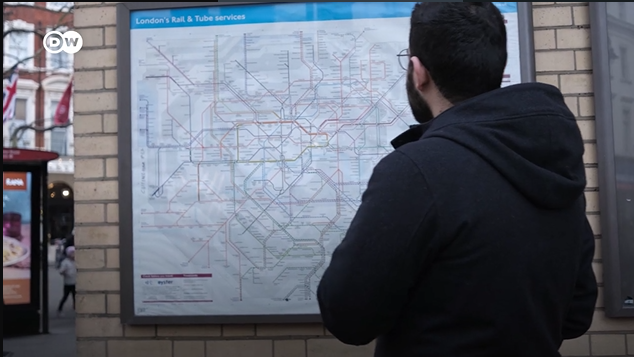
"The council hasn’t helped me much. They haven't found anything to offer me," Mahmood said.
"If I had known this in Afghanistan, that I would be in a hotel room for two years, I would have not come here to England. I would have been happy to stay in my own country, regardless of what could have happened to me," Mahmood told the BBC while also expressing gratitude for the help he so far had received from Britain.
The UK government has pledged £285 million (€330 million) in funds to help Afghan refugees find private accommodation, but local councils have said the funding is not enough -- particularly in some of the more expensive rental areas like in the south of the UK.
Also read: UK government proposes moving Afghan refugees out of hotels
*Not his real name, changed by the BBC to protect his identity
With AP, Reuters, AFP, dpa