
Sweden is temporarily ramping up security measures following a series of protests in which the Quran, the Islamic holy book, was burned, torn, and stamped upon. The protests were held by two men from Iraq, one of whom currently holds refugee status in Sweden.
Since June, two Iraqi men have been holding protests in Sweden and Denmark, during which they burned, tore, and stamped upon the Islamic holy book, the Quran. One of the men, 37-year-old Salwan Momika, holds refugee status in Sweden with a temporary residence permit, while the other, 48-year-old Salwan Najem, has been a Swedish citizen since 2005, the Swedish Migration Agency told InfoMigrants. The agency added that "regarding Salwan Momika, since July 11, a case was opened to investigate his status in the country."
The investigation was "due to new information that had reached the Swedish Migration Agency about his case." While no details were provided, the agency did however say that it is "not related to the recent public events."
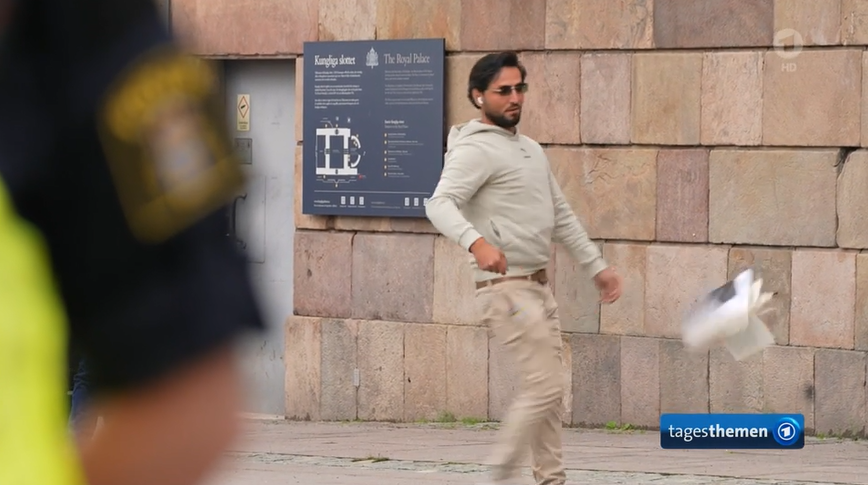
According to a report on German state television ARD on July 31, the two men claim to be Iraqi Christians who were mistreated in their home country because of their religion. They say they were hunted by forces close to Islamic State (IS) in Iraq. When Salwan Momika spoke with ARD reporters at the end of July he claimed that Muslims were coming to Europe with one aim only, to "take over the European continent."
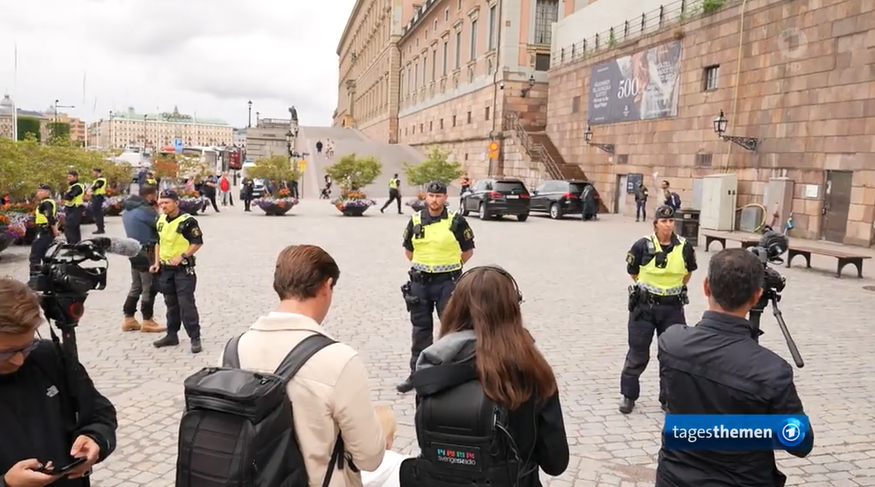
Both Sweden and Denmark have a long tradition of defending free-speech and have so far allowed some of the protests to go ahead, providing a police cordon for the two men. However, that might be about to change, considering the repercussions involved with the mens' protests.
Who is Salwan Momika?
According to the ARD reporter, ahead of the interview Momika seemed happy to "spread misinformation, right-wing propaganda and relativize crimes committed by the Nazi party [before and during the Second World War.]"
In a report about Momika on Germany's international broadcaster Deutsche Welle (DW), Momika described himself on Facebook as a "thinker and writer" and an "atheist." He said that his protests were about "expressing his feelings towards religion."
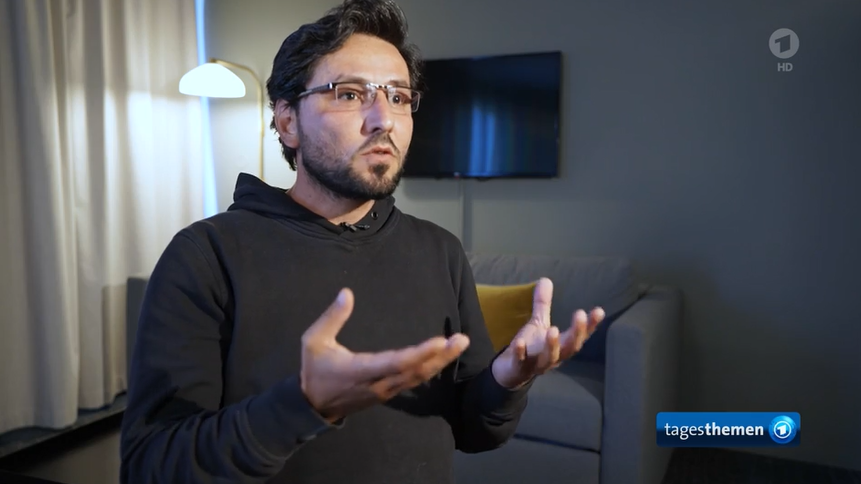
In the Swedish newspaper Aftonbladet, Momika stated his intention to join the right-wing populist party the Sweden Democrats (SD), but the party has not confirmed his membership.
"I belong to the party and became a member a year ago. I am proud of the party, which is the only one that defends Sweden and Swedish values," he reportedly told Aftonbladet. Contacted by InfoMigrants for confirmation or denial, SD replied they "do not comment on individual memberships."
"I will continue to burn the Quran until Sweden understands that it encourages violence," Momika told the Swedish right-leaning newspaper Dagens Nyheter (DN). The paper noted that Momika was already "militarily and politically active in Iraq before coming to Sweden."
Also read: 'Sweden as we know it is dying'
Fighting for militias?
In 2014, according to DN's sources, Momika joined an Iranian-backed umbrella organization known as the People’s Mobilization Forces (PMF), in order to combat IS. Momika reportedly joined the group via a Christian faction known as the "Syrian Hawks." An unnamed Iraqi expert told DN that Momika described himself as a "spokesperson for Christians in northern Iraq."
DW reported a similar version of events, adding that investigative work from France's International Broadcaster France 24 had found video evidence of Momika in various militias as early as 2014, most of them fighting against IS. Some of the group were Iranian-backed and Muslim and others were Christian or Kurdish-backed and atheistic or even Communist, reported the two broadcasters. According to DW, citing Iraqi journalistic sources, he was forced to leave Iraq in 2018 after a power struggle with the leader of a rival Christian militia.
Backlashes against Sweden
Momika's and Najem's actions have caused anger in the Islamic world and also shocked many in Europe too, even defenders of free speech, who feel that burning books, reminiscent of oppression during the Nazi and Fascist eras in Europe, and particularly attacking a holy book -- symbol of a religion and people’s faith -- is a step too far.
The protests have led to backlashes against Sweden across the world, with crowds in Iraq storming and setting fire to the Swedish embassy and ambassadors being asked to leave. Iran has suspended the appointment of a new Swedish ambassador until the situation is resolved. Moreover, the protests are also affecting whether or not they are approved to join NATO, a decision they applied for following the Russian invasion of Ukraine after years of being non-militarily aligned.
'Swedish interests are being threatened'
Swedish Prime Minister Ulf Kristersson told DN at the end of July that "We are in the most serious security policy situation since the Second World War." At a press conference on August 1 he also said that "Everything that is legal is not appropriate. It can be lawful but still awful." He went on to say that "I think it’s a serious situation where national Swedish interests are being threatened."
He announced that the country was going to step up border controls and identity checks at crossing points as the security situation in Sweden deteriorated. The measures were expected to be approved by the Swedish government by Thursday (August 3).
Also read: Sweden, no migration pact completed during our EU presidency
Denmark condemns burning of Quran
Earlier in July, the Danish government had already clearly condemned the burning of the Quran and called it a "shameful act that disrespects the religion of others."
In a statement dated July 22, the Danish foreign ministry on its website called the protests "a provacative act that hurts many people and creates division between different religions and cultures." The statement added that "many Danish citizens are Muslims. They are a valued part of the Danish population." While Denmark "underlines that freedom of expresion and freedom of assembly must be respected. Denmark supports the right to protest but emphasizes it must remain peaceful," the statement reads.
However, by August 1, the Danish government noted that the protests had "reached a level where Denmark, in many parts of the world across continents, is being viewed as a country that facilitates insult and denigration of the cultures, religions and traditions of other countries."
Also read: Austria, Sweden and Denmark push EU to get tougher on migration
Looking for legal ways to put an end to protests
Neither Sweden nor Denmark currently have a law that prohibits the burning or descretation of the Quran or other religious texts. Denmark, however, is considering implementing one.
Denmark was "exploring legal means of stopping protests involving the burning of holy texts in certain circumstances," reported AFP on July 31. The Danish government cited "security concerns," as its reason for doing so.
A statement from Denmark’s Foreign Ministry confirmed that any banning would be done "within the framework of the constitutionally protected freedom of expression and in a manner that does not change the fact that freedom of expression in Denmark has a very broad scope."
On Instagram, Kristerssen added that his country had also begun to analyse the legal situation. Kristerssen notes though that Sweden has become a target of disinformation campaigns in recent months, of which this could also be a part.
On July 26, the Guardian and various news agencies reported that Sweden blamed "Russia-backed actors" for attempting to damage its image with regard to its NATO candidacy by implying it had supported the recent Quran burnings.
Also read: Could Sweden's tough migration stance spill over into the EU?
Kristerssen: Sweden subject to disinformation campaigns
On Instagram, Kristerssen issued a statement, which in translation reads: "Sweden is currently exposed to influence campaigns supported by states and state-like actors, the very purpose of which is to damage Sweden and Swedish interests." In the statement he added that sometimes the protests had been "falsely retold" and were "sometimes accompanied by direct calls to harm" Sweden.
Kristerssen said he and his government was "working hard to correct this incorrect image that is being spread of Sweden" and were closely monitoring the situation. He said he was working with the Civil Defense and the Justice Minister as well as the head of Swedish Security SAPO to guard against any possible terrorist attacks as a result of the protests and their repercussions. Protecting Swedish citizens was their highest priorty, added Kristerssen on Instagram.
"Terrorism is a serious threat to our free and open society. The fight against terrorism is a fight for freedom and democracy," stated Kristerssen.
Protests have 'crossed the line' says Islamic theology professor
On August 2, Bülent Uçar, an expert on Islam and Professor of Islamic Theology at the University of Osnabrück in Germany, expressed his opinion to the German magazine Migazin, which focuses on integration and migration in Germany, that burning a holy book could not be covered by claims of freedom of speech. Instead, Uçar considered it a clear attack on a religion and should be defined as hate-speech.
Uçar explained that while criticizing religion and religious theory, even in harsh tones, is fine, the kind of "theatrical demonstrations [carried out by these men] have much less to do with freedom of speech and much more to do with denying the right of Muslims to exist as their target."
Uçar said he would argue exactly the same if someone in a Muslim country were to burn the Bible. "These kinds of actions go beyond the line of good taste. They are about attacking society as a whole and they should really be monitored carefully." Uçar pointed out that if someone were to burn the Jewish Torah in Germany they would be immediately accused of anti-Semitism and would be tried in a court of law.
The theologian appealed for Muslims to refuse to be provoked by the mens' protests, saying that was exactly their aim -- to show Muslims as violent people who couldn’t be criticized. "Muslims shouldn’t reward these protests with their attention," said Uçar.
With AP, epd, AFP
Also read: Sweden, young Afghans in a race against time