
The deportation of an Iraqi couple evicted from church asylum in Germany has been called off. But rights groups remain concerned by the actions of local immigration authorities.
It had seemed that Nahida and Dilshad had lost the battle. On Monday, July 24, an urgent appeal to prevent their deportation from Germany to Poland failed, and it was expected that the Kurdish couple would be removed the next day.
But late Monday afternoon the reprieve came, as authorities in the town of Viersen in Germany's west announced that there were "ambiguities" in the assessment of the couple's case.
The deportation was called off, for good: following Monday's decision, the couple's asylum claims will now be processed in Germany.
Sleepless nights in fear
For the past fortnight, the Kurdish pair had been held in detention in the city of Darmstadt in constant fear of being returned to neighboring Poland under the EU's so-called Dublin Regulation.
In the months before that, they had been living under the roof of the protestant church, seeking church asylum.

Prior to Monday's decision to cancel the deportation, Pastor Elke Langer, whose parish had granted the couple sanctuary, said that Nahida had been suffering physically under the strain of not knowing what was to happen:
"[Nahida] is so frightened (…) that she can only sleep if she takes medication," Langer said prior to the deportation stop, adding that the Kurdish woman's long-term need for mental health treatment had been ignored.
Read more: Germany requests the return of 1,878 migrants to Poland
'Worse than prison'
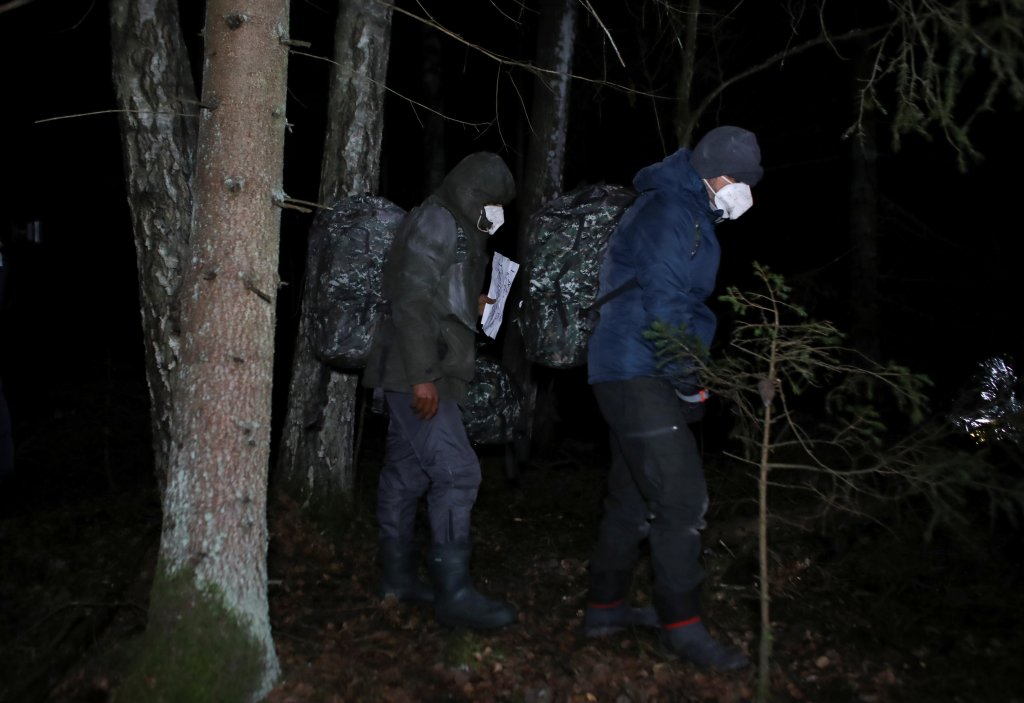
In 2021, Nahida and Dilshad -- like thousands of other Iraqis -- traveled to Belarus and from there crossed into Poland to seek asylum. This came after Belarusian President Aleksandr Lukashenko announced that he would no longer help prevent irregular migration at the EU border.
Once in Poland, however, instead of receiving protection the couple was arbitrarily detained in a closed facility, where they were surrounded by barbed wire and subjected to abuse.
Human rights groups have backed up Nahida and Dilshad's depiction of circumstances at the facility, based on reports showing that Polish authorities systematically pushed back, detained and violently mistreated large numbers of asylum seekers attempting to cross the border from Belarus.
Wiebke Judith, legal policy spokesperson for the human rights organization Pro Asyl, said migrants in Poland were systematically detained in "camps that are worse than prisons" just because they had applied for asylum.
Furthermore, human rights activists point out that Poland's treatment of asylum seekers is in repeated violation of European and international law.
Severely traumatized, Dilshad and Nahida eventually managed to reach Germany; however, authorities there said they could not claim asylum and that they would have to return to Poland in accordance with Dublin rules, which are used to determine which EU country is responsible to handle an asylum seeker's claim.
Denied the right to stay in Germany and threatened with forced removal, their last hope was to seek sanctuary under church asylum – a partially codified tradition in Germany that allows churches to offer temporary protection to migrants facing deportation while their asylum case is reconsidered.
Currently there are around 425 people in church asylum in Germany nationwide.
Also read: More church asylum cases in Berlin
Forcibly evicted
Two months later, however, German immigration authorities arrived at the church with a search warrant and forcibly took them into custody -- a highly unusual practice in the context and history of church asylum in Germany.
The incident prompted outrage from church representatives and refugee groups. "Forced entry into the sanctuary of the church and violence against the people seeking protection there blatantly contradicts an agreement between the churches and the state," said Dietlind Jochims, chair of the Federal Working Group on Asylum in the Church.
Tom Brandt, from the ecumenical network Church Asylum in NRW said they were "stunned" that the deportation was going ahead and called on immigration authorities to "go back behind the red line of church asylum and immediately halt the deportation of the couple."
Furthermore, authorities reportedly handled the eviction so roughly that Nahida received bruises during the incident. Elke Langer told the German daily newspaper taz that she had called an ambulance, which, however, was prevented from attending the scene.
Read more: Germany: Government opposes easing of church asylum rules