
More than 200 asylum seekers were recently released from the Ain Zara detention center in Libya, where they were arbitrarily detained in 2021 after taking part in a sit-in outside United Nations headquarters. But where will they go now?
A group of 220 male asylum seekers, including 218 from Sudan and two from Ethiopia, were released from the Libyan government-run Ain Zara detention center around July 11.
They had been arbitrarily detained for 18 months following their involvement in a sit-in outside the UN Refugee Agency UNHCR headquarters in Tripoli, where they demanded relocation assistance after having applied for asylum with the agency.
The group of migrants, ranging in age from 18 to 42, were released after a long and complicated lobbying process conducted by the organization Refugees in Libya, according to the group's spokesperson David Yambio, a Sudanese refugee.
Also read: UN crimes against humanity committed in Libya
Yambio, who himself spent time in Libya advocating for the rights of others like him before reaching Europe last year, told InfoMigrants by phone that he and others have been pushing the UNHCR to "take responsibility" for the migrants since their release from the center.
He said that after lobbying hard, the UNHCR provided buses to transport the migrants away from the Ain Zara detention center and is currently helping them look for housing.
'Not enough to rent a house'
The UNHCR acknowledged the transfer in a newsletter published July 18 on the Facebook page UNHCR Libya Information Portal: "Between July 11-13, UNHCR helped with the transfer of 220 individuals from Ain Zara detention center to the urban setting," the agency wrote.
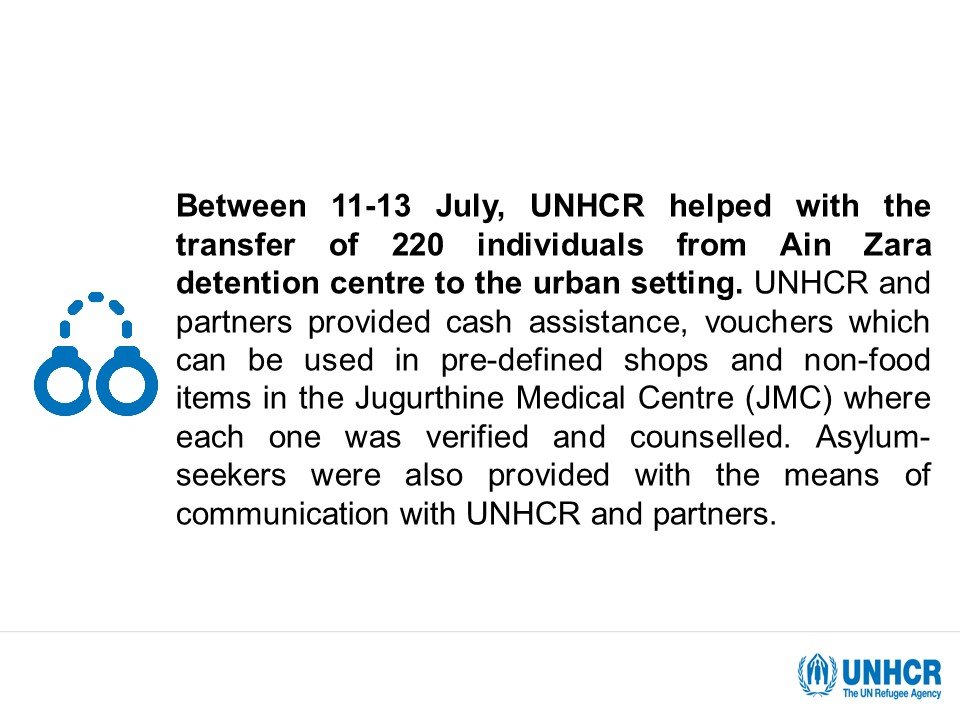
The statement said the UNHCR and partners had provided cash and other forms of assistance to the migrants.
Also read: Mazen, the ordeal of an abducted refugee teen in Libya
The UNHCR hasn't responded to InfoMigrants' requests for comment.
Yambio, however, told InfoMigrants that the money provided was "not enough to rent a house in Tripoli."
He acknowledged that the UNHCR set up appointments with the members of the group so they could tell their stories in an effort to help identify the most vulnerable among them, but this is "not what they want."
'Years have been stolen from their lives'
"Years have been stolen from their lives," explained Yambio. Even if they are given help to find a place to rent in Libya, the reality is that they will not have "access to jobs, to schools, to public services, or social security," he said.
The group ultimately wants to be relocated, he added.
"The majority of the group demand to be evacuated," he said. "UNHCR has a mechanism that brings people to safety and it should do that."
Because the majority of them come from Sudan, where conflict broke out in April this year, Yambio said they cannot return and want to be relocated to a safe third country.
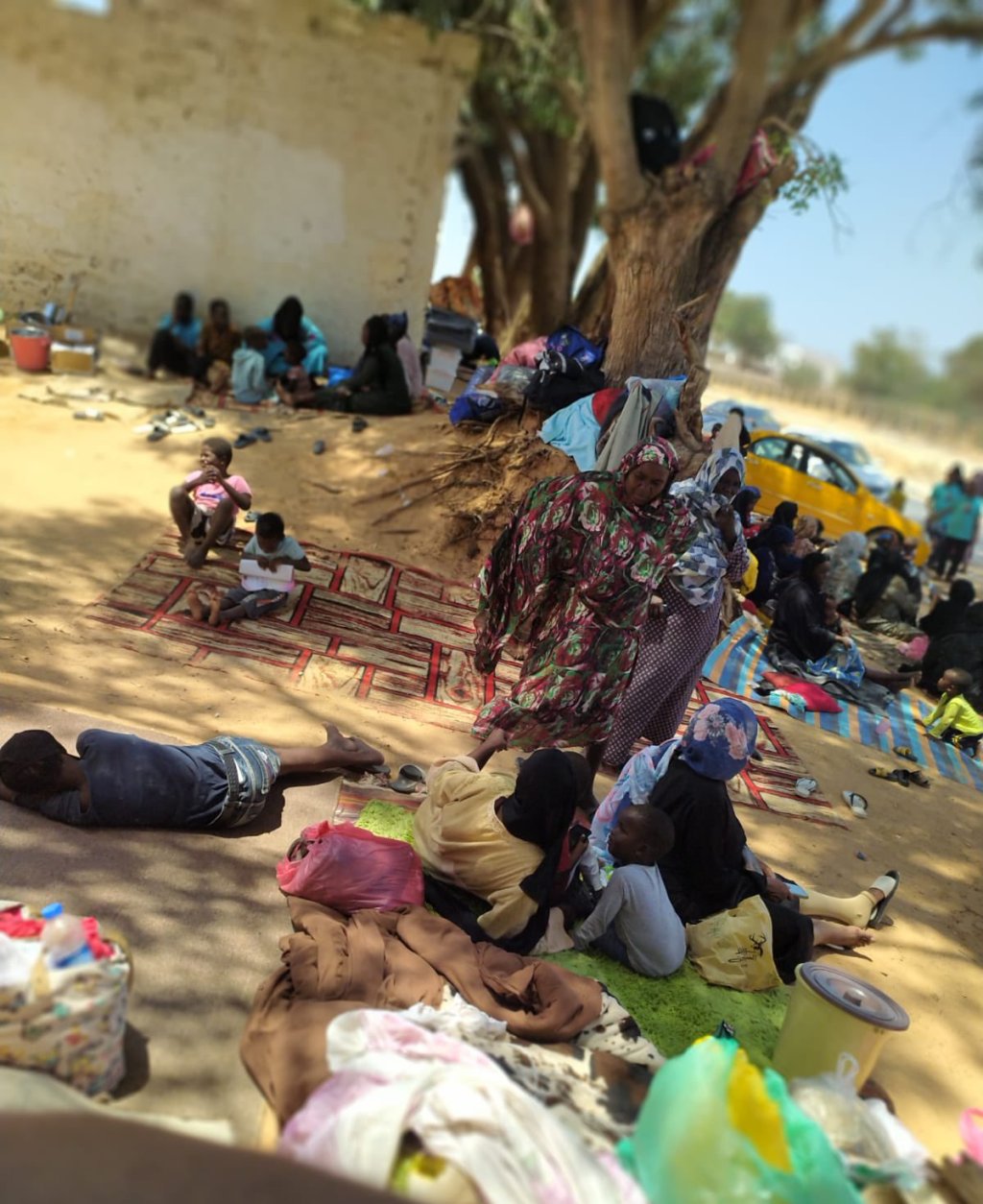
"They were forced to flee their country," Yambio said. "Now where do they go? They came from Sudan because of the situation long before the conflict that broke out on April 15. Thousands of Sudanese have fled, you see them in Chad, in Ethiopia, in Egypt and South Sudan. They don’t have anywhere to go and they need a safe space. The UNHCR has an existing mechanism for this, they need a safe space where they can have the chance to start living a new life."
Process for relocation is lengthy
However, the Italian NGO Baobab Experience, which works with migrants in Rome, cautions that the process for relocation is a lengthy one, and even slower for those perceived as being the least vulnerable, namely young men, even when they have legitimate claims to asylum and refugee status.
Also read: 'I can't imagine the future,' exhausted after nine months of detention in Libya
Alice Basiglini, a spokesperson for the organization, told InfoMigrants that if relocation happened at all, it would most likely be to another African country, like Chad, Niger or Rwanda, rather than to Europe.
Yambio told InfoMigrants that because the members of the group have certificates proving they are asylum seekers, even under Libyan law they should never have been detained in the first place and can also not be sent home, not that they are asking for that.
However, the reality on the ground sometimes bears little relation to stated laws and international treaties.
UNHCR accused of 'abandoning' asylum seekers who advocated for rights
Yambio believes the group was detained because they protested.
He accuses the UNHCR of "abandoning" the migrants during and after the sit-in.
"Does it mean that the UNHCR coordinated their detention ... so that no one will ever dare to imagine coming to protest for their rights to be respected and protected even by the international humanitarian agencies who are supposed to advocate for them?" he told InfoMigrants.
Yambio says over four dozen people have been holding a sit-in outside the UNHCR for the past few weeks.
The majority of those waiting for help are families who have escaped Sudan, says Yambio. He accuses the UNHCR of abandoning these people too.
Also read: More than 12,000 migrants held in Libya
Basiglini worries that during the waiting time, many of these people will feel forced to seek help to attempt the dangerous Mediterranean route over the sea to Europe, rather than take their chances with relocation or risk being locked up again in Libya, or fall prey to one of the numerous militia groups operating in the country.
In fact, the 220 migrants were just some of thousands who had protested during a sit-in outside the UNHCR headquarters in 2021. A few of them were subject to airlifts at the time, explained Basiglini, who said Baobab Experience had been in contact with two people who managed to get out and to Italy via that route.
Still many were detained or forced to attempt the dangerous Mediterranean crossing.
Forced labor
"There were hundreds of women and children detained at that time too," said Basiglini.
However, she said she thinks that since facilities like Ain Zara are run by the Libyan authorities, even they would have found it hard to arbitrarily detain children for that long, so many of them were released gradually in the intervening months.
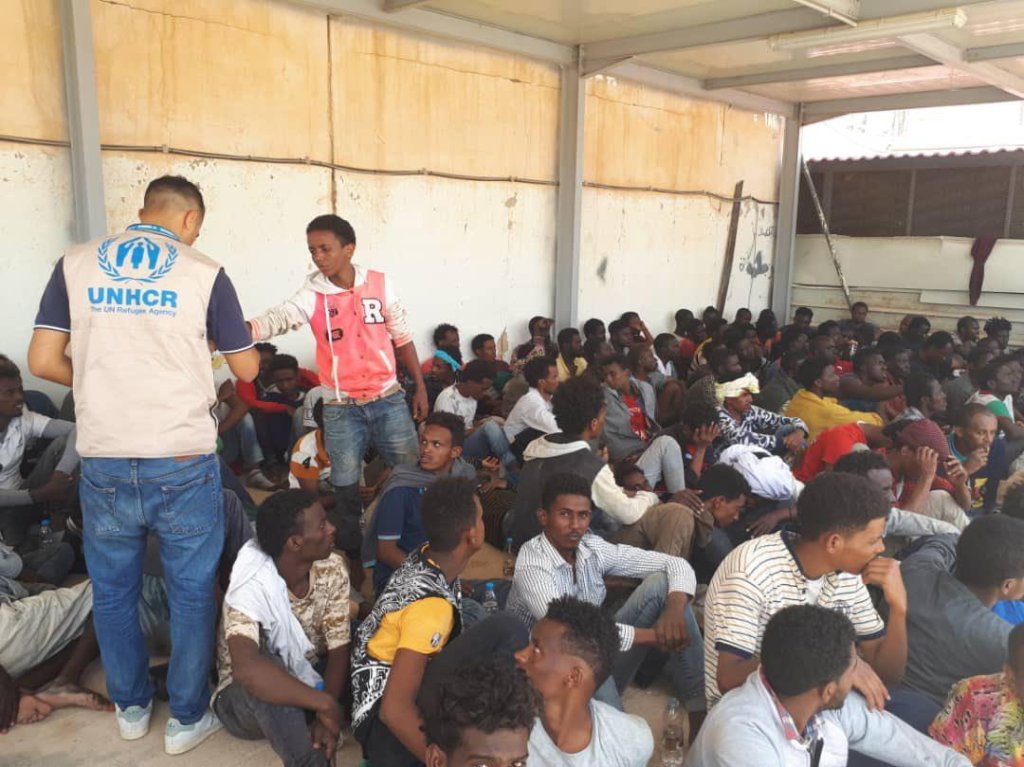
During their detention, Yambio explained, the group of 220 were forced to work, helping to construct public buildings for the Libyans.
They were held in a separate part of the detention center from those intercepted at sea or judged to have committed a crime in Libya. Still, Yambio said, their detention was "completely arbitrary. They were never charged, never told what they had done to have their liberty removed."
Also read: Hundreds of asylum seekers detained in Libyan prison
When asked whether they suffered violence or torture at the hands of the Libyan authorities, a commonly reported practice in many detention centers, Yambio said: "I think when we talk about torture and physical violence, we don’t always think about psychological torture. If you force me to work, from morning until evening, without even giving me water, and I am working against my will, that is physical torture too, because I am using my bodily strength to work. When we talk about psychological torture, that is when you are locked up, you don’t know what you have done, there is no judicial process, you can’t sleep when you want to sleep, you can’t eat when you want to eat, so all these are forms of torture that have been inflicted on them."
'Complicit silence'
Baobab Experience criticizes what it calls a "complicit silence" in Italy that keeps issues like this one out of the press. Yambio also said he has fought hard to get journalists and civil society to shed light on what is going on and to help put pressure on UNHCR and embassies.
"These people need support, they need medical assistance, they need a protection assessment that the UNHCR should undertake," said Yambio. "These people have lost everything."
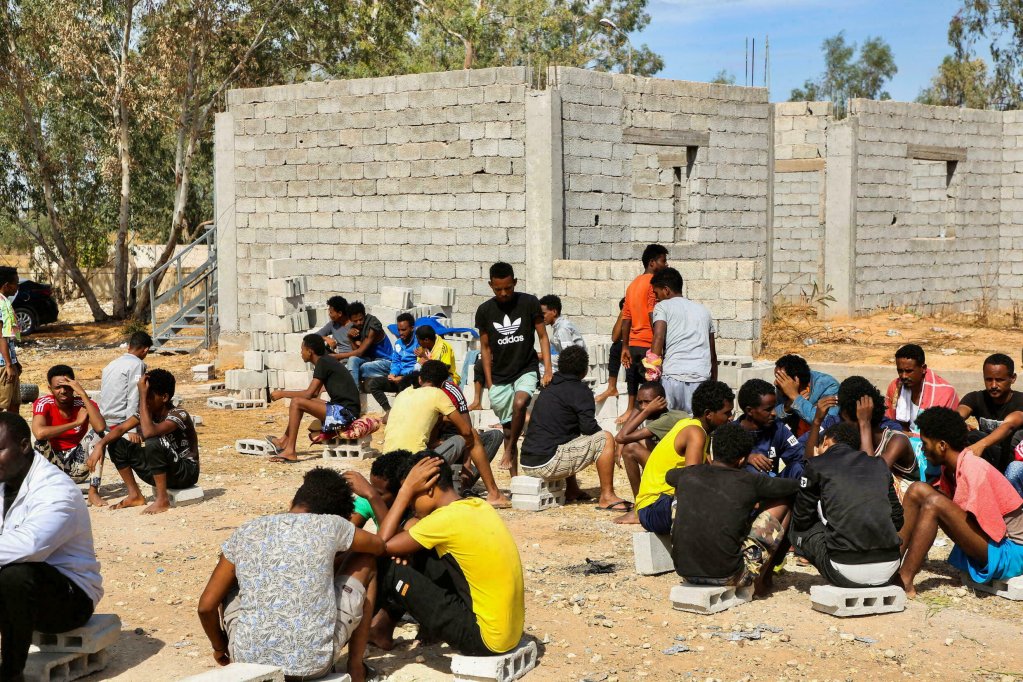
Some of the group have already survived bombings and multiple detentions in Libya. "Some of them have been in Libya since 2017 as asylum seekers, but very few of them have got recognized as refugees," said Yambio.
Also read: Libya: Migrant sit-in in Tripoli, 'we have to evacuate them'
Yambio knows only too well the lengthy process many have to go through to get full recognition. He said he arrived in Libya in 2019 and was still classed as an asylum seeker in June 2022, when he eventually managed to make his way across the Mediterranean.
"It’s really a long process," he said.
Basiglini fears that the process will be even longer for the group and many others still in Libya.
"The luckiest might get offered a flight to other African countries, but no one knows how many people will be offered a flight out and how long that might take. It is a very worrying situation and their story needs telling so more people know what is going on in Libya for people like these," she said.