
The curtailing of legal migration pathways to Europe can play a role in human trafficking operations in countries far away from the bloc. InfoMigrants talked to several experts to examine the cross-country impact of stricter EU border policy.
Europe has long ranked as one of the top destinations for economic migrants from Africa looking for jobs and new beginnings.
But as EU countries continue tightening their borders, Africans are increasingly looking to the United Arab Emirates (UAE) and other Gulf nations for livelihood opportunities that remain out of reach in their own country.
This is one of the findings of a collaborative investigation led by the International Consortium of Investigative Journalists (ICIJ) together with other media partners and published in Reuters last month (12 June).
Interviews with 25 African women, mostly from Nigeria, detailed how suspected traffickers lured them to the UAE with promises of employment only to force them into debt and subject them to threats, violence and sexual servitude.
InfoMigrants talked with several experts to examine the cross-country impact of the narrowing of legal migration pathways.
Systematic recruitment but weak labor protections
Rothna Begum, a senior women’s rights researcher for the Middle East and North Africa region at Human Rights Watch (HRW), said she first noticed the aggressive recruitment of African women as domestic workers in the Middle East in 2013 while conducting a research visit to the UAE.
“I was struck by the number of advertisements by recruitment agencies looking for African women for domestic work. This was unusual because domestic workers usually came from Asian countries, but African countries had increasingly become a point for recruitment agencies to recruit domestic workers,” Begum told InfoMigrants in an interview.
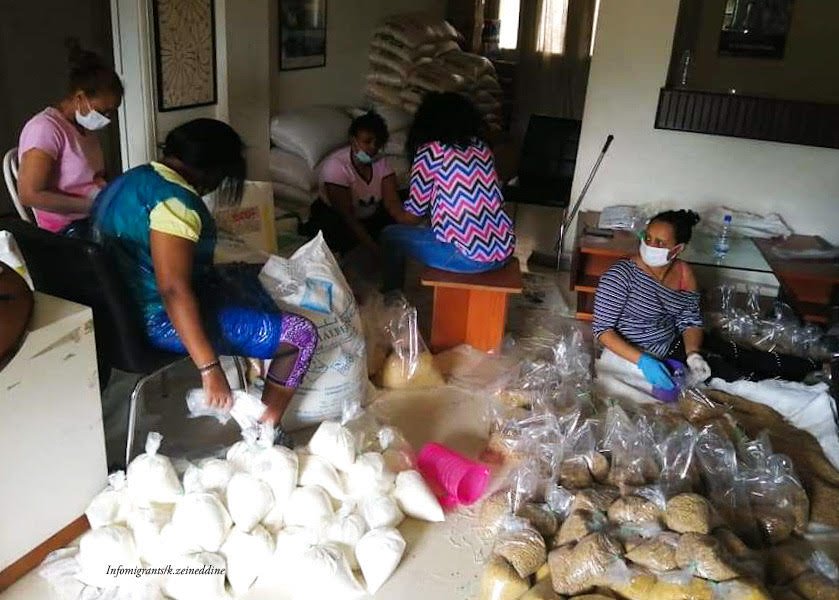
Gulf countries are highly dependent on migrant labor -- according to the International Labor Organization (ILO), 12 Arab States, including the UAE, have the highest global share of migrant workers as a proportion of the total workforce in the world.
Nearly half of all workers in these countries are migrant workers, usually employed in construction, hospitality and domestic work. Most female labor migrants are employed in the domestic work sector.
Estimates on the number of domestic workers in the Middle East are scarce, but numbers published by Statista in 2020 show that the number of foreign domestic workers in the UAE -- namely Dubai and Abu Dhabi -- hovered around 306,000 in 2016, almost double the 2008 estimate of 156,000.
Meanwhile, data from the 2020 edition of the International Migrant Stock database of the Population Division of the United Nations Department of Economic and Social Affairs (UNDESA) show there were an estimated 9.8 million female migrants from sub-Saharan Africa in 2015. In 2020, the number jumped to approximately 10.5 million.
The UNDESA data estimates the number of international migrants based on national statistics, usually obtained from population censuses.
Exploitation under the kafala system
According to Begum, a situation in which countries of destination need migrant workers and countries of origin have people looking for alternative sources of livelihood would be an “ideal marriage”. However, employee and employer relations in the Gulf States are governed by the kafala, or sponsorship, system, which grants employers overarching control over migrant workers’ legal status.
The kafala system, which governs the legal residency of an estimated 6.6 million migrant domestic workers, “put(s) domestic workers at the mercy of their sponsors", according to the International Domestic Workers Federation (IDWF), a global organization of domestic and household workers.
“Sponsors often withhold their identity documents, have control over all aspects of their lives, and subject them to both exploitation and violation of their human rights. If the employment relationship ends, even in cases of abuse, workers risk losing their residency status and consequently detention and deportation,” IDWF media officer Fernanda Valienti told InfoMigrants.
Media and human rights groups have continuously exposed the exploitation of domestic workers from Asia – the usual countries of origin of domestic workers -- enabled by the kafala system.
This engagement has pushed countries of origin to implement labor protections such as minimum wage requirements, contract monitoring, awareness campaigns to counter illegal recruitment and trafficking and the establishment of welfare offices in receiving countries in the Gulf.
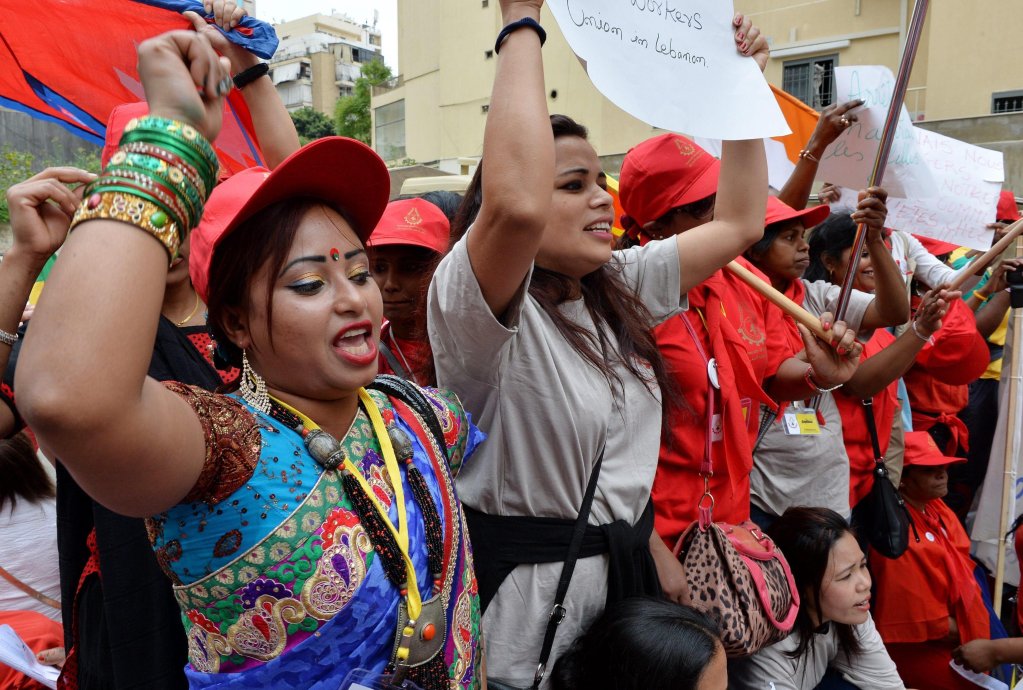
HRW researcher Begum said these moves to regulate domestic work, which still leave workers in extremely vulnerable positions, have had an adverse ripple effect. For one, she said, they have diverted labor recruitment to Africa, where domestic worker protections have yet to catch up. And they've inadvertently created conditions that aid trafficking through the use of fraud and misrepresentation.
"Most women who travel to the Gulf States are ‘hunted’ by employment agencies that offer them specific job proposals, often fraudulent. They are misinformed, misled, and trafficked,” said IDWF’s Valenti.
What does this have to do with Europe?
A 2019 HRW report documenting the trafficking of Nigerian women and girls to other African countries and the EU found that Nigerian authorities often failed to prevent traffickers, prosecute offenders or assist survivors.
A Trafficking in Persons (TIP) report published by the US Department of State lists Nigeria as a Tier 2 country, meaning “the government of Nigeria does not fully meet the minimum standards for the elimination of trafficking but is making significant efforts to do so.”
The latest TIP Report, published in 2022, identified Nigerian trafficking victims in Africa, Europe and the Middle East.

|Photo: ANSA/Polizia di Stato
According to the National Agency for the Prohibition of Trafficking in Persons (NAPTIP) in Nigeria, the tighter border restrictions increasingly being integrated into European migration policy disrupt human trafficking networks and the direction of migration paths for both migrants and smugglers.
“Swift deportation of refugees and asylum seekers may push migrants towards riskier migration methods. Meanwhile, traffickers and smugglers may explore alternative routes to evade heightened security and exploit vulnerable individuals,” a NAPTIP spokesperson told InfoMigrants.
“The Middle East now serves as an alternative route and destination to Europe. The demand for labor is becoming increasingly high in the areas of domestic work and construction,” the spokesperson added.
NAPTIP reported that last May a law enforcement officer charged with human trafficking was convicted to five years in prison.
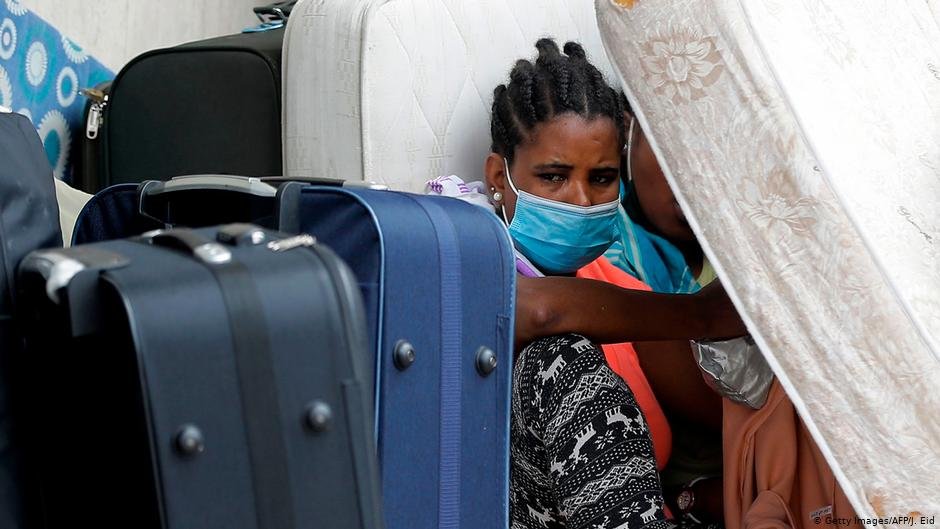
Julia Black, a project coordinator for the International Organization for Migration (IOM) Missing Migrants Project, told InfoMigrants that current data and ongoing research across the Americas and Europe indicate that restriction of legal migration routes leads to more risky, irregular migratory movements.
"Tightening borders or placing travel bans has never prevented workers from entering the country they have set their minds to enter. Instead, it has deepened the workers' precarity and increased the probability of their trafficking," Roula Seghaier, a strategic coordinator for the IDWF who has worked with domestic workers who are survivors of trafficking, told InfoMigrants.
“Tightening borders in Europe strengthens trafficking networks in Europe. At the same time, Gulf states remain a popular destination for workers because they are high-income countries. These processes continue to exist together and in parallel,” Seghaier added.
As long as an escape is possible
Nkiruka, 35, has worked with people who have returned to Nigeria after being trafficked and sexually abused. She said economic problems are putting a lot of pressure on Nigerians, especially young people.
Despite being Africa’s largest economy, Nigeria has been rattled by rising inflation, which the Nigerian Central Bank pegs at about 25%.
Monetary vanguards like the European Central Bank and the US Federal Reserve set acceptable inflation rates at about 2%.
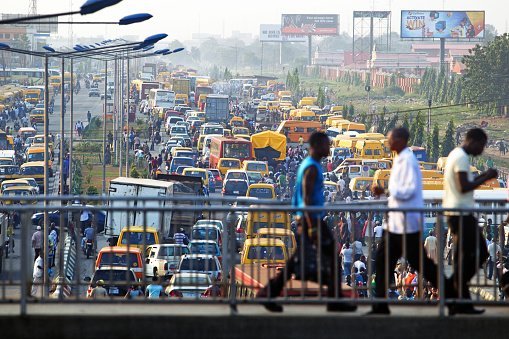
The World Bank estimates that the number of Nigerians living below the national poverty line will rise by 13 million between 2019 and 2025.
Nkiruka told InfoMigrants that she feels the pinch most in the rising cost of basic goods like food.
“Normally, the bread I would buy for ₦ 400 (€0.46) is now ₦ 660 to 700 ( €0.76 - 0.80). Tomatoes that used to be 6 pieces at ₦ 200 (€0.23) are now 4 pieces for ₦ 1,000 (€1.15),” said Nkiruka.
The average minimum monthly wage in Nigeria is ₦ 30,000 or €35.
“Trust me, the way that things are going, it really makes people want to escape. Even me sometimes,” said Nkiruka. “When people are desperate, I don’t think the choice of country matters. As long as you can get away.”