
Amid racial tensions sparked by the death of a 41-year-old Tunisian man, rights groups say the Tunisian government is carrying out a “purging” of the city of any person of sub-Saharan origin.
Rescue and aid efforts continue for hundreds of migrants abandoned in desert areas in Tunisia following what rights organizations have called a crackdown against sub-Saharan migrants by the Tunisian government.
Nearly 200 migrants were rescued from the desert on the Tunisia-Libya border after they were allegedly abandoned there by Tunisian security forces, the German press agency dpa reported yesterday (July 17).
Libyan border guards reportedly found the migrants in the desert where they were left without food, water or shelter. They were taken to the al-Assah border village.
In a video posted by the Libyan Ministry of Interior on their Facebook page, two men from Nigeria said they were beaten by Tunisian soldiers and taken to the desert. From there, they were told to cross into Libya.
One man who was interviewed claimed that he was beaten with iron bars. Another man said he had been in the desert for two days before being found.
Read more: Sub-Saharan migrants abandoned in the Tunisian desert: “We are going to die of thirst, help us”
Driven out of Tunisia
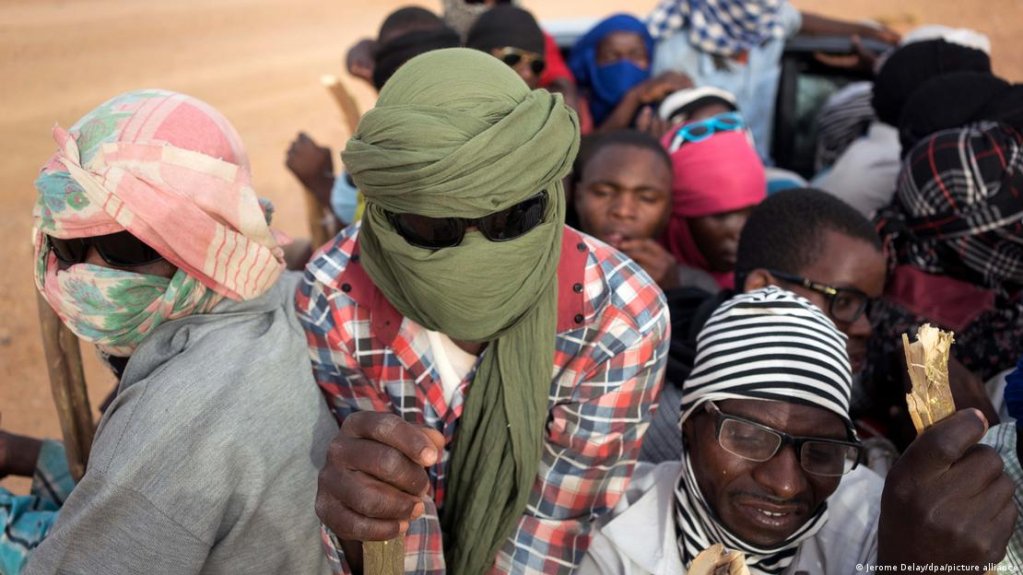
According to the British newspaper The Guardian, the Tunisian Forum for Economic and Social Rights (FTDES) reported on Friday (July 14) that about 165 people abandoned in Tunisia’s west near the Algerian border had been rescued. The FTDES statement did not specify who had carried out the rescue or where they were taken.
Several human rights organizations in Tunisia penned a statement accusing the Tunisian government of carrying out a wave of arrests followed by forced and illegal deportations. The human rights watchdogs condemned the crackdown, calling it a “purging” of the city of any person of sub-Saharan origin.
The statement, which was signed by more than 20 organizations, claimed that videos circulating on social media networks showed buses carrying migrants from the Tunisian port city of Sfax toward the Libyan border.
Sfax, located in the southern part of Tunisia, is a well-known hub and departure point for sub-Saharan migrants who want to enter Europe by crossing the Mediterranean Sea.
Sfax is also a hub for traffickers and human smugglers who organize boat journeys on often overcrowded rickety boats to the Italian island of Lampedusa, which is about 130 kilometers (around 80 miles) away.
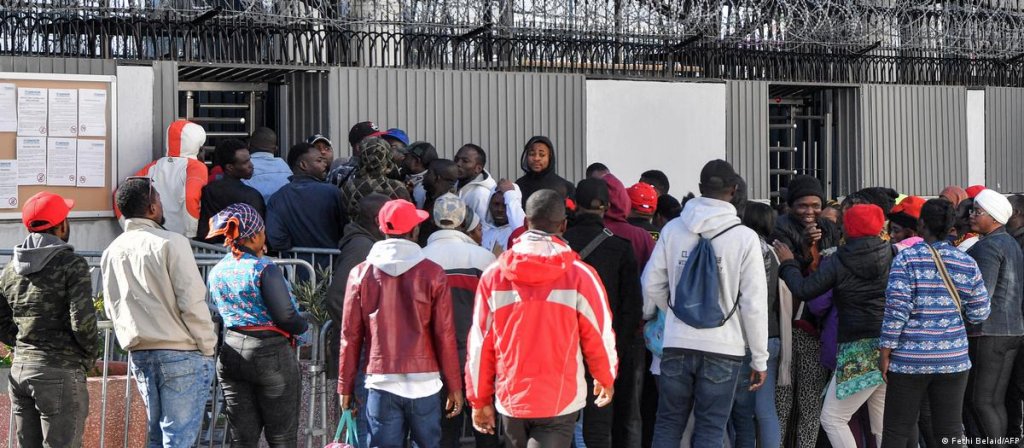
The statement said various sources had confirmed that a group of 28 people missing and another group of 20 people including asylum seekers, women and children had been deported to the militarized zone of Ras Jedir, located north of Al-Assah on the Mediterranean coast.
“These people find themselves abandoned in deserted places, with temperatures approaching 50 degrees Celsius, and left to fend for themselves without any assistance or resources,” the July 6 statement said.
The rights groups also criticized the deportations to Libya, which “can in no way be considered a safe country to return migrants to."
The deplorable living conditions of migrants and asylum seekers in Libya have been widely documented and condemned by rights groups.
Racially motivated attacks
Racial tensions in Tunisia have been simmering since President Kais Saied’s hateful remarks against people coming from sub-Saharan Africa last February.
Black African foreigners, asylum seekers and refugees reported being the target of racially motivated attacks that included assault, robbery and arbitrary arrest following the president's speech.
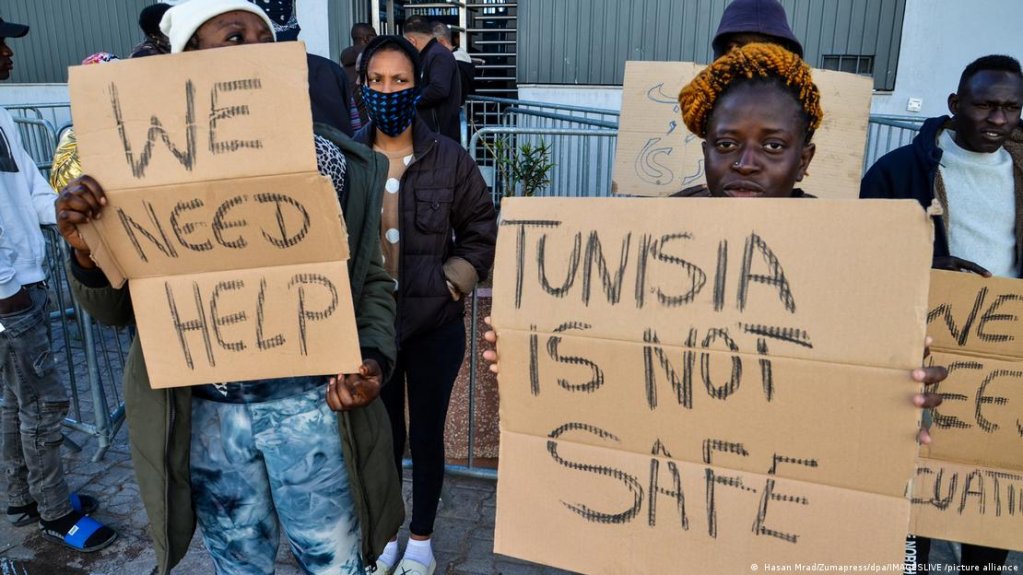
In March, HRW reported that scores of Black African foreigners who had found themselves suddenly homeless camped out in front of the offices of international organizations, where they said they felt safer “than elsewhere in Tunisia”.
Racial tensions flared last earlier this month after the death of a 41-year-old Tunisian man who was reportedly stabbed to death.
Amid rising tensions, some have been pushing back through protests in Sfax. Some local residents have attempted to bring food and water to migrants camped out on the streets.
In an interview with German news agency DW, researcher Monica Marks said these acts of Samaritanism don't come without risk.
"...They've (local residents) been punished by the police, they are not allowed to give car rides to Black refugees and migrants, and public transportation is barred from allowing them to ride," she said.
Read more: African migrants in Tunisia: We need help
Complicity in human rights violations
On Sunday, the European Union and Tunisia signed an agreement aimed at combating irregular migration in return for an aid package.
The deal brokered between EU Commission chief Ursula von der Leyen, Italian prime minister Giorgia Meloni and Dutch prime minister Mark Rutt during previous visits will bring in more than €1 billion in aid to support Tunisia’s collapsing economy and deal with the migration crisis.

The deal includes bolstering Tunisia's security forces and allowing European states to send asylum seekers back to Tunisia.
Several parliamentarians have criticized the agreement as the EU’s complicity in Tunisia’s human rights violations.
In a report by The Guardian, Matjaž Nemec, an MEP for the Progressive Alliance of Socialists and Democrats said, “The European Union cannot be part of, complicit in, the breakdown of the Tunisian democracy by President Saied. We need all European institutions united in our call and that the money released needs to be conditioned on full respect of human rights, democracy, and of course rule of law.”