
The UN released a statement on Tuesday warning that the UK's 'Illegal Migration Bill' could breach international human rights law.
The UK government reversed most of the amendments made to the "Illegal Migration Bill" on Monday (July 17), effectively passing its latest tool to control migration.
The bill will become law once it obtains royal assent by the King.
But in a statement released Tuesday (July 18), the UN warned that the bill "is at variance with the country’s obligations under international human rights and refugee law and will have profound consequences for people in need of international protection."
UN High Commissioner for Refugees Filippo Grandi said: "For decades, the UK has provided refuge to those in need, in line with its international obligations – a tradition of which it has been rightly proud. This new legislation significantly erodes the legal framework that has protected so many, exposing refugees to grave risks in breach of international law."
Changes for those arriving
The bill's passage into law will present major hurdles for migrants entering the UK, particularly those crossing the Channel in small boats.
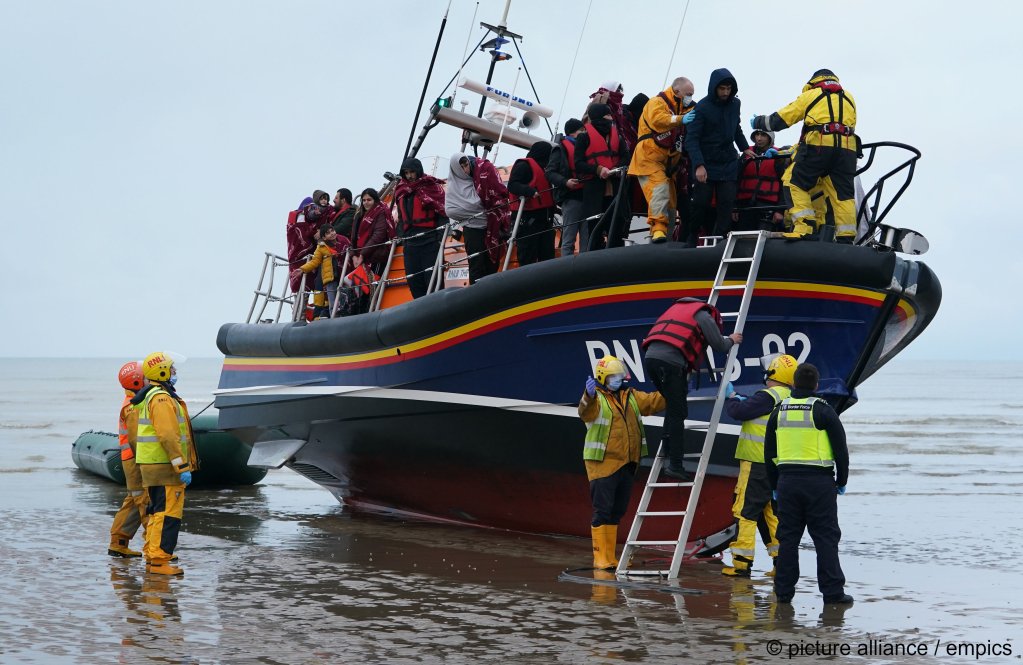
The new law deems crossings like these "illegal", a classification that will effectively strip anyone found doing it of their right to apply for asylum, because the legislation prohibits lawbreakers from the opportunity to start the application process.
It would also allow the government to send back many of those who arrive to either their country of origin or safe third countries through which they passed before reaching the UK. The UK considers 57 countries in the world safe, including the entire EU bloc.
Also read: UK to challenge Supreme Court decision on Rwanda
However, in order to send someone back to a safe third country, the UK would need the agreement of that country.
This cooperation has proven difficult since the UK left the EU and pulled out of the Dublin treaty, which allows countries to send a migrant or asylum seeker back to the first country they entered in the bloc or a country where they already started the asylum process.
'Legal duty to detain and remove anyone entering the UK illegally'
The government hopes the bill's passage will help it meet its pledge to "stop the small boats" crossing the Channel and act as a deterrent to those who hope to apply for asylum after arriving in the UK through irregular routes.
Also read: 'Illegal migration bill' meets stiff opposition in House of Lords
The bill gives the Home Secretary (Interior Minister) Suella Braverman a "legal duty to detain and remove anyone entering the UK illegally."
The upper house of Parliament, the House of Lords, tried to make a series of amendments to the bill, including reinserting time limits on the amount of time children could be detained, as well as ensuring people were protected under the Modern Slavery act. However, the government reversed most of those amendments in a late-night voting session on July 17.

Revival of Rwanda plan?
Eventually, the government is hoping to send some of those arriving in the UK to Rwanda under a deal the government signed with the African country in 2022.
However, the Rwanda plan was judged to be unlawful at the Court of Appeal in June. The government is now mounting a legal challenge to that decision, which the Prime Minister said he hopes to win.
However, those who oppose the plan say that another bill governing migration policy is not what the government needs, pointing out last year's passage of the Nationality and Borders Act, which was also designed to stop the small boats and get tough on those without genuine claims to asylum.
Also read: Are Italy and the UK preparing to strike a deal about migration?
Impact assessment by Refugee Council
The UK’s Refugee Council produced an impact assessment related to the bill when it was introduced into Parliament in March 2023. It suggested that once the law is passed, over 190,000 people could end up being locked up or forced into destitution, while 45,000 children could be locked up with "inadmissible" asylum claims.
They believe the law will end up costing the UK around £9 billion (around €10.5 billion) because of the increased detention times needed and the cost of accommodating those who cannot be removed because no agreement is in place with their destination country.
The bill also does not offer any additional safe routes to reach the UK, something the Refugee Council said would have done more than the new law to reduce the number of migrants crossing the Channel in small boats.
However, some of the concessions the government made to an earlier round of amendments on July 11 will require the Home Secretary to create safe and legal routes as well as a 10-year strategy to tackle both the number of refugees in the country as well as people smuggling.
Also read: Refugee Council warns of high costs if bill becomes law
When passed, the new law will also allow the Home Secretary to set a cap on the number of migrants who can arrive by safe routes and give the National Crime Agency a legal responsibility for tackling organized crime across the Channel, including cracking down on people smugglers operating the boats.
No retrospective application of law
The law will not apply to migrants who arrived before the bill was published on March 7. But anyone who entered after that date will be ineligible for settlement, citizenship and/or re-entry to the UK once removed.
Also read: Amnesty offered to migrants in order to get bill passed
Unaccompanied children will not be removed until they turn 18. Once they do, however, the Home Secretary will have the right to also remove them.
According to the academic website UK in a Changing Europe, which seeks to publish independent research on UK-EU relations from academics across the UK, "if someone meets the conditions for removal, the Secretary of State has a duty to refuse to process any asylum claim they make, along with any claim that removal to their country of origin would breach their human rights."
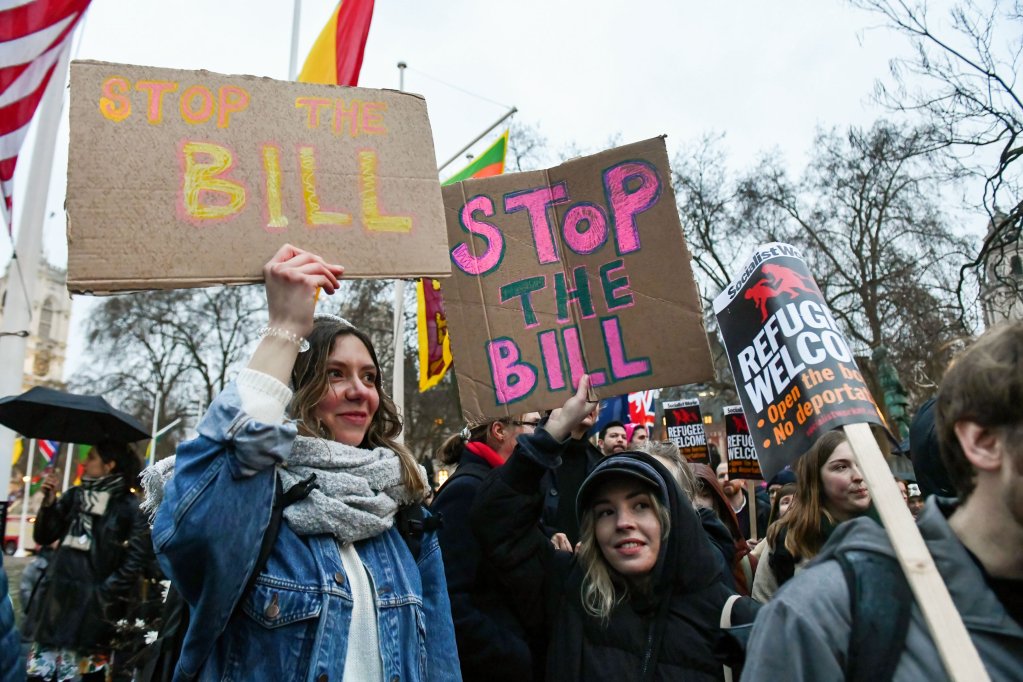
Anyone seeking to challenge removal will have one week to present their claim. Any further challenges, including those on human rights grounds "would only be considered by the UK courts after a person’s removal from the UK," notes the website UK in a Changing Europe.
Government's impact assessment
For unaccompanied teenagers who find their age is disputed, the Home Secretary would have the power to treat them as an adult rather than a child if they refuse to undergo a series of scientific age assessment procedures, including x-rays of their bones and teeth.
The government claims the system of accommodation and asylum currently costs the UK state £3 billion a year (about €4.5 billion), which includes the oft-quoted figure of £6 million a day on accommodation.

According to the government’s own impact assessment, published on June 26, it costs £169,000 (about €196,800) to remove a person from the UK. For every person the law manages to deter from entering the UK, the government claims it would save at least £106,000 (about €123,400).
According to UK in a Changing Europe, this would mean the law would need to be able to deter 37% of projected arrivals to provide cost savings to the British taxpayer. However, even as the bill made its way through Parliament, the numbers of those crossing the Channel increased.
Under the current system, the majority of UK asylum seekers have their claims recognized. Academic studies into the issue have found "little to no evidence" that policy changes deter people from leaving their home countries and seeking refuge, UK in a Changing Europe reports.
Is the law in line with international human rights law?
The UK's Children’s Commissioner worries that under the new laws, many of those who enter the UK as unaccompanied children -- who are protected under the legislation until they turn 18 -- will abscond before they come of age, which the commissioner said could present a "gift to traffickers."
While the bill was being debated, Braverman was asked in Parliament whether she thought it complied with the 1951 Refugee Convention, which allows asylum seekers to enter a state and have their claim assessed without receiving a penalty for entering illegally.
Braverman, herself a lawyer and former attorney general, replied: "The Bill introduces measures that we consider to be compliant with all our international obligations – in fact, we are certain."
However, the UN Refugee Agency has expressed concerns, saying it effectively places an asylum ban on anyone who arrives without papers, irrespective of whether or not their claim to refuge might be genuine and compelling.
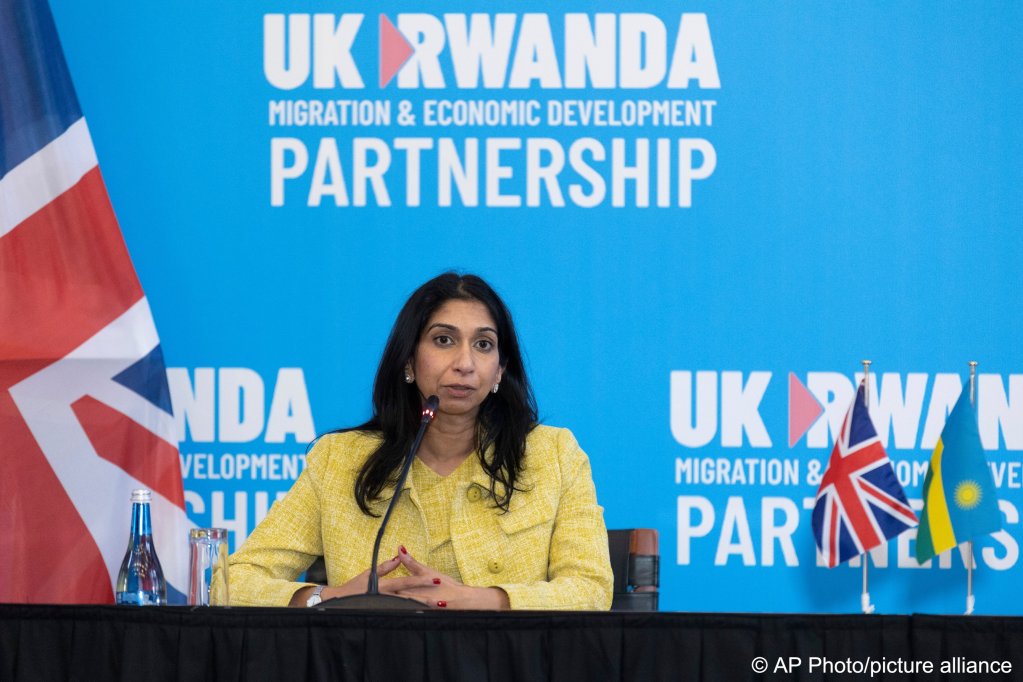
UK in a Changing Europe points out that Suella Braverman "was unable to make a declaration under the Human Rights Act that the Bill’s provisions are compatible with the European Convention on Human Rights (ECHR)."
European human rights and the UK's new law
One of the reasons Braverman was unable to declare the bill's compliance with ECHR is the fact that the new law infringes on some of the rights it lays out, UK in a Changing Europe writes.
"The duty to remove, the power to detain and the permanent ban on ever being granted citizenship status apply even to victims of modern slavery," the think tank wrote.
In addition, the law gives the government rights to exclude those refusing an age assessment test and grants immigration officers the power to seize and retain electronic devices, all practices that would contravene the ECHR.
The passing of this law is likely to lead to more legal challenges against the UK at the European Court of Human Rights, according to the UK's Joint Committee on Human Rights.
The law will also prevent UK courts from hearing human rights claims, so more cases are likely to be taken to the European courts. If the UK were then to defy judgements handed down by the European Court of Human Rights in Strasbourg, this in itself would be a breach of its international law obligations.
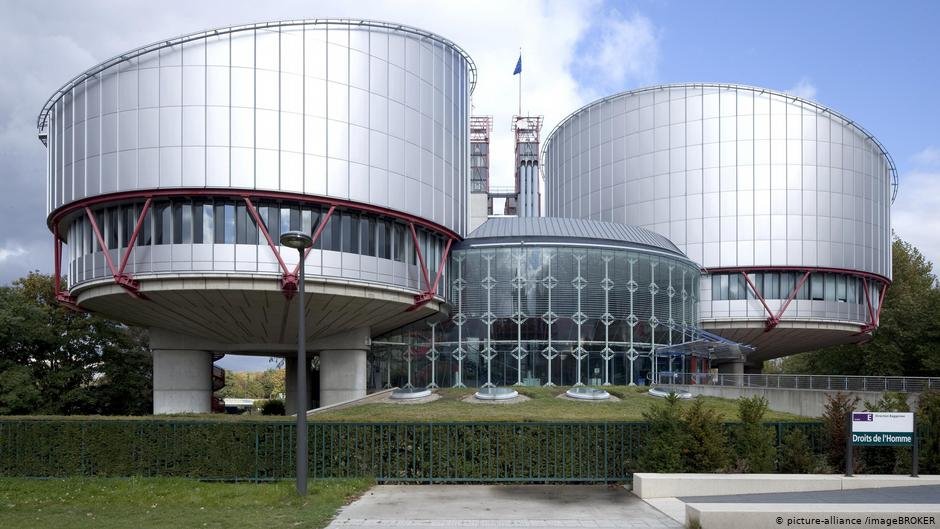
Although there are no specific sanctions if a country breaches international law, doing so may damage the UK’s reputation and would lead its partners to question its general commitment to international law.
Criticism from the EU
Even EU Home Affairs Commissioner Ylva Johansson has expressed concern about the new law.
"I think this is violating international law," she reportedly told Suella Braverman after the bill was introduced, according to Politico.
Johansson told Politico the UK had a "very, very slow asylum process system." She added that "you have to have some kind of individual assessment of people coming before you just put them into detention."