
Dozens of sub-Saharan African migrants in Tunisia have reportedly been detained and some expelled, or pushed towards the Libyan border after tensions rose between locals and migrants following the funeral of a Tunisian man stabbed to death during a fight between the two groups.
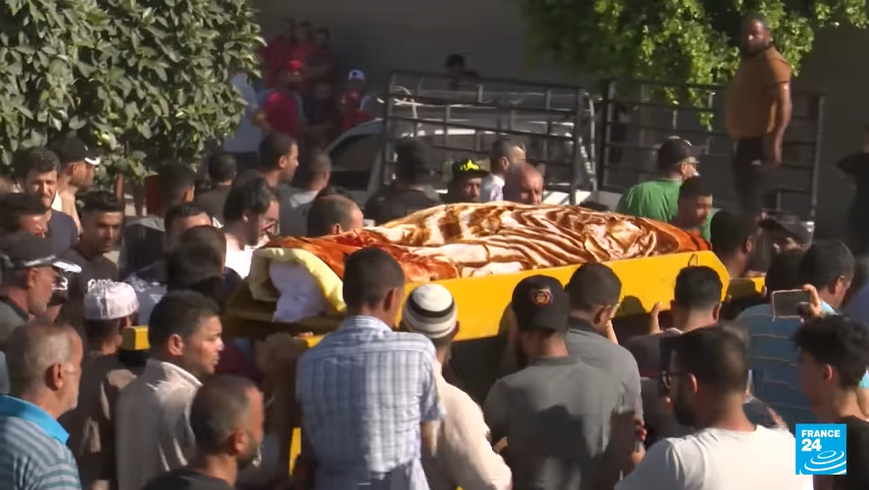
The Tunisian port town of Sfax is one of the main jumping off points for those leaving Tunisia and hoping to cross the Mediterranean by small boat towards Europe. On Wednesday (July 5), racial tensions flared in the city still further during the funeral of a 41-year-old Tunisian man who was reportedly stabbed to death during a fight between Tunisians and migrants on Monday.
Ongoing tensions have been mounting for at least a week, with reports of police firing tear gas, and residents and migrants throwing stones and fighting. The Interior Ministry sent more police personnel to Sfax on Monday.
Following the death, the Tunisian authorities arrested three men from Cameroon they regard as suspects. Young Tunisians posted video clips online chanting they were going to "avenge his death." Similar chants continued at the victim’s funeral, reported the French news agency Agence France Presse (AFP).
Expelled
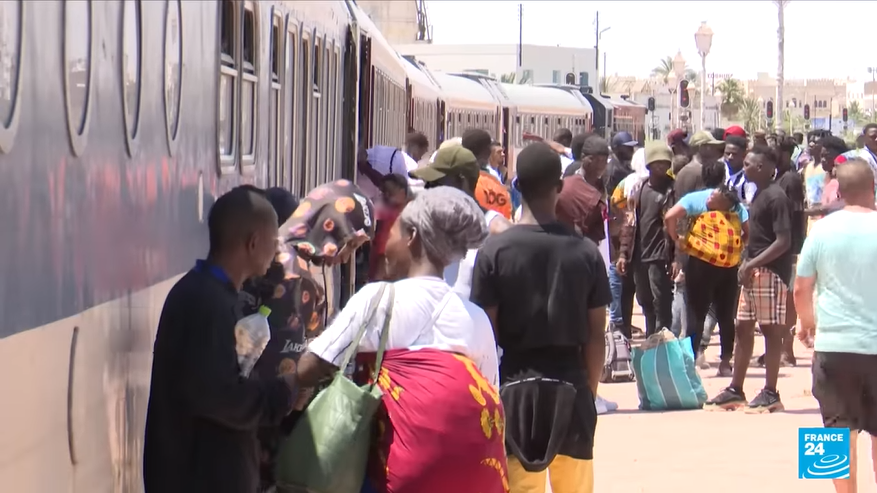
Hundreds of sub-Saharan African migrants, reported the news agency Reuters, have now been removed and brought to a "desolate area along the border with Libya." Dozens more were put on outbound trains on Wednesday too, claimed witnesses.
One politician from Sfax, Moez Barakallah, told Reuters, that the authorities had taken at least 1,200 sub-Saharan African migrants to border areas near Libya and Algeria. He added that the Tunisian authorities had supplied the migrants with meals and medicines. Border officers had now taken charge of the migrants, said Barakallah, and would decide on further steps, according to Reuters.
Migrants complain of racial harrassment in Sfax and Tunisia, and residents accuse the migrants of what they call "disorderly behavior," reported Reuters.
Also read: Boat wrecks of Tunisia reveal worsening situation in country
'Afraid'
One Congolese migrant, named as Jonathan Tchamou, told AFP that he was "afraid" of remaining in Sfax, as tensions had got so bad. He was hoping to take a train away from the city. "There is a serious problem in Sfax...We are really afraid of staying here, that is why I am trying to leave Sfax at any cost," Tchamou explained. "Tunisia was a welcoming country. It is no longer safe," the man concluded.
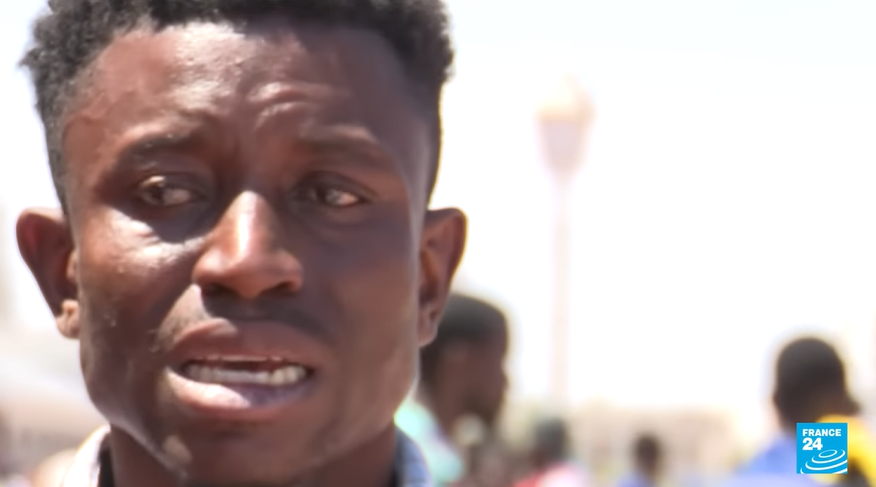
Another, named as Mohamed Mansari from Sierra Leone told France 24 that they had decided to take the train "because our life is in danger." He was pictured visibly upset at the train station, joining dozens of other migrants on trains for Tunis where they hoped they might be safer.
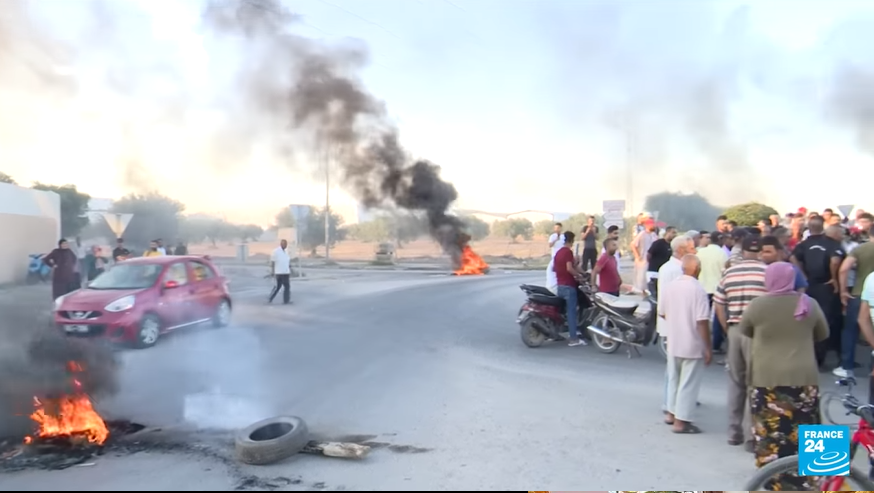
Ahead of the funeral, angry residents of Sfax, massed in the streets of the city in protest. Some blockaded streets and set tyres on fire, reported AFP.
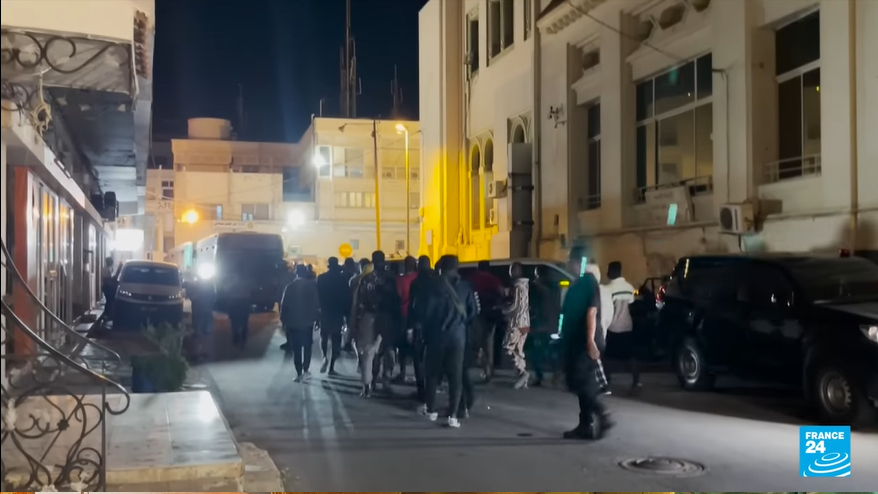
The Tunisian authorities were also caught on videos shared to YouTube, apparently chasing dozens of migrants from their homes and loading them into police cars. The actions were accompanied by cheers from local residents.
'Bloody night that makes you tremble'
One Tunisian medic working at the local hospital posted on a Facebook community group, reported AFP, that the emergency room at the hospital had been "inhumane...bloody night that makes you tremble." The medic, named as Lazhar Neji, said the hospital had treated between 30 and 40 injured migrants, including women and children.
Neji said some of the patients he treated had been "thrown from terraces, others attacked with swords."
On Tuesday, the Tunisian Forum for Economic and Social Rights FTDES, along with more than 20 other NGOs working in the field of migration and human rights issued a joint statement saying that people of "several nationalities" had been attacked including "at least 12 children aged between six months and five years." FTDES added that some of the migrants removed from Sfax had been "beaten."
Also read: 'We must put an end to the deaths in the Mediterranean'
Tunisia’s President Kais Saied made a number of incendiary and discriminatory remarks about sub -Saharan African migrants in February this year. His statements at the time put the blame for many of Tunisia’s problems on this group of migrants, and he accused them of committing crimes, committing violence and wishing to try and change Tunisia’s demographics. In fact, migrants from other parts of Africa represent just 0.2% of Tunisia’s population.
Tunisian President talks tough
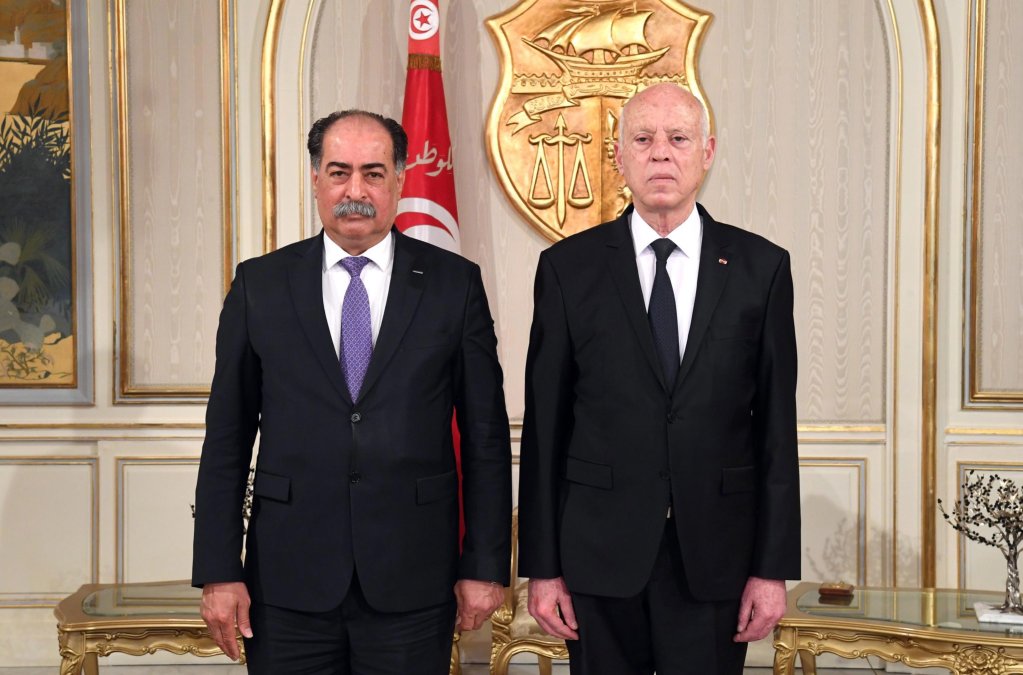
On Tuesday, Saied, spoke at the Interior Ministry, saying that his country would "not accept that anyone who does not respect its laws stays on its territory, or uses it as a transit country." He also reiterated that he didn’t want to see Tunisia become a country of resettlement for third country nationals that Europe had rejected.
Franck Yotedje, the director of the civil society organization Afrique Intelligence group, which says it exists to help wake the conscience of young Africans to the challenges facing their continent, called on the Tunisian state to fulfill its duty and to "ensure the safety of the residents of Sfax, Tunisians and foreigners." Yotedje is based in Sfax and was also one of the signatories of the FTDES joint statement. He describes himself on his Linked In profile as a humanitarian activist.
One AFP photographer said that as the unrest unfolded dozens of African migrants rushed to the city’s train station to try and get trains to other Tunisian cities. Footage and pictures showed groups of migrants lying on the ground with their hands on their heads, surrounded by residents armed with sticks.
Union calls for a 'radical solution'
The head of FTDES, Romdane Ben Amor, told AFP that some of the migrants taken by the police were grouped at the premises of the Sfax International Fair and then transferred elsewhere.
One Tunisian trade union said the Tunisian government itself had made the situation worse in Sfax by agreeing to start policing the boats that depart from ports like Sfax. In recent months, several European leaders have visited Tunisia and promised more aid and development contracts if Tunisia increases the role its coast guard is already playing and intercepts more boats at sea.
The UGTT trade union said that the Tunisian government had made things worse "by playing the role of the Mediterranean policeman, intercepting the boats of illegal sub-Saharan African migrants and transporting them to Sfax." Because of these actions, the UGTT claimed there were now "thousands of illegal sub-Saharan migrants" in Sfax and called on the Tunisian government to find a "radical solution." It said the region around Sfax had been "transformed into a place of assembly or resettlement for these migrants in a desire to please Italy and Europe."
Appeal for calm
FTDES and the other NGOs appealed for "calm" in their joint statement and asked everyone to try and "preserve human life," saying there had been victims on both sides. The joint statement said the Tunisian authorities had been using the unrest as a "pretext" to operate waves of arrests and "forced and illegal pushbacks" which had been carried out "with threats" with the "aim of purging the town of all people of sub-Sarahan origin."
The human rights organizations said that the border areas where they believe the migrants have been sent often register temperatures approaching 50 degrees celsius and that the migrants had effectively been "abandoned" in the desert with "no help and no resources." The Tunisian authorities have not yet responded, either to FTDES or to the news agencies regarding these claims, or what might have happened to various groups of migrants.
FTDES said that the Tunisian authorities were basing these expulsions on the "false assumption that some of these migrants might have traveled through neighboring countries in order to reach Tunisia." Since Tunisia is a signatory to international human rights treaties, as well as the 1951 Geneva convention on refugees, expelling anyone to Libya, which cannot be considered a safe country, "is not in line with international law." The signatories of the joint statement "firmly condemn Tunisia’s actions" and accuse Europe of having a hand in the actions by "forcing Tunisia to play the role of European border guard."
With AFP and Reuters
Also read: EU-Tunisia migration proposal ignores human rights concerns