
Germany has deported 11 men to Tunisia just days after a visit to Tunis by the German interior minister Nancy Faeser to discuss cooperation on migration.
Eleven rejected asylum seekers in several states across Germany were deported to Tunisia on a chartered plane last Wednesday (June 21).
Authorities in Saxony confirmed on Friday that the plane had taken off from Leipzig Airport. Six of the deportees on board were adult men from that state whose asylum claims had been rejected and who had been convicted of criminal offenses, they said.
No further information was available about the other five Tunisians, except that they had been living in Berlin, Mecklenburg-Western Pomerania, Lower Saxony and Saarland. According to activist group No Border Assembly, the flight operated by the German charter airline Sundair was headed for Enfidha in eastern Tunisia.
EU-Tunis deals
Human rights organizations say Tunisia should not be considered a safe country to send rejected asylum seekers back to. In April, around 70 non-government organizations, many of them humanitarian groups carrying out rescues in the Mediterranean, signed a statement demanding that the EU and its member states cease cooperation with Tunisia on migration control and that they stop financial and technical support for the Tunisian coast guard.
The latest deportation of Tunisian nationals from Germany came just days after a visit by the German interior minister, Nancy Faeser, to Tunisia for talks with the country’s head of state, Kais Saied, and interior minister Kamel Fekih.
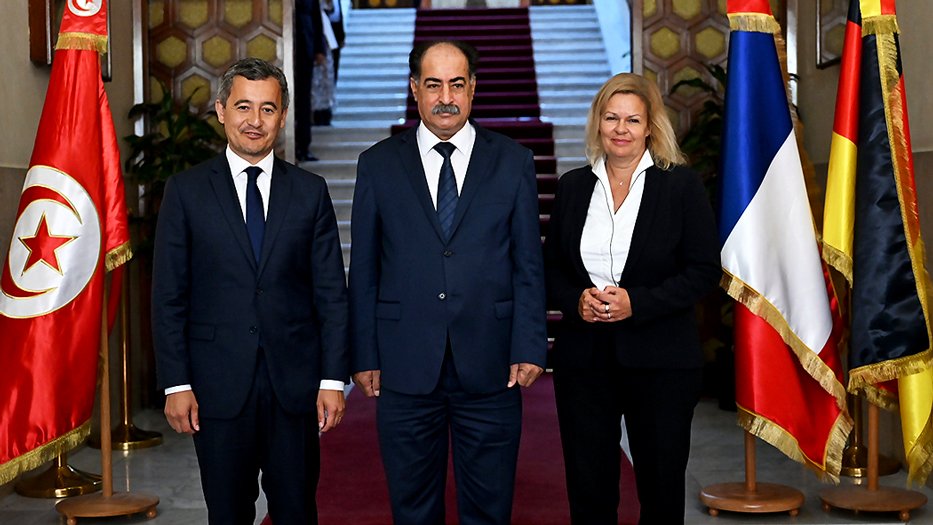
During the visit, Faeser said she was concerned with ending the "terrible deaths in the Mediterranean," and that she hoped to reach an agreement on migration with Tunisia. Among other things, she said she wanted to facilitate deportations to the North African country.
Read more: Rising death toll at the gates of Europe is unacceptable, says UN
Tunisia is one of the main transit countries for irregular migration to Europe from Africa. It has recently had a stream of visitors from European Union member states, including Italy Prime Minister Giorgia Meloni, Dutch Prime Minister Mark Rutte, French President Emmanuel Macron and the president of the European Commission, Ursula von der Leyen. This year, the EU will provide millions of euros in additional funding to Tunisia, including €100 million specifically for migration management.