
Some 50 young Moroccan migrants have been missing for two weeks, after they boarded a boat bound for the Canary Islands. Their families don't know where to turn for help. Meanwhile, various NGOs continue to highlight shortcomings on part of Moroccan and Spanish authorities in many such cases, as another shipwreck on the same route made headlines just days ago.
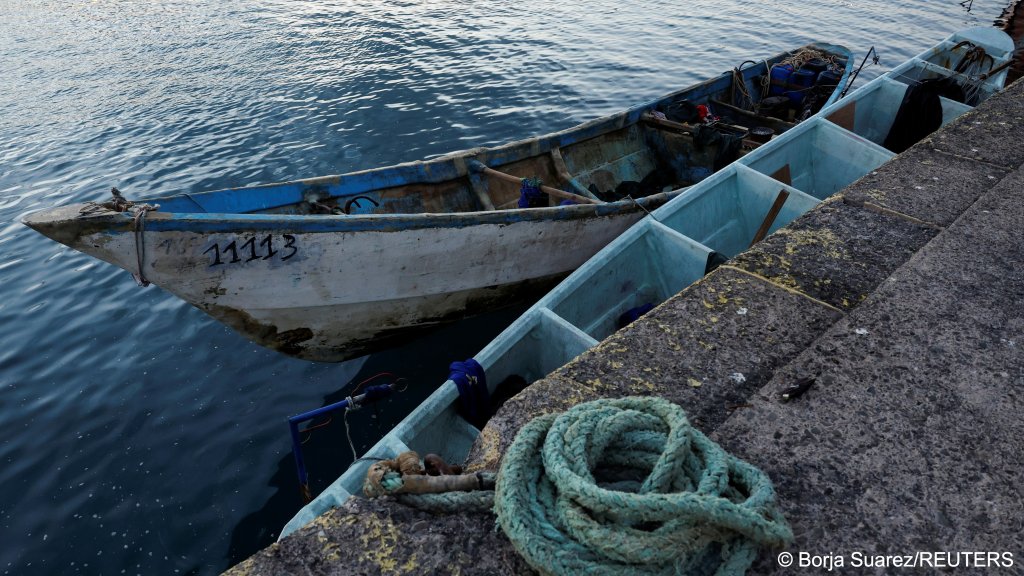
According to the father of one of the missing migrants, the group boarded the boat from the Agadir region in the early morning hours of June 11. Two weeks later, they remain unaccounted for.
Abdelrezzak Arki told InfoMigrants French that most of the passengers on board were young men, all "aged between 15 and 37."
He added that he and other parents only informed authorities that their children had disappeared almost a week after their departure, and that they were advised to "lodge a complaint and inform the maritime authorities in Agadir."
Another relative, Amine Aharrouy, told the AFP news agency last week that no one had any "news of what may have happened to them," adding that the last contact with the group took place at dawn on June 11-- their time of departure -- after which the parents received no more signs from them.
Economic woes driving migration
Meanwhile, the Moroccan Human Rights Association (AMDH) issued a statement last Thursday, urging authorities to "intervene immediately to reveal the fate of these young (migrants)."
Khadija Ainani, vice-president of AMDH, told InfoMigrants that improvements in surveillance technology used mainly in the north of Morocco, where the African nation borders Spain, are increasingly pushing migrants to try to use the sea route further south, which she says "is less guarded but more dangerous."
Ainani adds that the crippling "economic conditions suffered by young people in Morocco are pushing them to migrate to Europe via death boats."
Arki agrees with that assessment, saying that "the economic and social situation" in Morocco prompts young people to leave, highlighting the lack of job opportunities in the country as well as the effect of rising prices.
Read more: Pregnant woman found dead on Canary Islands migrant boat
Dozen feared dead in latest shipwreck
As people like Arki and Aharrouy continue to worry about the fate of their loved ones, reports of shipwrecks pour in on the news, making them face their worst fears repeatedly. One particular case from last week is now shedding light on how much dysfunction there is between Moroccan and Spanish authorities when it comes to saving lives at sea.
On June 21, another shipwreck occurred involving a dinghy headed to the Canaries, resulting in multiple missing people, reported local media outlet Canarias7.
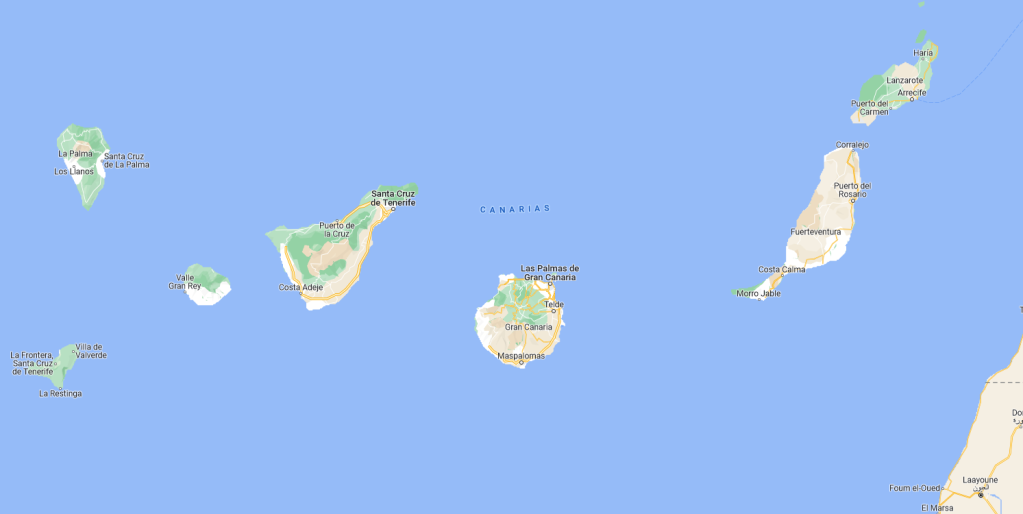
Spanish rescuers, who intervened at Morocco's request, recovered two bodies that day, including that of a child, about 160 kilometers away from the island of Gran Canaria. On the Moroccan side meanwhile, a patrol boat found 24 survivors.
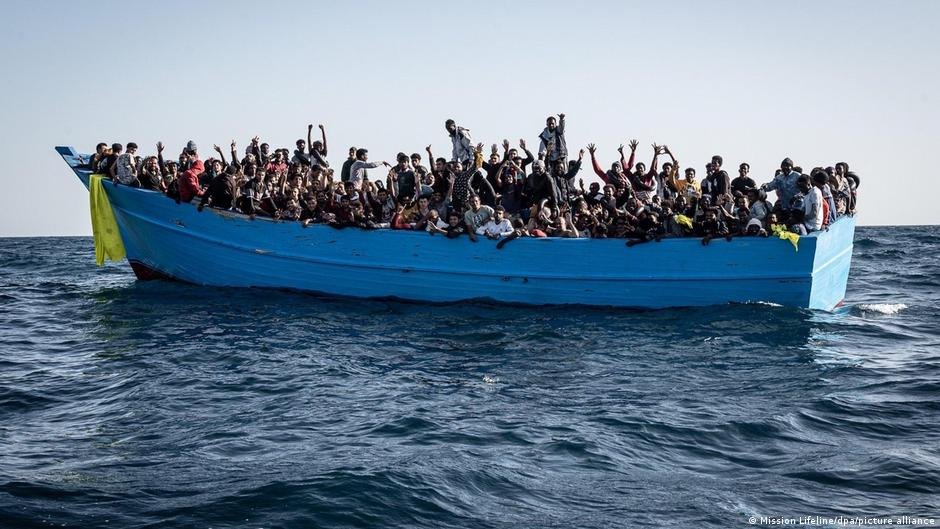
However, various NGOs fear that the actual death count from that shipwreck could be as high as several dozen people: According to Alarm Phone and Caminando Fronteras, which cross-reference geolocation data from distress calls with witness testimonies, nearly sixty migrants in total must have been on board the boat.
This is why Caminando Fronteras believes that the shipwreck actually claimed the lives of at least 39 people -- including those of four women and a baby.
Those on board reportedly were comprised of mainly Senegalese and Gambian nationals as well as a few Ivorians and Guineans, according to Caminando Fronteras activist Helena Maleno Garzón.
In a tweet published on June 11, she said that "58 people, including 21 women and a baby, were on the verge of death due to the sinking of the inflatable boat on which they were heading for Las Palmas" (capital of Gran Canaria)."
Spain under fire
Meanwhile, the Spanish daily newspaper El Pais confirmed that more than ten hours had passed between the time that the boat in question was first spotted by a plane on June 20 and the start of rescue operations on Wednesday morning.
Maleno Garzón says that those on board "had been begging for rescue in waters under Spanish responsibility for over twelve hours."
Caminando Fronteras and Alarm Phone have accused both Moroccan and Spanish authorities of acting too late; Maleno Garzón said that both governments were "playing with people's lives" by passing the blame from one side to the next.
However, they accused the Spanish government in particular of showing reluctance in performing its duty of care, stressing that the dinghy was within the country's search-and-rescue region under international law.
Khadija Annabi added that this lack of taking immediate action sent "a clear message: we won't make a big rescue effort, even if the price to pay is the lives of these people."
Read more: Canary Islands: 'The most important thing for Madrid is that migrants remain in Morocco'
Probe to be launched
Spain for its part said that all proper procedures had been followed; Spain's Transport Ministry said the maritime rescue service had complied with international search and rescue procedures.
Even though a Spanish rescue service ship was situated merely 60 kilometers away from the dinghy on Tuesday evening, it had been ordered to return to port after already rescuing 63 people in a separate incident, with several of them requiring medical attention.
"At no time did the Moroccan authorities ask Spain's rescue service for assistance or mobilization of resources, except in the final moments when the mobilization of a helicopter was requested. The resources are always at the disposal of any emergency and this was no exception," a Transport Ministry source told the Reuters news agency.
Meanwhile, Spain's ombudsman has been told to investigate the sinking of the dinghy.
The ombudsman will monitor any possible breaches of civil liberties and can make recommendations to parliament; the government is formally mandated to acknowledge and react to reports issued by the ombudsman's office.
It is uncertain, however, if regardless of the results of the ombudsman's assessment, any real changes will be introduced to sea rescue operations coordinated by Spain.
Read more: Deaths en route to the Canary Islands
Declining interest in Canaries route
The route from Morocco to the Canary Islands is considered one of the most dangerous in the world, as strong ocean currents and long journey times continue to cost lives.
According to the International Organization for Migration (IOM), since 2021 a total of 1,500 people have lost their lives on this route across the Atlantic Ocean. Caminando Fronteras believes the number to be much higher, claiming there were 1,784 deaths in 2022 alone.
In recent months, the number of migrants arriving on the Canaries using this perilous sea route has dropped by nearly half compared to the previous year: between January 1 and May 31 this year, 4,406 people arrived in the Spanish archipelago using this route, compared with 8,268 in the same period in 2022.
This trend, however, comes as little consolation to people like Amine Aharrouy who continue to worry about the whereabout of their family members.
"We hope that the Moroccan authorities will be able to clarify their fate," is all that Aharrouy could say.
Read more: Spain and Morocco mend ties with migration agreements
With Reuters, AFP