
Nine men face have been remanded in custody in Greece in connection with the Mediterranean shipwreck on June 14. The number of bodies retrieved from the disaster has risen to 82, with hundreds still missing.
Nine Egyptian men aged between 20 and 40 have been remanded in custody by a Greek court over the shipwreck last week that led to hundreds of deaths.
The court in the port city of Kalamata made the ruling on Tuesday evening, the Greek broadcaster ERT reported. The charges are based on statements by survivors who said the nine accused men were the crew on the fishing trawler.
By Wednesday (June 21), 82 bodies have been recovered from the boat which sank in waters about 5,000 meters deep just over 90 kilometers to the west of the Peloponnese peninsula. Only 104 people survived.
The men have pleaded not guilty to the charges. On Monday, a court-appointed lawyer for one of them said his client was not a smuggler, but a victim who had paid to be taken to Italy.
"He left his country looking for a better life in Europe because of economic difficulties," said Athanasios Iliopoulos.
Two other accused men also told their lawyers that they had paid smugglers to reach Italy from Egypt, and one said he had tried to retrieve food and water the smugglers on board had thrown into the sea.
Arrests in Pakistan
Fourteen people have been arrested for alleged people smuggling in Pakistan, where a high-level investigation has been ordered into the smuggling network officials believe was involved with the ship that sank.
According to police, one of those arrested admitted to having sent three men on the boat and charging them up to three million Pakistani rupees (about €9,500).
Another man arrested in Pakistan said his own son had been on the boat and was missing, a police report said. It claimed the main suspect in a migrant smuggling network operating between Libya, Pakistan and Greece was based in Libya.
Read more: Pakistan mourns victims of capsized boat on Greek coast
The fishing boat reportedly left from Egypt, making a stop in eastern Libya to take on more passengers before setting sail for Italy.

Did Greece act when it should have?
The details of how the disaster happened are unclear, with conflicting reports from Greek authorities, Frontex, testimonies of survivors, aid agencies and Alarm Phone, an advocacy group that was in contact with people on the fishing vessel.
Alarm Phone says it received calls for help from people on board on two occasions and alerted Greek authorities, Frontex and others.
Greece denies reports that the boat was stationary for hours and maintains that those on board refused offers of assistance from the coast guard, which consequently decided not to commence a rescue operation.
Legal experts and former and current members of the Greek coast guard said Greece should nevertheless have acted, even if there was a "refusal of assistance," according to the online magazine wearesolomon.com.
As the vessel was overloaded and unseaworthy, had no proper captain and was in a state of distress, its rescue was mandated from the moment the coast guard received the SOS call from Alarm Phone, it states.
The United Nations has called for an investigation into the way Greek authorities have handled the disaster.
Call for survivors to be moved
Meanwhile family members of people believed to have been on the boat continued to travel to the facility north of Athens where most of the survivors have been taken in the hope of finding their relatives.
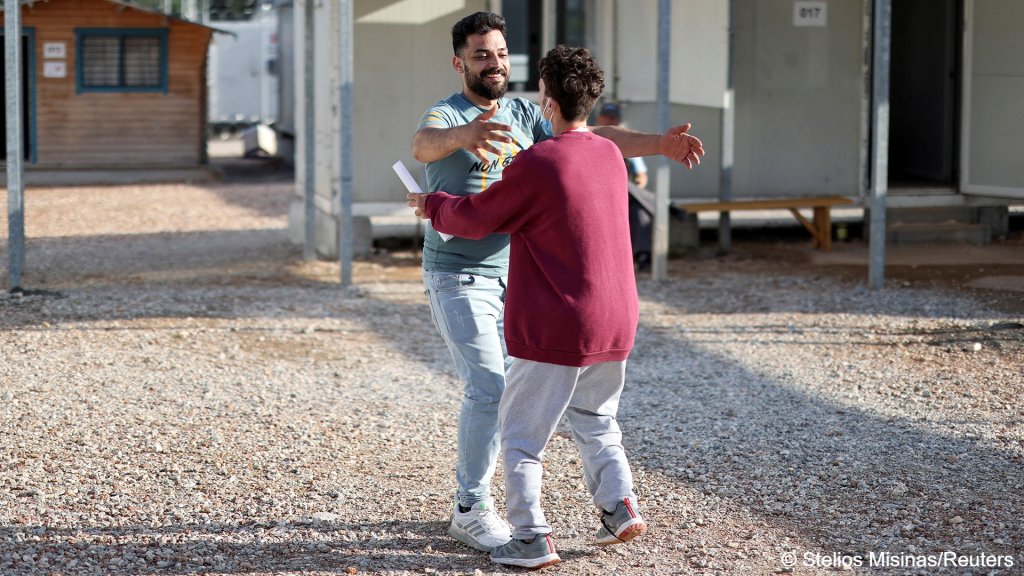
An open letter on Tuesday signed by more than 180 groups and individuals, including Tima Kurdi, aunt of Alan Kurdi, called on Greek authorities to move the survivors from the isolated Malakasa camp to more suitable accommodation where they could receive the support they needed, including legal advice and counselling, and their families could visit them more easily.
The letter also demanded the release of the nine men who have been in police custody in Messinia since their arrest.
Migrants accused
According to authorities, the charges against the nine Egyptians include the following: illegal entry into the country, illegal trafficking of foreigners, criminal organization, causing a shipwreck, manslaughter by negligence and endangering life.
Under EU law, member states like Greece have to make it a criminal offense to "intentionally facilitate the unauthorised entry or transit" of people across borders. In practice, this means anyone steering a migrant boat to Greece could be prosecuted as a smuggler, according to the group Captain Support Greece, which helps to connect people accused of smuggling with lawyers. Since 2015, thousands of people have faced such charges, the group said last week in a post on an Oxford University legal blog website.
Without referring to last week's shipwreck, Captain Support Greece says the targeting of migrants as smugglers is part of Greece’s "migration management," rather than an attempt to stop the operation of criminal networks.
An Alarm Phone statement last week also said that experience has shown that those who make a profit from organizing journeys such as the one that ended in the Pylos tragedy will not be on the boat. It also claimed that people are repeatedly wrongly accused and sentenced to long prison terms "because the authorities need scapegoats."
With Reuters, dpa
This item was updated to include the decision of the court late Tuesday. It also updates the number of bodies recovered to 82.