
German and French Interior Ministers Nancy Faeser and Gérald Darmanin are the latest European politicians to travel to Tunisia to engage in migration talks. During the two-day visit, Faeser said she's keen to lower the number of deaths in the Mediterranean.
German and French Interior Ministers Nancy Faeser and Gérald Darmanin just wrapped up a two-day visit to Tunisia to meet with the country's Interior Minister Kamal Feki and President Kais Saied.
They follow in the recent footsteps of Italian Prime Minister Giorgia Meloni, Dutch Prime Minister Mark Rutte and European Commission President Ursula von der Leyen. All three visited Tunis together for migration talks a few weeks ago.
The German, French and Tunisian politicians discussed the development of new legal migration routes, according to statements from the German Interior Ministry.
The ministry said they also talked new training and work programs that would allow Tunisians to enter Europe legally.
Also read: Italy works to unblock IMF funding for Tunisia
"We want to create legal migration routes, to take away business from the people smugglers," said Faeser. "We also want to make sure that the human rights of those who are fleeing are protected and that the awful deaths in the Mediterranean stop."
German police project in Tunis
The European ministers touched down in Tunisia on Sunday afternoon (June 18). On the first evening, Faeser visited a German federal police project that assists Tunisian officers in building effective police structures.
The German federal police have been working in Tunis since 2015.
Also read: EU-Tunisia migration proposals ignore human rights concerns
Along with helping to improve structures, the German unit also helps with rescuing lives at sea, "controlling irregular migration, checking documents and deeds, fighting international terrorism and organized crime," the ministry said, adding that Germany hopes to continue helping with these migration-related issues in Tunis.
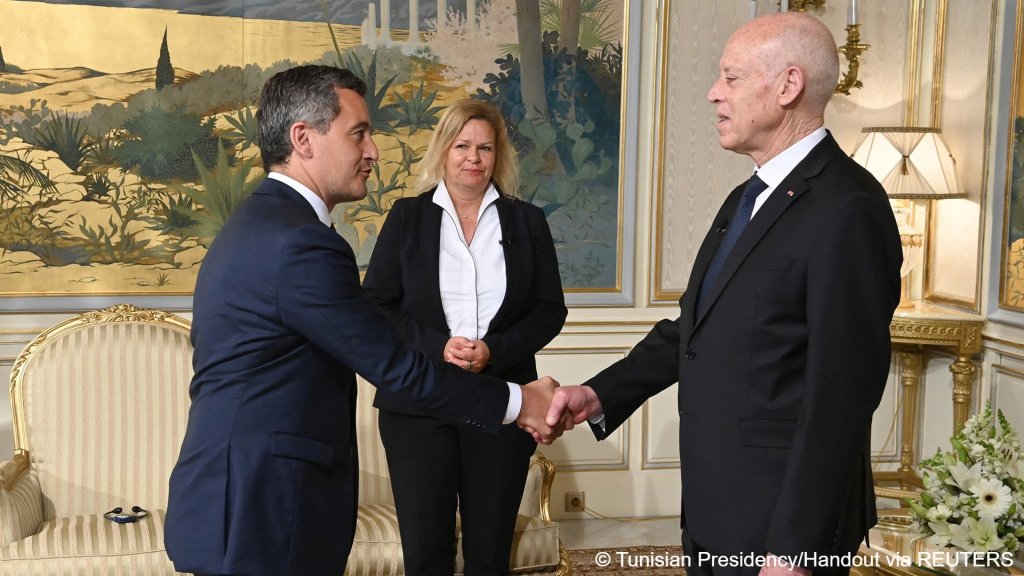
Faeser described the work of the German police as "successful" and said she wanted to "strengthen it going forward."
Bilateral job creation and training
On Monday evening (June 19), Faeser visited a German-Tunisian advice center for jobs, migration and reintegration partially funded by the German Society for Development and Cooperation (GIZ) and the Tunisian Employment Agency.
The center aims to develop skilled workers that can meet the needs of both the German and Tunisian economies.
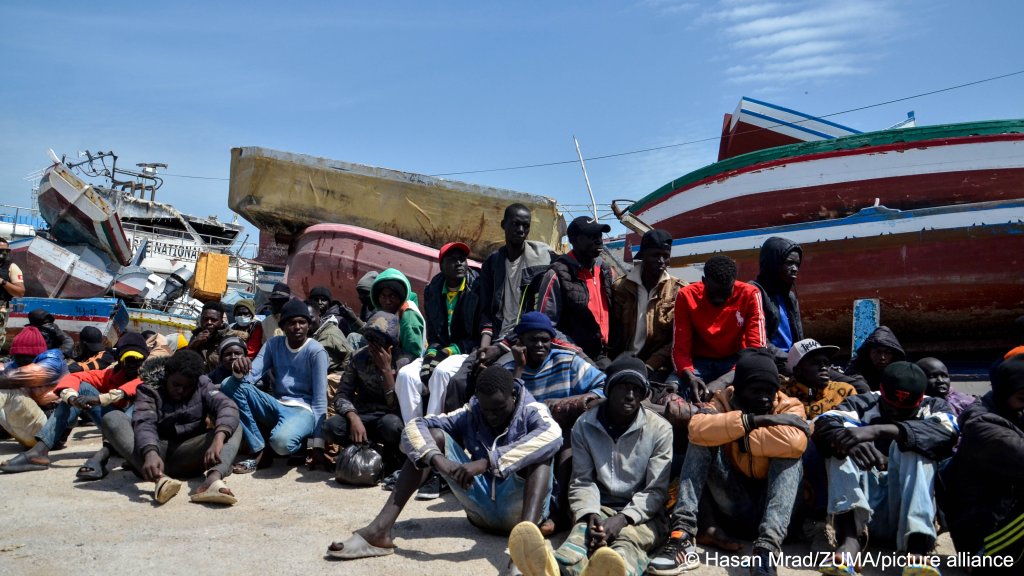
According to reports in German newspapers, including the Suddeutsche Zeitung, Germany has promised more than €20 million to Tunisia to help strengthen its border controls.
Germany has also reportedly promised to shorten the length of time taken to process applications for work visas by Tunisian citizens.
Also read: Meloni, EU forge first agreement but Saied raises stakes
France too has promised almost €26 million in the form of various grants and development packages for Tunisia to help the country control its borders and buy the necessary equipment to survey and patrol their sea borders, according to French international broadcaster France 24.
France promises almost €26 million 'for migration purposes'
"This bilateral aid is earmarked for migration purposes," explained Darmanin.
It comes in addition to a package of about €105 million announced by EU Commission President Ursula von der Leyen a little over a week ago.
Also read: EU discusses migration curbs and aid in Tunisia
Darmanin added that the French money was meant to help "contain the flow of irregular migrants and make sure they were sent back to Tunisia or their countries of origin safely."
Departures from Tunisia towards Europe have surpassed departures from Libya this year, according to the European Border Agency Frontex.
The number of migrants who have left Tunisia since the start of 2023 has also increased 100% compared with last year's figures over the same period.
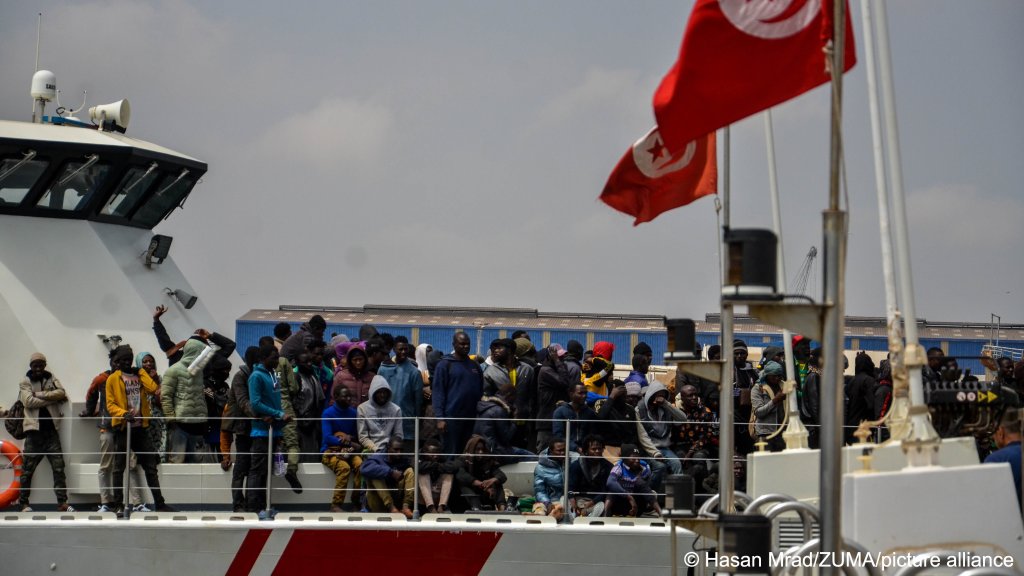
According to Italy's Interior Minister, as of June 20, over 57,740 migrants have now arrived in Italy by sea since the beginning of the year. More than 26,000 of them are thought to have departed from Tunisian shores.
Reasons for increase of departures from Tunisia
The rise in the numbers of migrants (both Tunisian and from sub-Saharan Africa) is due to a complex mix of factors. But many analysts put the sudden increase this year down to the continuing deterioration of economic and political stability in Tunisa, as well as Saied’s increasing autocracy.
In February, the President declared that sub-Saharan Africans were responsible for many of Tunisia’s problems. His comments led to a wave of discrimination and attacks, prompting many of those targeted to try to leave after finding themselves ejected from the jobs and housing they'd held for years.
Also read: Tunisia--Italy route claims more lives
In recent weeks, Saied’s tone has slightly softened, perhaps as a result of the increase in visits from European leaders. Recently, for example, he promised that the migrants being intercepted at sea and returned to the port city of Sfax would be handled respectfully.
According to the German newspaper Suddeutsche Zeitung, European leaders are also keen to strengthen their ties and cooperation with Tunisia in the face of increasing overtures from Russia and China.
"Diplomatic circles are watching anxiously as the Russian embassy in Tunis brings in more diplomats," the newspaper reports.
Tunisia -- a 'safe' country?
Faeser did not mention Tunisia's status as a "safe" country directly, but after speaking to Saied told the press that "we want to work together to make sure that we solve problems."
Tunisia is designated as "safe" by most European countries, including Germany, France and Italy. This status means these countries can deport Tunisian migrants who do not meet requirements for asylum or any other residence permit in Europe.
Also read: Citizens of a safe country? Tunisian migrants in Italy
However, for Tunisians who arrive in Europe without documents, sending them back can prove difficult. In Italy, several Tunisians who spoke to InfoMigrants in Sicily explained that after a few months in reception centers, they were told to leave the country but couldn't because they had no documents to do so, forcing them to find work in exploitative situations.
Saied has also made it clear that he does not want to become a "country of resettlement" for migrants Europe rejects. Saied has blamed human smuggling networks for the rise in the numbers of migrants leaving his country, according to news agency Associated Press (AP). He has said he needs more aid to help combat them.
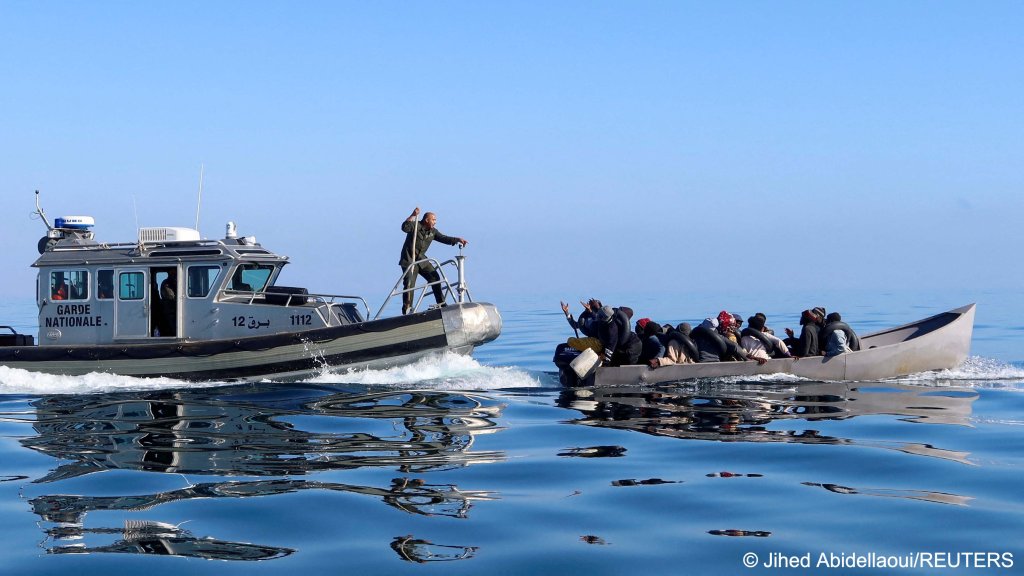
The Tunisian authorities say they intercept thousands of migrants every month. Just last weekend, 11 boats were intercepted, carrying around 260 people, reported AP. National guard spokesperson Hussameddine Jbabli said that most of the migrants were from sub-Saharan Africa, but that some Tunisian nationals were among them too.
With dpa and AP