
It is not clear how a fishing boat carrying hundreds of migrants sank off southern Greece on Wednesday. As the search for survivors continues, some are still hoping to find their loved ones alive.
Questions are beginning to be asked about how a fishing boat carrying hundreds of migrants ended up capsizing and sinking in international waters off the coast of southern Greece in the early hours of Wednesday (June 14). The shipwreck, about 87 kilometers from Greece, happened not far from one of the deepest areas of the Mediterranean, making the task of trying to recover those who died even more difficult.
Greek authorities were continuing extensive search and rescue operations on Friday (June 16) for survivors of the disaster that claimed the lives of at least 78 people. 104 people have so far been pulled from the water, and 27 remained in hospital on Friday morning. It is estimated that hundreds more have drowned. Patrol boats and a helicopter continued to scour the area on Friday.
Greece in mourning
Greece has declared three days of national mourning and flags are flying at half-mast across the country.
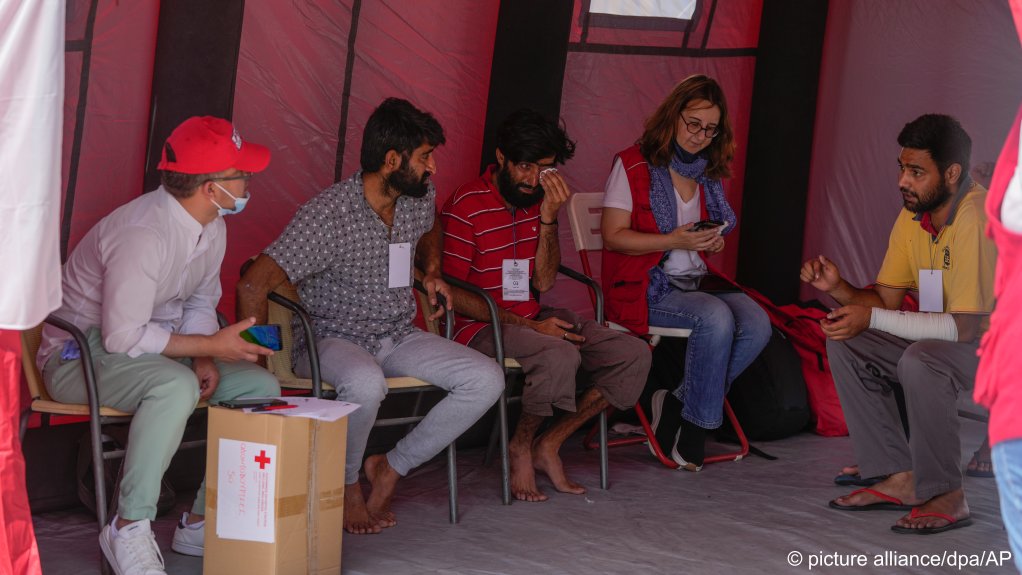
For survivors, many of whom lost loved ones in the disaster, as well as relatives and friends who have arrived in Greece to reunite with survivors or be nearer the search, the hopes of finding people alive are fading fast. By Friday, survivors were being transferred by bus to the Malakasa migrant camp.
Following the rescue, the survivors were taken to a large hall in the port city of Kalamata, where they were given makeshift beds, food, water and medical care. Journalists have not yet been allowed in to the makeshift camp, which is surrounded by fencing, but some political figures have been allowed to visit.
'Was the Greek coast guard towing the boat before it capsized?'
One of those allowed into the camp was a Greek MEP, the social democrat Kriton Arsenis. After visiting survivors, he gave an interview to the Press Project which was posted on Twitter by the NGO Aegean Boat Report.
Arsenis said survivors told him that the boat had capsized while it was being towed by the Greek coast guard. The incident was "a clear crime," he said.
"While they were being pulled along by the coast guard ...suddenly the boat capsized," the survivors reported. The coast guard saved those on the top deck, according to their testimonies.
Rescue or pushback?
Information that emerged shortly after the rescue had suggested that the ship capsized because people on board lurched to one side, or because of a fight that took place below deck, causing the ship to roll.
Also read: NGOs in Italy criticize European states over migrant deaths at sea
It is believed that many women and children were sheltering below deck because of the bad weather, and most on the lower decks would have been unable to escape before the ship sank.
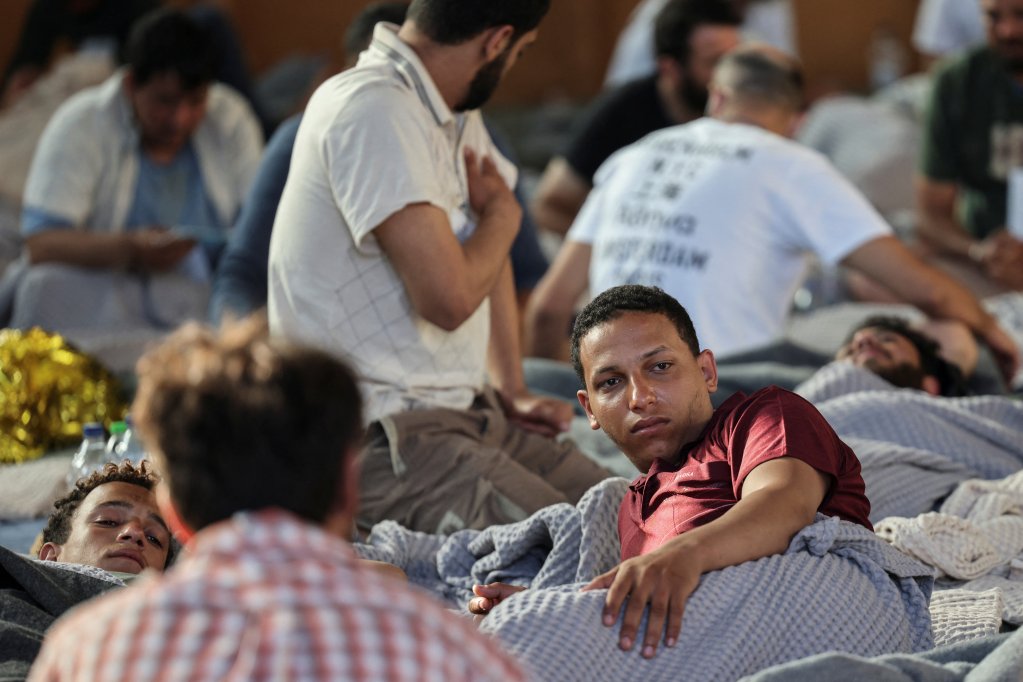
Arsenis says that he was told that people were packed so tightly they could not have moved.
According to the NGO portal 'Leave No One Behind', some suspect that the Greek coast guard had been trying to pull the boat out of Greek waters when it capsized.
Reports from the coast guard contain no information about this, the NGO points out, adding that towing overcrowded boats "is dangerous and is not used in rescue operations, but pushbacks."
Lots of questions
Since Thursday, a "search and rescue" activist Iasonas Apostolopoulos, has also been posting on Twitter, asking similar questions. He says that the boat capsized "without any wave" and says that is why "journalists were banned from entering the refugee accommodation all day today."
The activist went on to ask, "why were you towing them? Where were you taking them? Why doesn’t the port say anything about the towing in its announcement? Towing is not a rescue action, but a pushback action."
"If this is true, we are not talking about criminal negligence, but about an act that caused the death of 600 people," said Apostolopoulos.
Greek authorities deny accusations
Greek authorities have denied the accusation. "There was no effort to tug the boat," coast guard spokesperson Nikos Alexiou told state broadcaster ERT. Greece is currently being governed by a caretaker government, pending elections on June 25. In the last few years, the country has been governed by conservatives who took a tough line on migration.
Alexiou also said that repeated offers of assistance had been rejected by those on board the vessel, and that the coast guard had also made calls over a loudspeaker. The authorities said the migrants were hoping to continue to Italy.
However, the organization Alarm Phone said it had "alerted the Greek authorities many hours before the vessel capsized and had been informed by different sources that this was a boat in distress."
Europe's migration policies called into question
According to Alarm Phone, "European authorities could have sent out adequate rescue resources without delay. They failed to do so because their desire to prevent arrivals was stronger than the need to rescue hundreds of lives."
Syriza Party leader Tsipras said after visiting survivors: "I want to say that unfortunately in this Europe where great ideas and great values of enlightenment were born, and a value of human life, that unfortunately human life does not have the same worth for everyone."
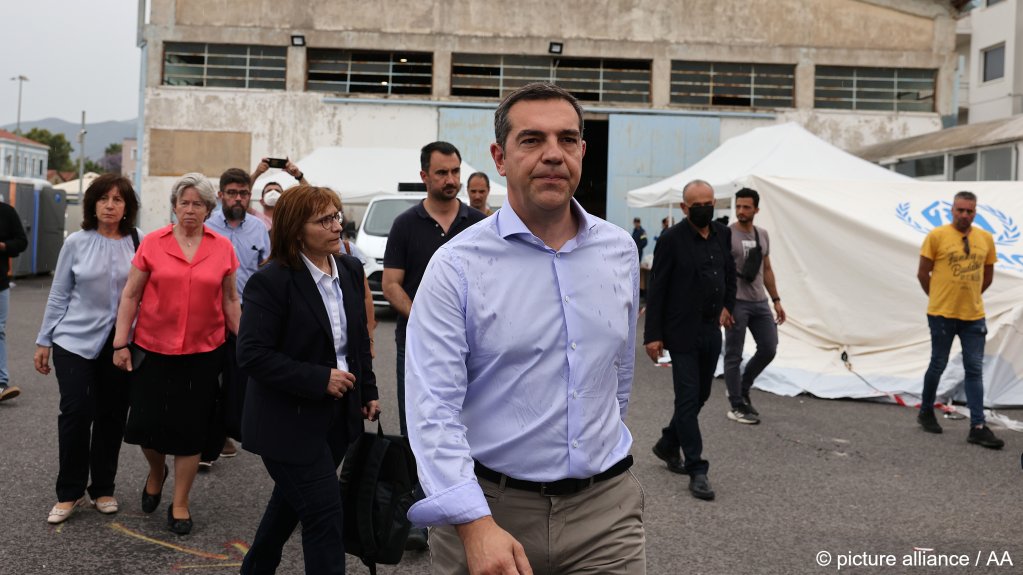
The politician went on to critize Europe’s migration policy and said it had turned "the Mediterranean, our seas, into watery graves. And I think it is time to speak the truth because this policy has to change."
A tearful reunion
Relatives of survivors at the reception camp have also been starting to arrive. 18-year-old Mohammad from Syria burst into tears when he was able to embrace his elder brother Fadi through the bars of the cordoned-off center, the Reuters news agency reported. Fadi had traveled from the Netherlands to begin the search for his brother.
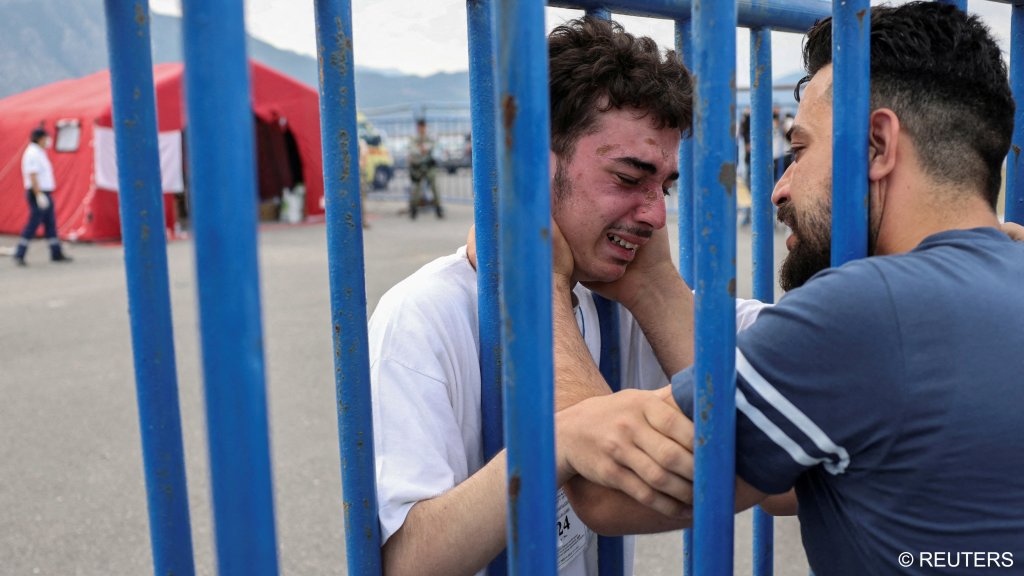
"Thank god for your safety," he said, kissing his sibling on the head.
Another Syrian man, 34-year-old Kassem Abu Zeed, was not so lucky. He had flown from Germany to Kalamata in the hope of finding his 21-year-old wife, Esra Aoun, and her 19-year-old brother, Abdullah, who had boarded the boat in Libya in the hope of joining him in Germany.
Searching without much hope
Zeed told the Associated Press that he had last spoken to his wife eight days ago and that she had told him she had paid $5,000 (about €4,500) to smugglers in order to board a boat.
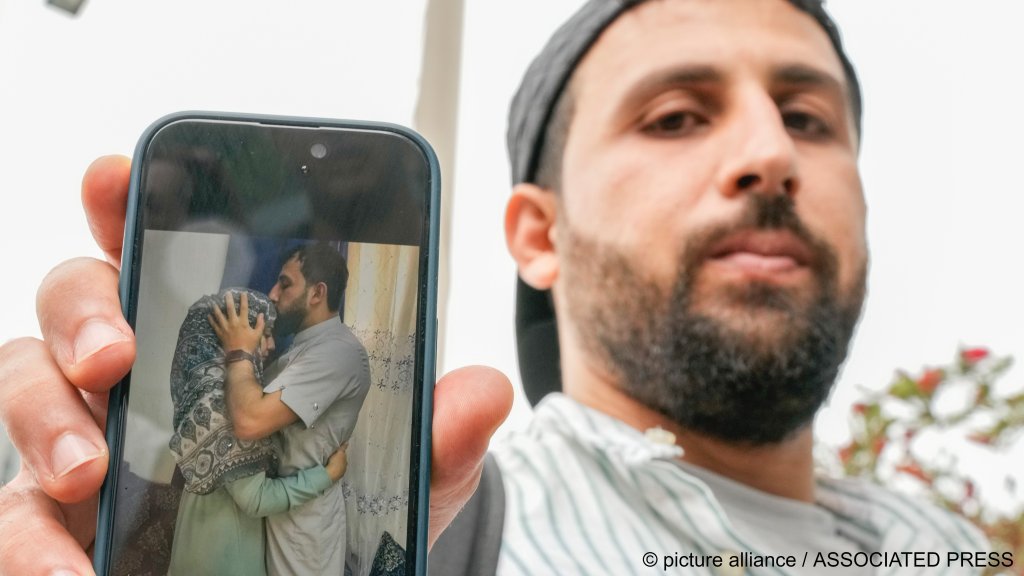
He showed pictures of his wife on his mobile phone to reporters, but so far only men have survived the incident. Zeed said he was hoping to find Abdullah among the survivors in the reception center in Kalamata.
Based on interviews with survivors, there might have been at least 40 children on board the boat, and a total of between 700-750 people.
Arrest of suspects
The Greek authorities, in collaboration with Europol, arrested nine Egyptian nationals they suspect of having worked as crew on the fishing boat or been involved with smuggling. However, it is believed they may have been minor players in the organization and not the main beneficiaries of the operation, which Al Jazeera reported might have been worth as much as $3 million (about €2.7 million).
According to a press release from the Greek coast guard, released in the early hours of Friday, the suspects aged between 20 and 40 years old have been arrested on charges of "illegal entry into the country and for the illegal trafficking of foreigners, as well as being part of a criminal organization, causing shipwreck, negligent homicide and exposure of life to danger."
Preliminary investigations are being carried out by the Central Port Authorities in Kalamata.
Demonstrations
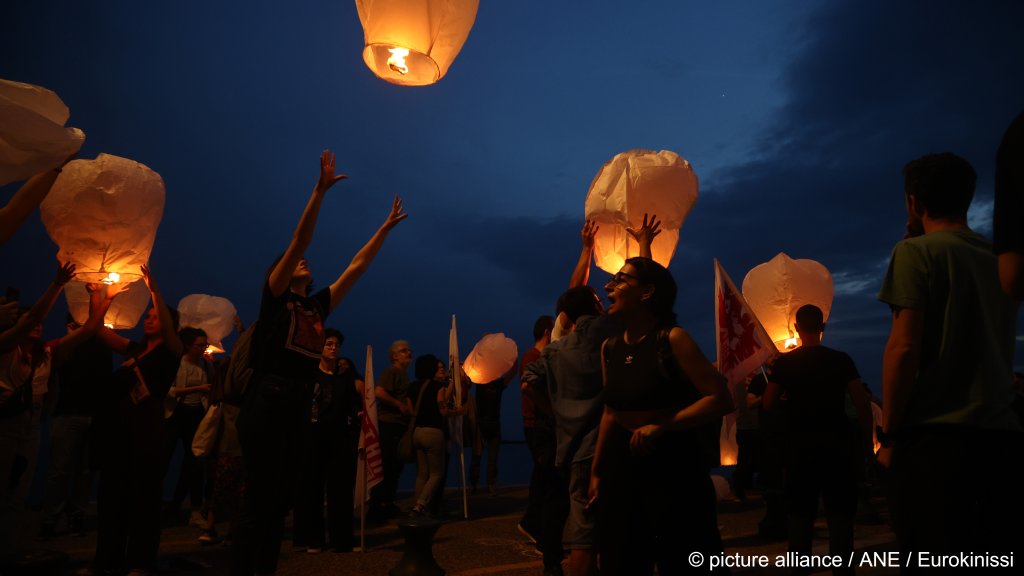
Meanwhile across Greece, thousands of people took part in protests to demonstrate against the migration policies of Greece and the European Union. Large demonstrations in Athens turned violent, leading to 21 arrests.
Adriana Tidona of Amnesty International said the Greek government had "specific responsibilities toward every passenger on the vessel, which was clearly in distress." She added that the tragedy was even greater, because it was "entirely preventable."
Officials in the state morgue have started to take photos and DNA samples from the victims in order to identify them.
With Reuters and AP