
A survey showed approval ratings for the right-wing party, Alternative for Germany (AfD), at a record high of 17-19%. About 65% of those surveyed said that the AfD’s critical stance on immigration was their reason to vote for the party.
The Alternative for Germany (AfD), a right-wing populist political party continues to rise in public opinion polls and could be on course to win three eastern German states in the 2024 elections, Reuters reported today (June 7).
In a survey conducted by Wahlrecht, an independent polling service that measures political sentiment, Germans were asked who they would vote for "if there was a general election next Sunday”.
AfD scored 17-19% nationwide, a record high for the party. The approval scores put AfD at par for second place with Chancellor Olaf Scholz’s Social Democrats Party (SPD). AfD was last at such highs in 2018 after Europe's migrant crisis, said Reuters.
These approval ratings indicate that support for the AfD party is up from fifth in the 2021 election when it secured 10.3% of the vote.
German news agency DW reported that in several eastern states, the AfD has long been the strongest political party.
Why is the AfD gaining ground?
A recent survey probed the motivations of AfD supporters and found that dissatisfaction with other political parties was the main reason voters would cast their ballot for AfD.
The majority of those surveyed, or about 65%, said that the AfD’s critical stance on immigration was their reason to vote for the party, followed by energy and climate change (47%) and economy (43%)
Only 32% claim to fully support the AfD's policies, reported DW.
Founding and political ideology

Founded in 2013, the AfD's initial main thrust was to oppose economic bailouts for European Union member states like Greece which found itself mired in a debt crisis.
A turning point came in 2015 when the flow of refugees from mostly Middle Eastern countries caught the European bloc by surprise.
In September 2015, Germany allowed refugees, many of whom were from Syria, to enter the country after days of being trapped in Hungary. While neighboring Austria also took in refugees, it was Germany that kept its borders wide open, taking in an estimated 890,000 people who applied for asylum.
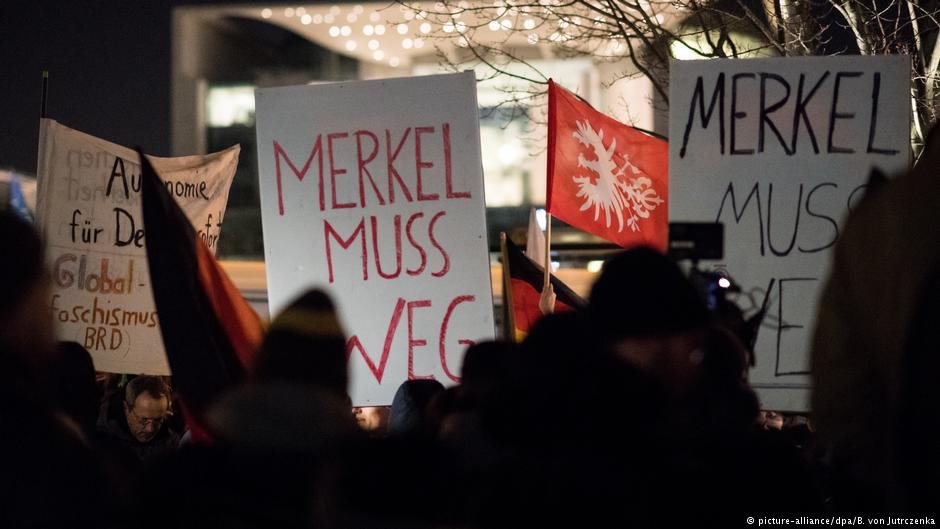
AfD opposed this move and emerged as a voice of outrage, adopting an anti-immigration stance as one of its main political positions. In addition, AfD is also opposing the costly transition to green energy solutions and a skyrocketing inflation rate.
Local German news has noted how AfD has positioned terror attacks committed by asylum applicants to win support and pointing to former Chancellor Angela Merkel as responsible for these attacks.
The party has consistently made active use of social media to promote and shore up support for its political ideologies. A study by Oxford University found that the AfD was the most active German political party on Twitter. Of the million Tweets that were analyzed in the study, 30 percent were tied to AfD.
Rise of far-right in Europe
Across Europe, far-right parties have gained momentum. In some countries, restrictive anti-immigration policies such as those implemented by Italy’s right-wing government have played a role in influencing the immigration policy of other countries.
Read more: Italy, Greece, Czech Republic, and UK: Aligned on tougher migration laws
Discussions on reaching a semblance of consensus on migration policy is expected to take center stage this week when the home affairs ministers of the bloc's 27 member states meet on Thursday to discuss an overhaul of its asylum rules.
It would be a mark a breakthrough after years of bitter feuds within the bloc, reported Reuters on 06 June.
Returns, whether voluntary or deportation of failed asylum seekers, are taking focus as a migration management policy across the European bloc.
However, the EU countries have still failed to reach a consensus sharing the responsibility of housing and integrating migrants and refugees, "with differences playing out prominently as right-wing and populist parties fuelled the debate with anti-immigration rhetoric", cited Reuters.
EU's top immigration official Ylva Johansson called for an agreement to a "common approach" and warned against countries taking a hard line on migration to curry favor in domestic politics.
She also warned those reluctant had no veto in the majority vote, and cautioned against taking tough lines on migration for domestic political purposes.
"If we agree on a common approach to managing migration in a humane but restrictive way together, we would all be winners because we will be able to manage migration together in an orderly way."