
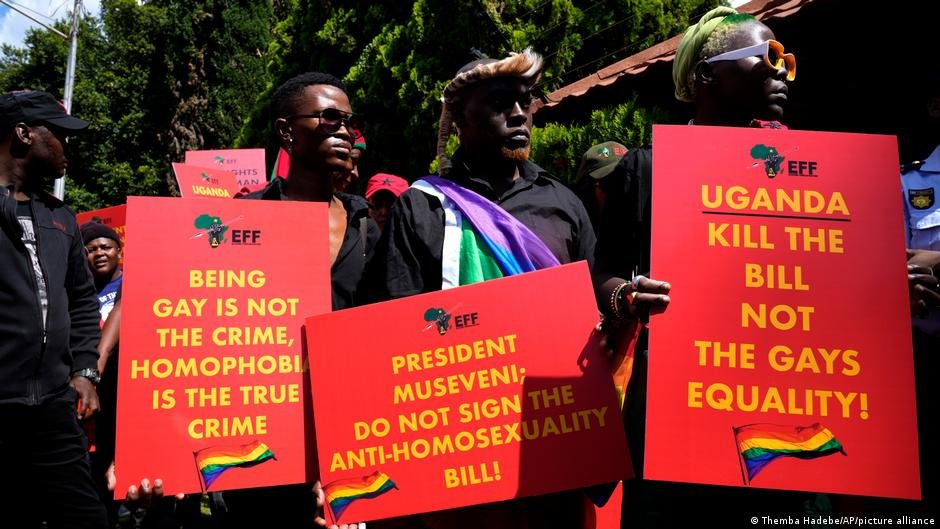
Last month, Uganda enacted a new law against homosexuality. The new legislation might, however, affect the lives of all Ugandans, as the international community has started to take action against the African country. InfoMigrants looks at whether the law might cause more people to flee the country.
Holding hands with the person you love and share a life with can get you thrown into jail in Uganda. Even giving support to people in loving relationships can result in fines and up to 20 years of jail time — for example by renting out a flat to a gay couple or being seen in public with them.
This is how far-reaching the draconian consequences of Uganda's new "anti-gay law" enacted in late May can be.
Even penning this article would carry a penalty in Uganda, as journalists also face imprisonment for publishing, broadcasting or distributing any content that might remotely be deemed to advocate the rights of LGBTQIA+ people.
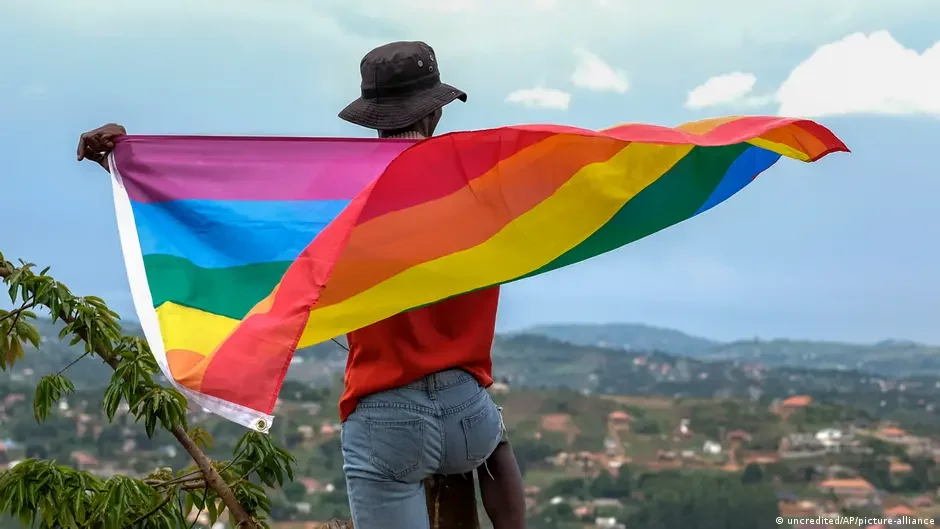
There is even a provision for the death penalty in cases of "aggravated homosexuality" in Uganda's Anti-Homosexuality Act 2023 — without specifying what exactly would escalate sexual preferences to an "aggravated" status.
The offenses that could result in an "aggravated homosexuality" sentence and a subsequent death sentence include — but are not limited to — the spreading of HIV/AIDS through same-sex relations as well as acts of rape, in addition to "serial offenders."
Uganda last carried out an execution in 2005.
Not just an 'anti-gay' law
The enactment of the law against homosexuality in Uganda attracted condemnation around the globe — from UN Secretary-General Antonio Guterres to US President Joe Biden.
However, Biden stressed that those who will potentially be affected by the new law are not only Ugandans who self-identify as members of the LGBTQIA+ community:
The White House commented that the move was "shameful," highlighting also in particular that it "jeopardizes the prospects of critical economic growth for the entire country."
Biden further said his administration would have to "evaluate the implications of this law" with regard to aid it provides to Uganda, including relief aid to combat HIV/AIDS.
Economic consequences
The World Bank echoed those sentiments saying that the law will "endanger people by placing an added barrier to vital medical care, disease screening, and precautions," adding it would serve as an additional block to achieving the goal of "ending extreme poverty and boosting shared prosperity."
"Development efforts supported by the World Bank Group have demonstrated that institutionalized discrimination is harmful for people, societies, and countries," the statement further read, highlighting that socioeconomic consequences of the law could likely affect every Ugandan.
The governments of the US, the UK and Germany have announced that they will assess imposing sanctions on Uganda, including the freezing of foreign accounts, which effectively would plunge one of the poorest countries in the world deeper into crisis.
As frequently is the case with sudden socioeconomic shifts, the threat of ensuing changes in migration patterns therefore is not only one that would affect gays and lesbians in Uganda.
Questionable constitutional grounds
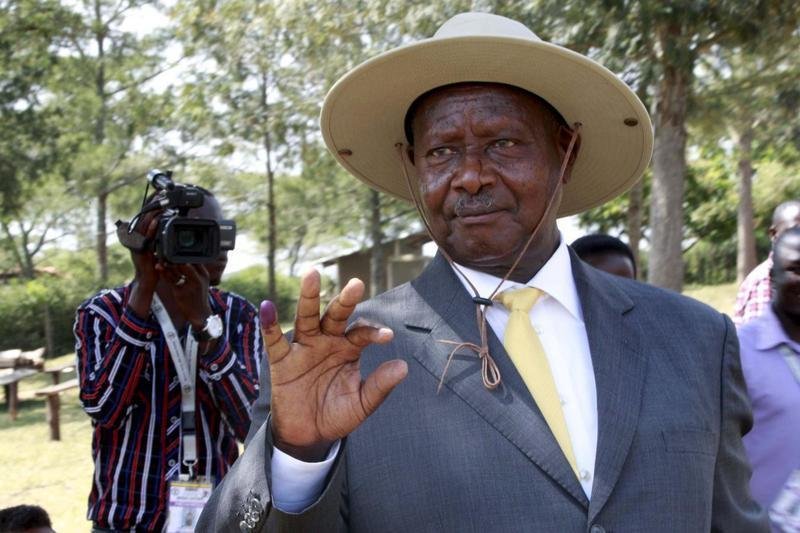
Ugandan President Yoweri Museveni took several months to sign the new act into law, possibly taking into consideration the repercussions that the African nation might suffer.
However, same-sex relationships were already illegal in Uganda even well before the new law was passed with the support of 341 out of 389 members of parliament earlier this year.
In fact, Uganda had passed a similar law criminalizing same-sex relationships in 2013, dubbed the "Kill the Gay Act." However one year later, Uganda's Constitutional Court rejected the law on a technicality.
There may be legal challenges to the 2023 Act as well. Ugandan human rights lawyer Adrian Jjuuko said the law was clearly unconstitutional, as it violates Ugandan's right to dignity "under article 24 of the constitution."
"By criminalizing what we call consensual same-sex activity among adults [it] basically goes against key provisions of the constitution including violating the rights to equality and non-discrimination under article 20 and 21 of the constitution," he added.
The UN also believes that the new law needs "urgent" review.
No options left but to flee
The most immediate victims of the law are gay, lesbian, bisexual and trans individuals in Uganda who will now feel that there is even more persecution against them in their own country.
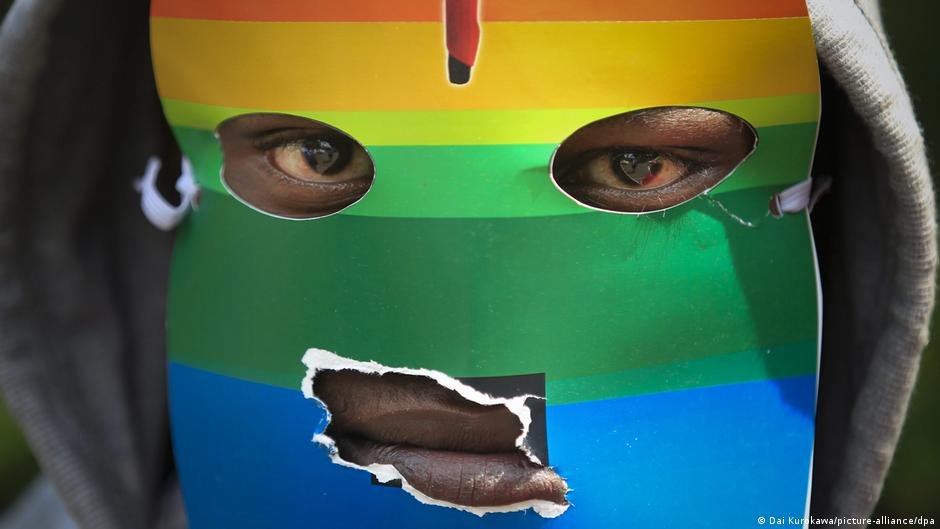
Our partners at DW spoke to several members of the LGBTQIA+ community in Uganda on the condition of anonymity. They all said that they had had to go into hiding, with one saying that he felt like a refugee already:
"Is it a crime to embrace my identity? I am even scared for my life like a refugee. … I am scared for my life, and I am scared for my friends. I am scared for my family," he told DW.
Meanwhile a lesbian in Uganda said: "We are now just going to ask for asylum and leave the county because now it seems like everyone is against us. If the president has signed we have to look for asylum in countries which will allow us."
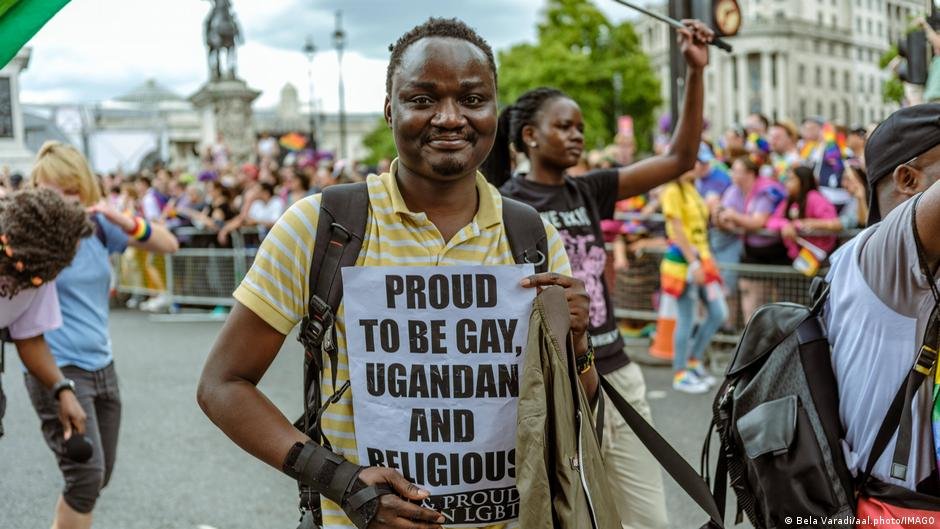
Another gay man, Francis, said he would probably "flee for safety elsewhere as it remains a tall order to have LGBTQIA+ rights fully accepted in Africa."
As is the case in many other countries where there are severe punishments against same-sex relations, many members of Uganda's LGBTQIA+ community like Francis are likely going to seek to start a new life elsewhere.
Others, however, cannot imagine leaving their country even against the backdrop of homophobia being encouraged on all levels by the law: In 2014, gay rights activist Kelly Mukwano had to be hospitalized after being attacked for his sexuality.
However, he told the UK's Daily Telegraph newspaper at the time that he "cannot leave this country."
"It is my home and still I love it. But I worry now that I cannot be a Ugandan, and a gay man, and survive."
Read more: Cameroonian transgender activist arrives in Belgium after receiving asylum
Changing views in Uganda
Despite repeated reports of such brutal attacks, the homophobic rhetoric in Uganda is mostly limited to the realm of politics. According to various polls, views on LGBTQIA+ issues have actually shifted in the past 15 years.
While in 2007, a poll carried out by the US-based Pew Research Center found that 96% of Ugandans believed that homosexuality was not acceptable, a more recent poll conducted by the International Lesbian, Gay, Bisexual, Trans and Intersex Association (ILGA) said that by 2017, at least 59% of Ugandans agreed that LGBTQIA+ individuals should enjoy the same rights as straight people, with a similar percentage stating that they should be protected from workplace discrimination.
According to the same poll, only a third of Ugandans said they would try to "change" a neighbor's sexual orientation if they discovered they were gay.
Read more: When you are gay and African, sometimes your only choice is to flee
Politicians and hate speech
Many Ugandan politicians, however, including certain MPs who previously had careers in the medical field, reject homosexuality squarely, fanning the flames of hate speech, discrimination and violence.
Ugandan MP John Musila was seen in parliament earlier in 2023, wearing a traditional outfit with a homophobic message printed on it.
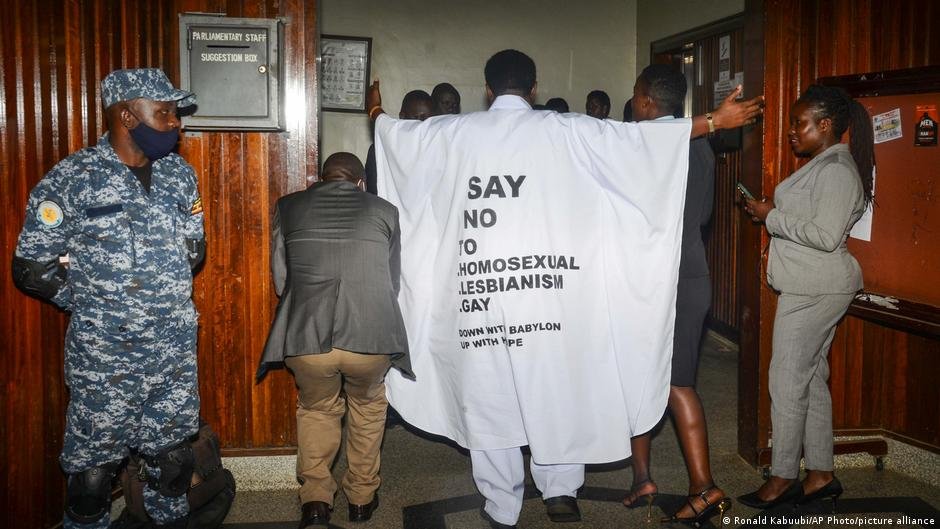
MP Asuman Basalirwa, who composed the exact wording of the anti-homosexuality bill, meanwhile accuses gay, lesbian and trans individuals of "invading our schools … invading our children," implying that members of the LGBTQIA+ community are grooming children for sexual abuse.
The country's former minister of Ethics and Integrity, Simon Lokodo, even went as far as publicly comparing same-sex marriage to bestiality, and saying that heterosexual rape was more morally acceptable than consensual homosexual sex.
Lokodo, who died last year, also claimed that homosexuality had been "brought to Uganda by white people" — which factually is incorrect; in fact, researchers widely agree that homosexual activity has always existed in all societies and that what colonialists actually imported to the African continent was the Christian faith along with the homophobic views espoused in the 19th century.
Ugandan gay rights activist Richard Lusimbo even goes as far as saying that "homophobia is the most foreign thing to our country."
The laws, on which Uganda's Anti-Homosexuality Act 2023 builds, are in fact pieces of Colonial-era legislation, which criminalize gay sex.
Homophobia: a US import
Prominent Ugandan gay rights activist Kasha Nabagesera, says that Uganda "has failed to separate the church from the state, so we have so many aggressive, anti-gay religious leaders who also happen to be in the parliament."
"So they end up mixing their own personal views and values with the policy making. So they become more aggressive, they hold press conferences, they hold protests around the country, they push for very tough laws so that makes us activists work even harder," she added.
"We are predominantly a Christian religious country. So we have all these fundamentalists. But it got worse when we had some American evangelicals who came over here and pushed it even further.
Mukwano agrees with that assessment: "All the time, you see evangelicals flying into Uganda spreading homophobia."
Lusimbo adds that since "2009 … all these sentiments are being planted and pushed by American evangelist extremists who come to our country."
One Ugandan human rights activist told InfoMigrants on the condition of anonymity: "if only the planes that bring the evangelists in from America would also take our gay brothers and sisters back with them into safety!"
Read more: Revealing sexual orientation of asylum seekers: German government admits mistakes
Mixed experiences in Kenya
Fleeing — literally — for their lives is therefore often the only option left for many members of the LGBTQIA+ community in Uganda. But rarely do they know in advance what kind of reception they might enjoy elsewhere, nor what dangers they might face along their journeys.
According to some reports, many gay and lesbian Ugandans have already fled to neighboring Kenya, where laws against LGBTQIA+ individuals are somewhat more lax — even before the anti-homosexuality act was signed into law.
However, there have been recent reports of LGBTQIA+ refugees and asylum seekers in Kenyan refugee camps falling victims to severe hate crimes and abuses — including rape.
Others are hoping to reach South Africa — the only country on the continent with full protections for the LGBTQIA+ community, where rather than homophobia, xenophobia has been a major issue in recent months, as the country's economy is teetering on the edge of recession.
Mozambique, Botswana, Angola and Namibia might also be destinations of interest to gay and lesbian refugees from Uganda, as homosexuality is at least tolerated by law in these countries — even if homophobic laws have not yet been fully repealed.
Read more: The difficulties of being gay in Iran
No protection guarantee in EU
Meanwhile in the European Union, sexual orientation is not a guarantee for succeeding with an asylum application.
In 2020, a lesbian woman from Uganda had to go to court in Germany to finally be granted protection status after previously failing with her application.
Most general asylum applications from Uganda are typically rejected, according to figures from Germany's Office for Migration and Refugees (BAMF) — however, it is unclear to what extent this changes in cases where someone's sexual orientation means that they would suffer persecution in Uganda, as BAMF does not collect statistical information on sexuality.
People seeking asylum from other African countries on grounds of sexuality have actually been rejected in Germany before.
Read more: Germany: LGBTQ+ man from Algeria refused refugee status in court ruling
Even the application process for protection in the EU might be an uphill battle for many LGBTQIA+ individuals from Uganda:
In 2020, the Dutch government decided to reassess about 250 cases of Ugandans who had been granted asylum in the Netherlands on the basis of sexual orientation.
Authorities said they had uncovered a criminal network that had helped at least 36 migrants fake their sexual orientation in order to qualify for protection status.
Since then, claiming asylum in the Netherlands on the grounds of being persecuted for sexuality has reportedly become harder.
Read more: France: The challenges of seeking asylum as an LGBTQ+ refugee
Calls for more action
The UN refugee agency, UNHCR, meanwhile has appealed for better protections to be given to people fleeing persecution on account of identifying as being LGBTQIA+.
"Forcibly displaced people who are LGBTQIA+, regardless of whether they fled specifically because of their gender identity, sexual orientation or sex characteristics, face a high risk of sexual abuse and violence, in many contexts receive little or no police protection and often face discrimination and other obstacles in trying to access basic services, such as health care and legal aid both on their journey and once they arrive at a destination," UNHCR said.
Uganda is far from being alone in criminalizing homosexuality around the world. 66 countries around the world have laws against consensual, same-sex sexual activity.
Capital punishment meanwhile remains on the books against same-sex relations in 11 countries: Afghanistan, Brunei, Iran, Mauritania, Nigeria, Pakistan, Qatar, Saudi Arabia, Somalia, the UAE and Yemen.
Read more: Trans in Afghanistan: A mortal danger under the Taliban