
European leaders will meet at a summit held in Moldova today to discuss border security and greater cooperation on the issue of irregular immigration.
British Prime Minister Rishi Sunak plans to speak at the summit of the new European Political Community (EPC) on Thursday (June 1) in for greater cooperation on the issue of irregular immigration.
Downing Street announced on Wednesday evening that Sunak will also discuss repatriation agreements that would allow the UK to deport irregular migrants.
As a result of leaving the EU, the UK also stepped out of corresponding agreements. Last year alone, some about 45,000 people crossed the English Channel in small boats. Sunak's Conservative government is under pressure, to stop this.
The EPC is the result of an initiative by the French President Emmanuel Macron and seeks to improve cooperation with other European countries. It groups 27 EU members with 40 of their allies and excludes Russia and Belarus. Leaders from nearly 50 countries are meeting at Mimi Castle in Bulboaca today.
Sunak focused on tackling irregular migration
The UK prime minister has been under pressure from his own Conservative party to prioritize irregular migration and reduce overall migrant numbers.
Sunak, whose country left the European Union but remains in NATO, said, "Europe is facing unprecedented threats at our borders. From Putin’s utter contempt of other countries’ sovereignty to the rise in organised immigration crime across our continent."
Figures published by the the Office for National Statistics last week show that net migration into the UK for 2022 was 606,000 -- the highest number on record.
However, "the tragedy is that these figures do not reflect an increase in protection to people fleeing torture and persecution," Sonya Sceats, the chief executive at Freedom from Torture, told The Guardian:
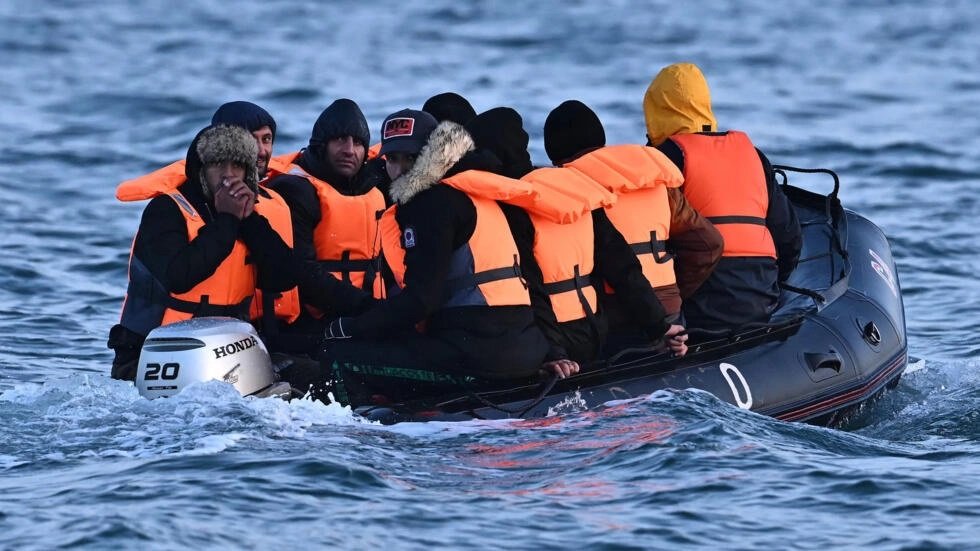
The UK is entering negotiations with Moldova on a new returns agreement with the small Baltic state. Sunak is also set to announce a similar deal struck with Georgia has come into force, and that the UK is sharing intelligence with Bulgaria to help its law enforcement officials to help officials destroy the business model of people-smuggling gangs in the Western Balkans and the Eastern Mediterranean.
In a statement released by No.10 Downing Street Wednesday night the prime minister stated: "We cannot address these problems without Europe’s governments and institutions working closely together."
At the summit held on the frontline of the Ukraine war, a conflict threatening the stability of the entire EU block, the UK continues to focus on the perceived "threat" of irregular migration on their shores.
Sunak is seeking to win points with his party continue to push for the issue of irregular migration as a priorty stating that "the UK will be at the heart of this international effort to stop the boats and defend our national security".
Talks on the frontline
It is no coincidence that the EPC chose Ukraine's tiny neighbour Moldova for its second summit. Moldova lies on one of the most vulnerable points on the continent's strategic frontline, in a show of diplomatic force designed to pressure Moscow.
Less than an hour's drive from Transnistria a Russian-backed breakaway region of Moldova and not much further from war-torn Ukraine, sends a clear message to Kremlin chief Vladimir Putin.
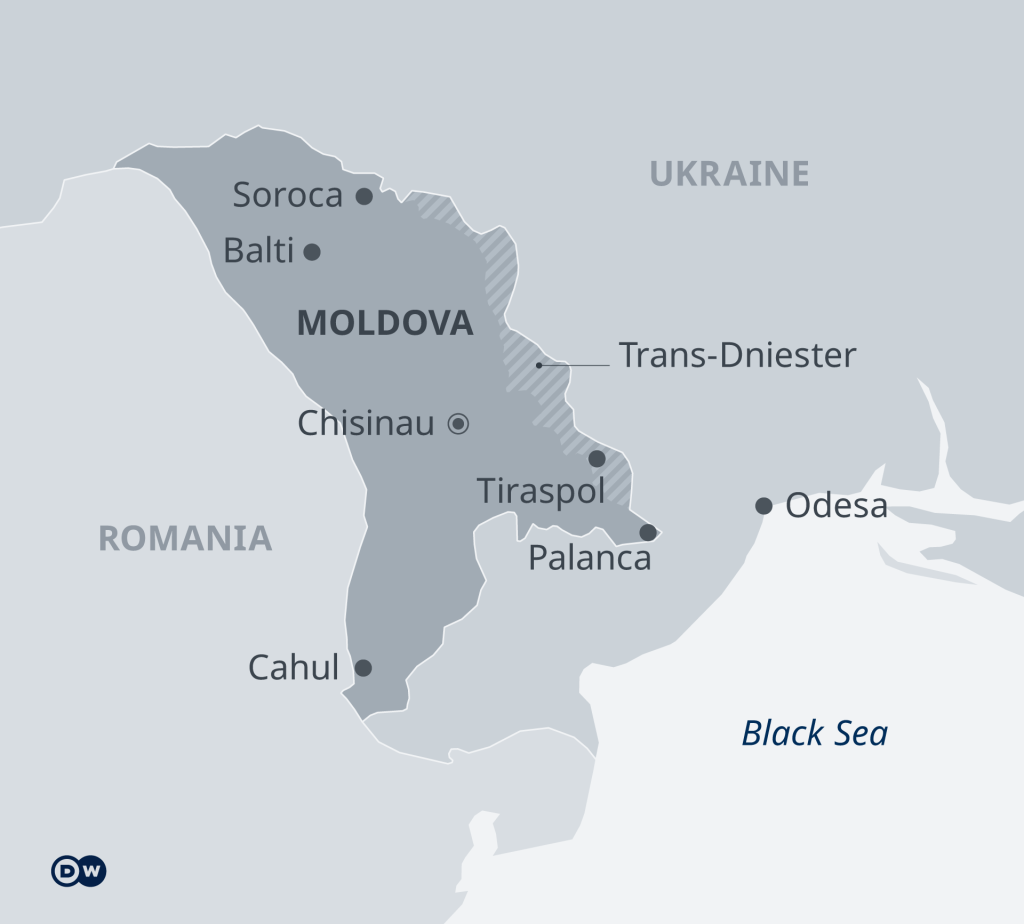
First and foremost, holding the summit outside Chisinau is a show of solidarity with Moldova in the face of Russian destabilization operations and support for its EU membership bid.
It is also an opportunity for European states -- EU members, former member Britain, and candidates for future membership such as Ukraine -- to work together on regional crises.
Need for unity
The Moldova summit also came as NATO ministers, including US Secretary of State Antony Blinken, met to discuss the agenda of the military alliance's next summit.
The NATO summit in Vilnius on July 11 will debate how formal a promise to give Kyiv on how and when to join the alliance, but in the interim Europe is keen to show support.
Macron stated that Ukraine's forces battling Russian toops in the east and south of the country are "protecting Europe".
And urge its allies to find a way to offer "tangible and credible security guarantees to Ukraine" while the eventual questions of EU and NATO membership are pending.
With up to 47 heads of state and government invited, not much time has been set aside for a general group discussion, but diplomats hope side meetings will deal with practical issues.
Macron and Germany's Chancellor Olaf Scholz will convene a meeting between Armenia's Prime Minister Nikol Pachinian and Azerbaijan's President Ilham Aliyev.
Yerevan and Baku have fought for decades over the disputed territory of Nagorno Karabakh, but have both been invited to the EPC as Washington and Brussels push for a peace deal.
Another long-standing European conflict, the standoff between Serbia and Kosovo will be on the agenda, with leaders from Pristina and Belgrade under pressure to dial down tensions.
With AFP and DPA