
Migrants who come to Europe for sporadic work are excluded from social assistance despite contributing to unemployment insurance, social security or even retirement, a report by the European Trade Union Institute shows.
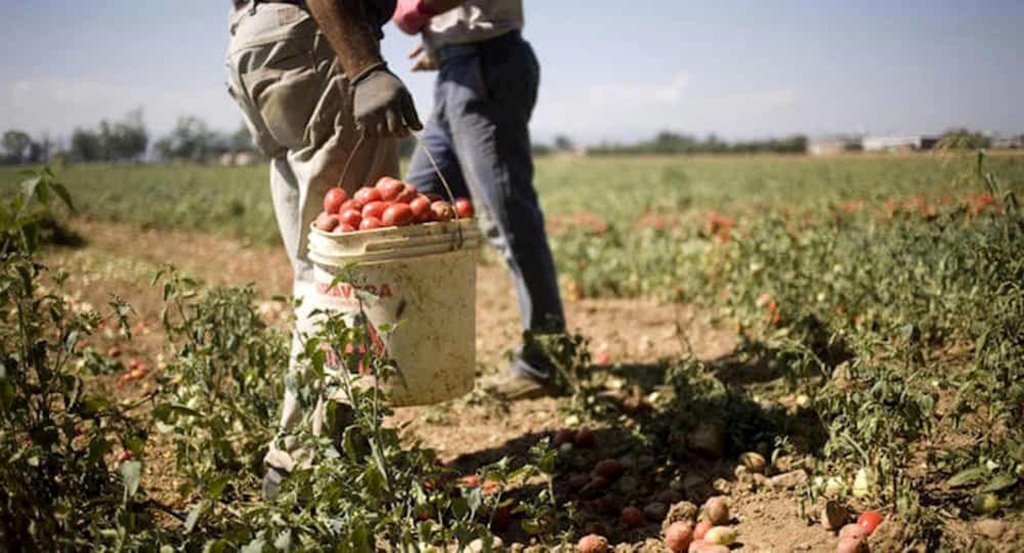
Thousands of foreign workers come to work legally in Europe to harvest tomatoes or strawberries and construct buildings. These foreigners are seasonal workers: they stay in a European country for a few months, the necessary amount of time for the work to be accomplished, and then they return to their country.
During this period, these workers contribute to the social assistance of the host country: unemployment insurance, social security or retirement. Yet, in most cases, they cannot benefit from it.
This information was revealed in a report by the European Trade Union Institute (ETUI), which analyzed the social assistance systems of 26 member states of the European Union (EU).
In general, one must live for at least one year in a European country in order to be eligible for social benefits.
In Germany, for example, seasonal workers are entitled to full access to social security only if their employment lasts 102 days per year (about five months). In Cyprus, for third-country nationals to receive child benefits, they must have resided there for at least five years. Seasonal workers are excluded from all these benefits.
Vulnerability and Exploitation
According to the researchers, "short-term migrant status is sometimes used as a basis for exclusion from social security coverage and rights."
Migrant workers may have to complete one seasonal job after another in different EU countries. This mobility makes their access to rights even more complicated. Each European country has its own rules, making it difficult for these foreigners to navigate within the different systems.
Read more: UK: At least 45,000 seasonal farmworker visas for 2024
Even if they benefit from social protection to which they have contributed, foreigners face significant difficulties in accessing it once they leave the EU, reports Toute l’Europe.
"Migrants who move abroad are therefore likely to lose access to certain benefits, such as the inclusion of their time spent working in the calculation of their retirement," the website said.
Seasonal workers experience discrimination, even though most of the time they occupy jobs recognized as arduous (construction, agriculture), according to the research. These differences in treatment increase their vulnerability.
"Certain types of vulnerability facilitate the short-term exploitation of migrant workers and make their situation precarious," said the report.