
Britain’s 'illegal migration bill' begins the amendments procedure today (May 24). But the process is being clouded by rows over the Home Secretary's conduct.
Immigration to the UK is on the rise and cracking down on it has become one of the ruling Conservative government's main priorities.
The 'illegal migration bill' introduced this year represents the government's latest attempt to deliver on its promises to stop small boats crossing the Channel towards Britain and process asylum claimants more quickly.
Last year, the 'nationality and borders bill' promised to do similar things when it was passed in parliament. But the numbers of those crossing the Channel has continued to rise and the current administration felt an additional bill was needed.
The bill already passed the lower house of parliament, the House of Commons, at the end of April and begins a detailed line-by-line examination in the upper house, the House of Lords, today (May 24).
Also read: UK aims to cut legal migration
After today's talks, four more sessions are planned to discuss amendments in June. According to the parliamentary record’s service Hansard, the Lords are expected to table amendments governing the UK’s obligations under the European Convention on Human Rights, whether unaccompanied children should be given leave to enter and remain in the UK and the amount of time someone can be detained under the bill.
150 amendments tabled
All in all, there are 150 amendments proposed for discussion. Some of them ask for whole clauses to be rewritten or even scrapped, while others merely involve the redefinition of certain words.
The bill itself is long and covers many aspects of the immigration process -- from definitions of modern slavery to how to deal with unaccompanied children, family reunification, applications for asylum and being able to repatriate people or even send them to countries like Rwanda to begin their asylum process there.
It all essentially rests on the premise that entering the UK without papers, in particular via small boats from across the Channel, is "illegal" -- a classification that would effectively prevent those aboard from the ability to apply for asylum because they would be deemed to have committed a crime.
Also read: Conditions at UK detention center underscore mental health issues migrants face
Some of the proposed amendments would toughen up the legislation, while others would soften or refine it. According to reports by British online newspaper the Independent, one of the proposed amendments would allow authorities to "seize the mobile phones of every migrant crossing the Channel and mine them regularly for intelligence."
Government amendment, under fire
The UK government was fined just last year for similar practices. The Information Commissioner’s Office confirmed to the Independent that the "government remains under investigation for its previous seizure policy."
In July 2021, legal action was launched by several asylum seekers who had had their phones confiscated and searched after they arrived by small boats. The men, from Iraq and Iran, reported the Independent, said they had been stripped of their possessions and were not able to contact their families while the phones were being held.
At the High Court, which heard the case, the Home Office "admitted acting unlawfully when it seized mobile phones from all migrants crossing the Channel between 2018 and 2020," the Independent reports.
Judges at the High Court ruled that the practice was "wholly impractical and disproportionate" and violated both human rights and data protection laws. At the end of the court case, the Home Office admitted it had more than 400 phones in storage that could not be returned and were consequently "marked for destruction," apparently because their owners could no longer be traced, according to the newspaper.
The government justified its actions in a statement, saying that for them it was "paramount that we also use every tool at our disposal to investigate and disrupt the people smuggling networks who facilitate these dangerous crossings, including seizing mobile phones which could assist with criminal investigations."
No other choice
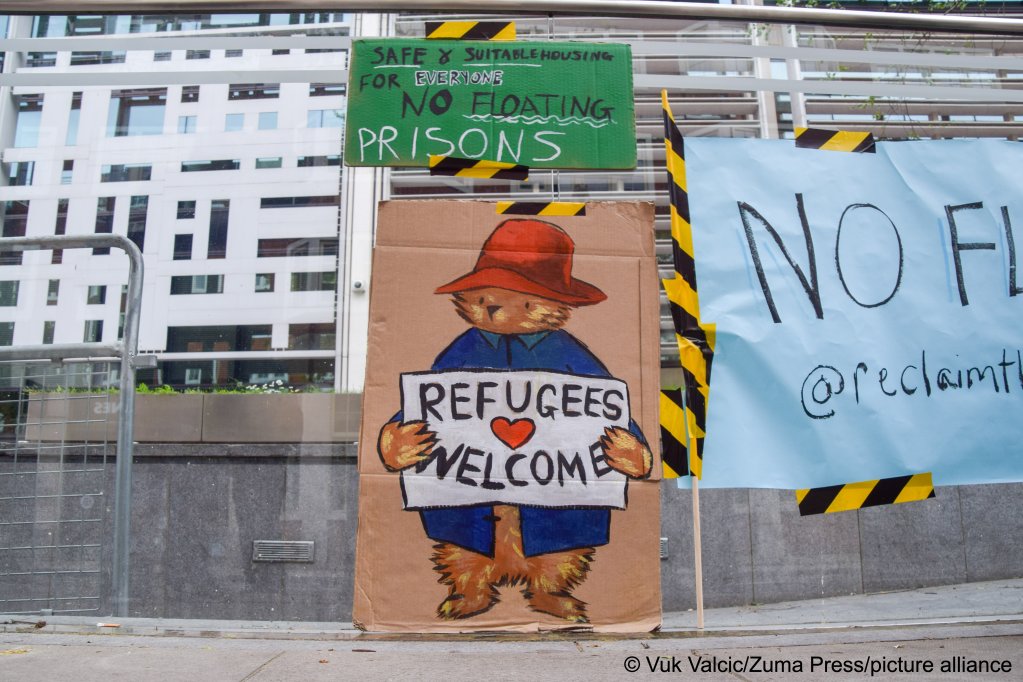
Critics of the bill both from within and outside the Conservative party point out that since there aren’t many legal routes available into the UK, many migrants feel they have no choice but to arrive in Britain via small boats or other "illegal" routes.
Also read: Refugee council warns of high costs if bill becomes law
Organizations that work with migrants and asylum seekers also point out that the way someone arrives should not block them from having their asylum claim objectively and fairly processed, since this is a fundamental tenet of international human rights law to which the UK is a signatory.
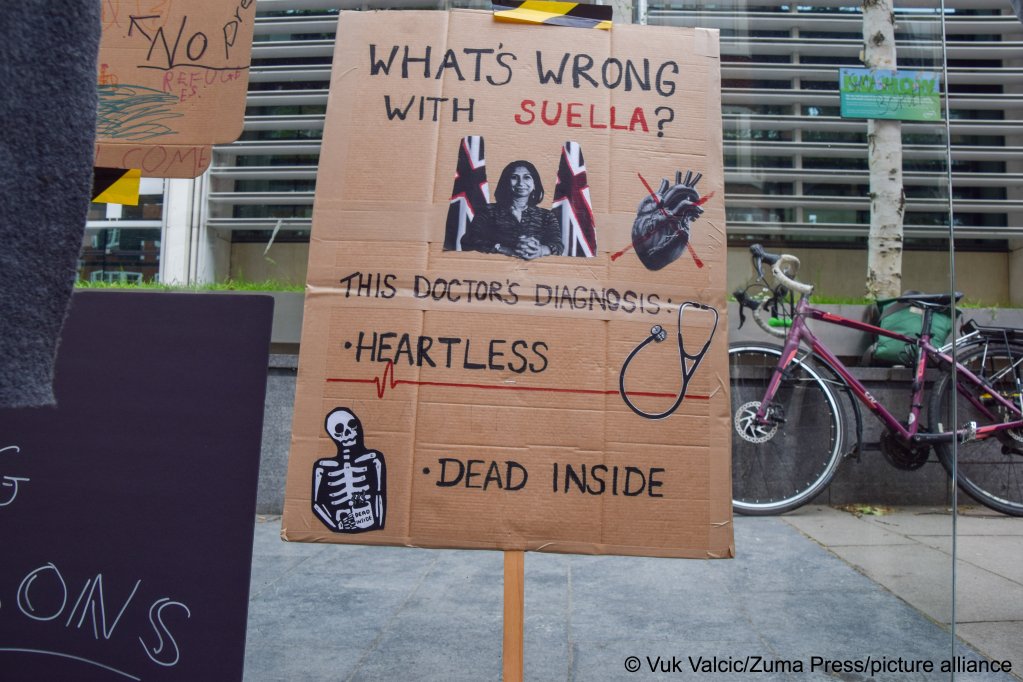
Recently, the main architect of the law, Britain’s current Home Secretary (Interior Minister) Suella Braverman, has been accused by the opposition -- and even some in her own party --- of fanning the flames of discrimination by making migrants the scapegoats for problems in the UK.
Braverman faces questions on conduct
In addition, Braverman faced questions in the House of Commons (Parliament’s lower house) on Monday (May 22), over whether or not she breached the ministerial code -- this time, by allegedly inquiring with the civil service whether she could have special treatment (a one-on-one speed awareness course) in regards to a speeding offense she incurred while holding the office of Attorney General.
The Telegraph said Braverman was the subject of a "smear campaign" because of her push to get tougher on migration, a stance that is not shared universally, even within the Conservative party.
One ally of Braverman told the Telegraph it was "extremely worrying" that the Home Secretary was being subjected to personal attacks. Miriam Cates, a fellow Conservative MP, told the newspaper she felt it was a “concerted effort to discredit her.”
Cates added that it is "no coincidence that it’s in the same week that she had been very vocal about the need to put proper limits on legal migration which is clearly a contentious issue in government." Cates explained that there were many people who don’t agree with Braverman’s view on limiting immigration and "if you put two and two together, it is perfectly possible it’s politically motivated."
The left-leaning Guardian newspaper has also alleged that Braverman asked to be allowed to be absent during a vote on the illegal migration bill. The Home Office though told the Telegraph this was "drivel" (nonsense).

More important issues to focus on
Prime Minister Rishi Sunak has announced that he will seek advice from his independent adviser Sir Laurie Magnus over whether or not an inquiry into these allegations is necessary.
However, in analysis on the issue from the independent and cross-party think tank The Institute for Government, program director Tim Durrant wrote that "the headline-making drama [of whether a minister responsible for upholding the law broke the ministerial code] risks the questions that really matter fading out of view."
Durrant wrote that instead, attention should be focused on "failures of the Home Office and her own criticism of government policy. From the charges of 'institutional racism, misogyny and homophobia,' levelled at the country’s largest police force [The Metropolitan police, for which the Home Office is responsible] to the much-criticized small boats and Rwanda asylum policies."
Braverman has refused to answer directly whether she spoke to civil servants about the speeding fine or any kind of special treatment.