
The majority of Italy's first reception centers, or 'hotspots' as they are known, are located in the south of the country. Now the government has announced it is considering building one in the north, possibly in the port city of Trieste.
Italy's port city of Trieste, located in the northeast region of the country not far from the Slovenian border, serves as a crossing point on the so-called Balkan route, which migrants follow from Turkey and Greece through the Balkans toward Western Europe.
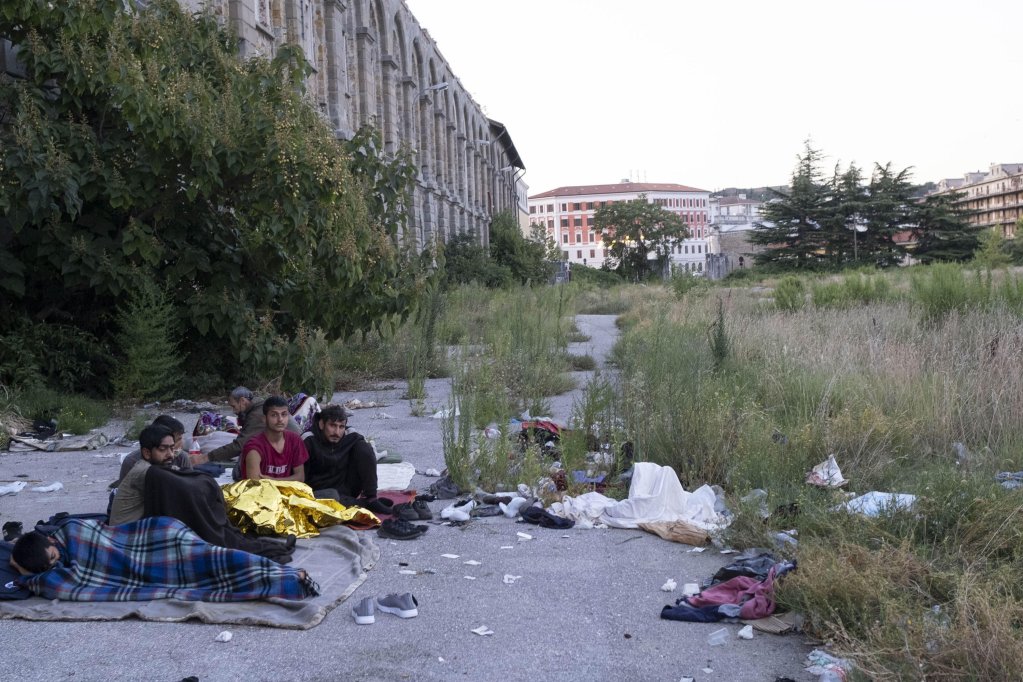
Migrants have been staying in the city for years, sometimes just for a few days on their journey towards the Alps, France, the UK or Germany, and sometimes for longer. Until now, some volunteer-run reception facilities have operated in Trieste, but no proper state-run reception facilities.
In January 2023, when Deutsche Welle (DW) reported from the city, mayor Roberto Dipiazza told reporters he was reluctant to build a place to house the many migrants who were known to be sleeping rough in squats and abandoned buildings around the town.
'If I create accommodation...more will come'
"If I create accommodation for 80 or so refugees, then more will come, that’s the problem," Dipiazza told DW. "I would also like to point out that it is not our responsibility, it is the prefectures. They should open up the abandoned military barracks and make room for these unfortunate souls."
Dipiazza has been mayor of Trieste off and on since 2001. The right-wing politician and businessman has held the office this time since 2016.
Last week, May 17, Italian commissioner for the "migrant emergency" Valerio Valenti spoke to leaders in the Fruili Venezia Giulia (FVG) region around Trieste to evaluate whether or not a "hotspot" could be legitimately built in the region. He met with FVG's four prefects and the regional president Massimiliano Fedriga, according to the news portal Balkan Insight.
Increase in arrivals of migrants in FVG and Trieste
According to that news portal, the FVG region saw a 180% increase in the number of migrants entering Italy from the Balkan route in the first four months of 2023.
Trieste’s local newspaper Il Piccolo reported last week that Trieste itself had experienced a 335% increase in the number of migrant arrivals in the first four months of the year compared to the same period in 2022. Although the increases sound high, according to Il Piccolo, Trieste’s prefect Pietro Signoriello confirmed that in the first four months of 2023, some 5,909 migrants had been registered as arriving across the whole FVG region, 3,491 of them in the city of Trieste.
Valenti said that with recent increases in the numbers of migrants coming to northern Italy via the Balkan route, the region around Trieste, FVG, is in need of similar reception facilities to those found in Sicily and Calabria in the south of the country, where most migrants travel by boat to reach Italy.
Location of the 'hotspot'
The question of where to situate the 'hotspot' is hotly debated in the region. "The evaluations are ongoing," Migrant Commissioner Valerio Valenti told the Italian newspaper Il Gazzettino. Valenti added that he was working closely with leaders in the region and he was confident that "we will find a structure that will be adequate for our aims. The ministry and my commissioner’s office will provide funding so that we can make it work."
As well as providing first reception centers, Valenti says he hopes that a purpose-built structure will help reduce the impact the presence of migrants has on the FVG region. Valenti told Il Gazzettino they aren't aiming for a structure to house thousands of migrants, but rather centers with maybe 300 beds.
Also read: Homeless refugees fined in Trieste
Signoriello told Il Gazzettino that although his office is looking at the whole region, "it is obvious that since Trieste is the main entry point [for migrants coming from the Balkan route] we are looking at Trieste more closely."
Signoriello said they are hoping to build proper centers, not just tent camps. "It would really have to be an emergency situation for us to consider using tents. At the moment, they are not on our agenda," the prefect told the press.
Expanding the reception system
Valenti himself held the post of prefect of Trieste up until 2021. He was nominated Special Commissioner for Migration in April this year, shortly after the Italian government declared a state of emergency over migration on April 11.
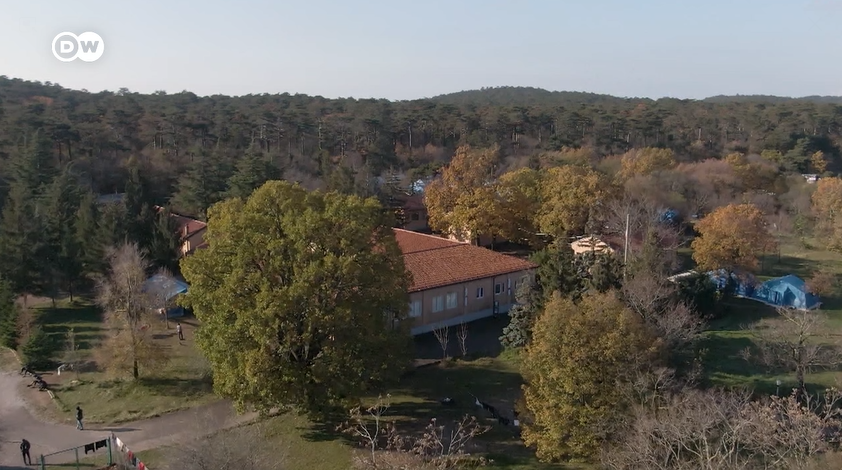
One of Valenti’s prinicple roles in the post is to amplify the reception system, which includes hotspots, first reception centers, emergency reception centers and integration and welcome centers. He has also been asked to identify provisorial structures to house migrants and asylum seekers in the short term, making sure they have access to a place to sleep, health care and language lessons.