
More than one month after the Sudan crisis began, the fighting is picking up again – and with it the mass displacement. Close to one million people have been uprooted by the conflict so far, 200,000 of whom have crossed into neighboring countries.
In 2016, Salam Kanhoush fled the civil war in Syria and found refuge in Sudan, an African country some 2,000 kilometer to the South.
Fast-forward to today, the fighting that broke out in the Sudanese capital Khartoum last month means he's facing a second round of exile.
The 30-year-old student is stranded in Metema, a border town on the Ethiopian side of the border with Sudan, along with thousands of people fleeing fighting between the Sudanese army and paramilitary forces.
When the fighting began, Kanhoush had just moved to Khartoum from Kassala in eastern Sudan and "started a new life," he told news agency AFP.
April 15 began like any other day, he said, but he soon began receiving messages urging him not to leave his house.
After he spent over a week holed up in his home, including a few days with no electricity or water supply, before finally managing to leave Sudan's capital, carrying only a backpack.
"I left a lot of things behind, it was really hard to take the decision to leave Khartoum because ... I had to leave a lot of memories," he told AFP.
As of May 15, close to one million people have been displaced by the conflict, data aggregated by Relief Web shows. 200,000 of them have crossed into neighboring countries, almost 90,000 of them into Egypt.
Read more: Number of internally displaced people hit record in 2022
Unfinished dreams
Without his passport, which is stuck at the Syrian embassy in Khartoum due to it being renewed, AFP reported, Kanhoush cannot leave Metema. And "going back to Syria is not an option. What I have is everything I have," he said.
Kanhoush is not the only refugee in Metema who's been forced into exile once again. Before the conflict, Sudan hosted 1.1 million refugees, according to the UN refugee agency UNHCR.
Sina fled to the northeastern African country in 2018 after enduring four years of harsh military service in Eritrea, an authoritarian state sandwiched between Sudan, Ethiopie and Djibbouti. Sina is one of tens of thousands of Eritreans who have been suffering under the notorious policy of universal conscription.
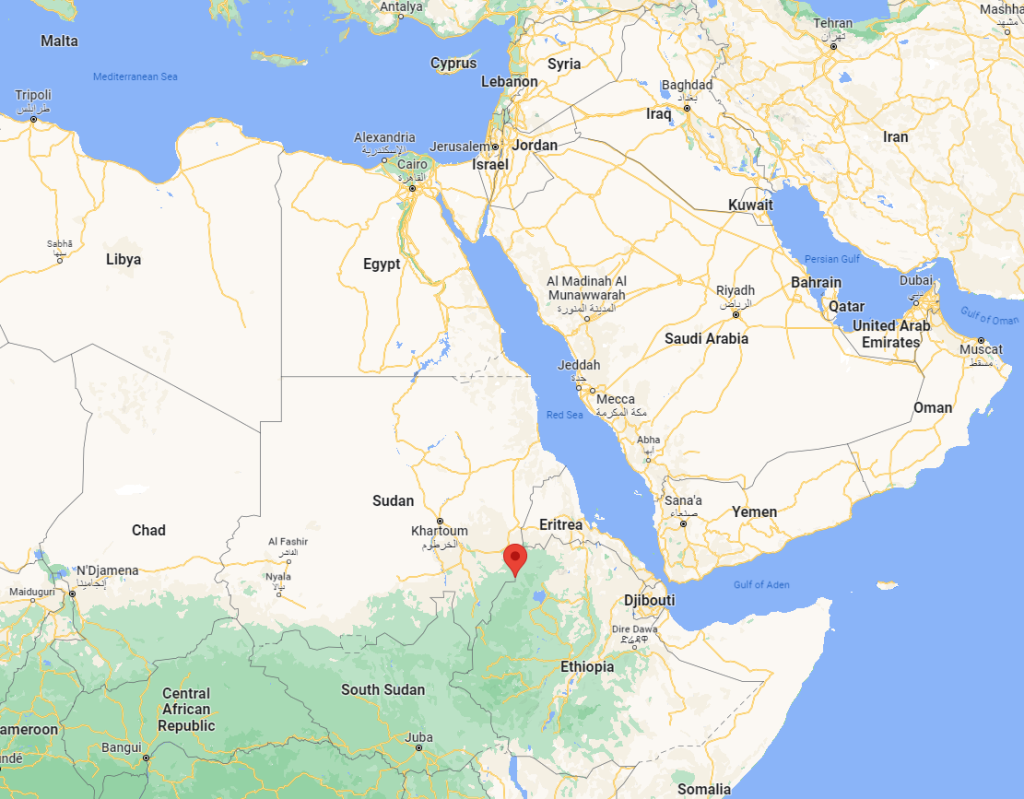
The 24-year-old, who worked as a waitress in Khartoum, said she was devastated to leave the place where she sought refuge, AFP reported.
"I was so happy with my new life," she told AFP. She fled to Metema with her boyfriend and his brother and two suitcases between the three of them
"We have no proper shelter, the water supply is not enough, I have no money. And worst of all, no immediate prospects for the future. If I go back to Eritrea I will get punishment, prison, then I will be sent back to [the] military," she said.
Also read: Yonas' tale: 'I haven't heard from my siblings for over two weeks'
'I want a quiet place away from war!'
Mohammed Qassim left Afghanistan in 2016 for an additional degree in mass communications in Sudan. Five years later, in August 2021, the Taliban takeover of Kabul put an end to his hopes of ever returning to Afghanistan.
"I was trying to do my best to live in [Sudan] because there was no chance to go to Afghanistan,"the 29-year-old told AFP.
Qassim was preparing to get his diploma when he was forced to flee. He does not see his future in Ethiopia, hoping -- like Kanhoush, the student from Syria -- to find a save haven in a third country.
Kanhoush said he dreams of the day when he can return to Sudan to complete his studies and "move forward".
"My new life? I want a quiet place away from war."
Also read: Child refugees stuck in Sudan wait for UK's family reunification process
This article is based on an AFP feature