
In the Canary Islands, the International Committee of the Red Cross is training teams to use a tool capable of listing all the relationships a victim may have had during the last hours of their life while crossing the Atlantic Ocean. Julia Dumont reports for InfoMigrants.
The cemetery of Santa Cruz de Tenerife overlooks the Atlantic Ocean from the heights of the coast and faces the expanse of cobalt blue water. Imposing graves topped with crosses and burial sites marked by marble slabs stretch off into the distance beneath the cypresses and palm trees. Each grave has flowers and a name engraved on its surface.
One day in late April under a powerful midday sun, Silvia Cruz Oran and Isabel Sebastia Fabregat are looking for the only unidentified graves in the cemetery. Accompanied by José Pablo Baraybar, forensic coordinator at the International Committee of the Red Cross (ICRC), the two women want to identify the graves of 14 of the 24 victims of a shipwreck that occurred on April 26, 2021. The other 10 bodies are in the cemetery of Candelaria.
Like for every shipwreck victim along the Canary Islands route, the San Cristobal Forensic Institute took a DNA sample from each of the victim’s bodies, assigned a number to each body, recorded its location in the cemetery and provided the information to the Spanish Red Cross.
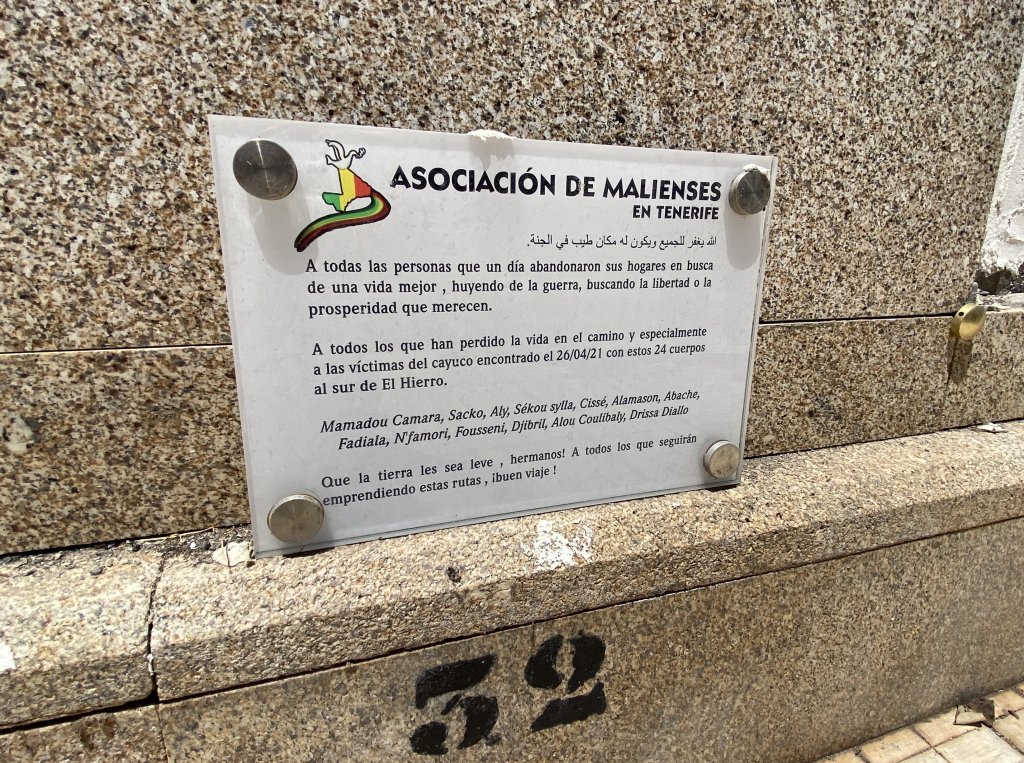
The 14 unidentified graves are on a higher level of the cemetery. Nearby, a small plaque by the Association of Malians in Tenerife reads in Spanish, "To all the people who one day left their homes in search of a better life."
Also read: Deaths en route to the Canary Islands
This is the harsh reality of exile on the road to the Canary Islands: around 8,000 people have died since 2018. Many of the bodies are buried in unmarked graves because there are no documents on them and there is no possibility of comparing their DNA with family members. Other boats never arrive and the bodies of their passengers remain at the bottom of the ocean.
Thousands of kilometers from the Canary Islands, the families of the migrants hope for news and often refuse to resign themselves to considering their loved ones dead.
Interviews with survivors
In September 2021, the Spanish Red Cross launched the Missing migrants program to try to overcome this impossibility of identification. The research consists of collecting testimonies from survivors of shipwrecks and the families of the disappeared. It is then necessary to cross the sources in order to confirm the presence of a certain person, in certain a boat, on a given day.
Also read: Identifying the dead: Why it is so difficult and what you can do
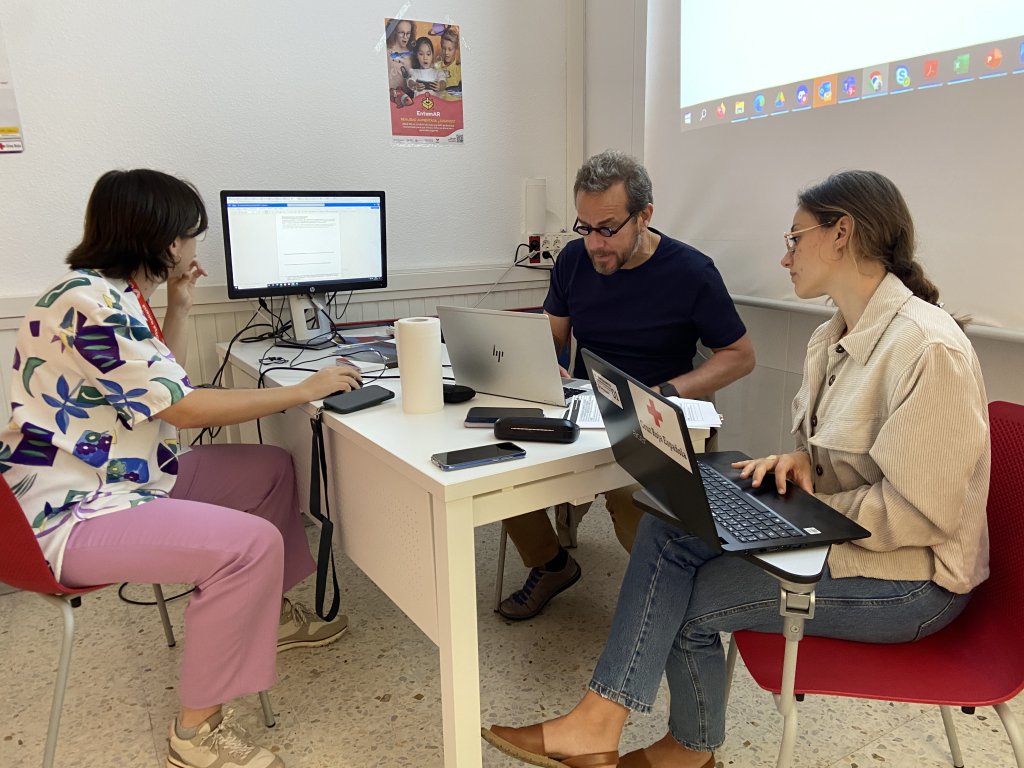
"Survivors are interviewed within a week of their arrival," says Isabel Sebastia Fabregat in the Red Cross offices in Santa Cruz. "Sometimes, we also question the families. In most cases, we receive phone calls from relatives settled in Europe," adds Silvia Cruz Oran, who is sitting nearby.
The ICRC-Paris developed the method in 2019, following the death of 800 people in a shipwreck off the coast of Libya in April 2015. In 2021, the members of the "Catania pilot project" (named after the Italian city where the survivors were dispatched) came to assist the Spanish Red Cross office in the Canary Islands with the same process. In 2022, the program extended to the whole country of Spain.
From the Canary Islands, to the Balearic Islands via Andalusia, the principle is always the same: to use the testimonies of survivors to prove the death of a so-called "missing person", even in the absence of a body.
Sharing information
Today, the Spanish Red Cross is preparing to take further steps in this direction with a new technological tool, developed by the ICRC and Institut National des Sciences Appliquées de Lyon (INSA Lyon). Baptized SCAN (for "Share, Compile and Analyse", to share, compile and analyze), it should enable real-time sharing of information on what José Pablo Baraybar calls "an event", i.e. a shipwreck, a boat arrived at the wrong place, a small boat which arrived without some passengers.... In short, a crossing that went wrong.
Read more: Looking for a missing loved one: How do I even begin to search and who can help?
"Human sources are everywhere," explains José Pablo Baraybar, a former member of the teams of the International Criminal Court (ICT), who trains Spanish Red Cross teams to use the new tool. "Before, everyone made lists on their own, now we can share all the information on an 'event' and try to match our information using the same software."
An algorithm is responsible for checking the variables "four times a day" to avoid any risk of repetition. "So the name Mohammed, Muhammad and Mohamed isn’t recorded three times, when it is the same person," says José Pablo Baraybar.
Absence-disappearance
Ideally, the forensic anthropologist would like SCAN to connect all the actors involved in the identification of people missing at sea, in order to gain time and efficiency.
The Red Cross is not the only organization trying to establish the status of missing persons on the road to the Canary Islands. Between Morocco and Spain, several associations, citizen groups and Facebook pages conduct research on behalf of families.
In Tenerife, Aboubakar Konaté Diarra, president of the association of Malians of Tenerife, generally receives calls from families looking for a missing relative. "When families contact me, I pass on the information to the Malians of Tenerife. I ask them if they have had information of a shipwreck and we exchange photos of the missing people on WhatsApp", he explains over the phone. "Generally, the only information I have is that a shipwreck occured. I cannot confirm the identity of the dead or missing."
A boat that arrived in Tenerife on April 26, 2021 was an exception. "It left Mauritania but lost its way. The survivors went for days without food or water. When several migrants died, their bodies were thrown into the sea," says the president of the association.
After more than 20 days at sea, the boat finally reached land. Only three people did not perish. Among them was Moussa, a young Malian, who told the story of the crossing to Aboubakar Konaté Diarra. He identified the bodies that were in the boat when he arrived on the island. The young man delivered the same testimony to the Spanish Red Cross. Therefore, the two organizations (the association and the Spanish Red Cross) had every reason to share their information with one another.
José Pablo Baraybar hopes that better identification of the disappeared will force the authorities of their country of origin to issue official "absence-disappearance" certificates to the families of the disappeared. "State certificates which would certify that, even if one does not have a body, a person no longer exists."
On the other side of the Atlantic, the disappearances of the road to the Canaries create gaps in families and prevent bereavement. "A person must be declared dead so their spouse can remarry, or so the family can sell the house, etcetera, explains José Pablo Baraybar. So that life can continue."
Also read: Henry A. recounts journey on ship's rudder to the Canary Islands
Correction note: The original version of this article, published May 8, 2023 was updated on May 15 to replace the mention of "the French ICRC" with "ICRC-Paris".