
A group of 60 migrants rescued from two separate boats in the central Mediterranean disembarked on the island of Malta on Monday. It was the biggest arrival of migrants in Malta in many months.
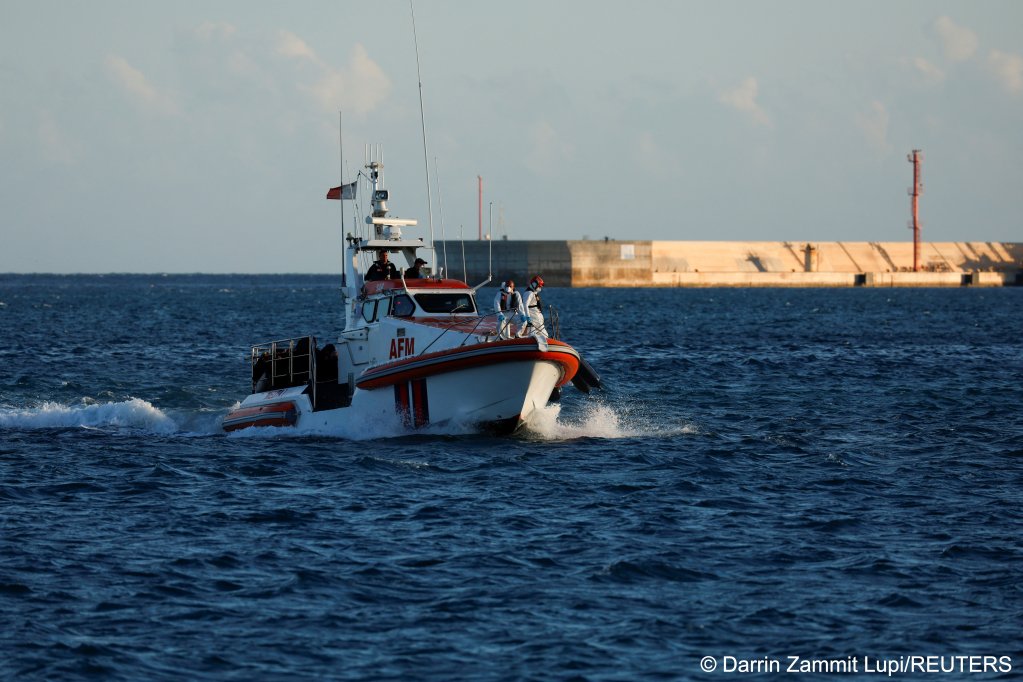
On Monday (April 17), a group of 60 migrants disembarked in Malta after being rescued by two merchant ships in the Maltese Search and Rescue (SAR) zone. This is the biggest arrival of migrants in Malta "in months," reported the news agency Reuters.
In fact, to date this year, only a few migrants have been reported as medically airlifted to Malta from private rescue ships, and the majority of those rescued by private rescue ships, merchant ships and the Italian coast guard have then been transported to Italy.
The two merchant ships involved in Monday's rescue were ordered to initiate the rescue by the Maltese authorities, who are responsible for coordinating rescues of ships found in distress in their SAR zone.
On Sunday (April 16), the organization Alarm Phone, which monitors migrants' journeys towards Europe, alerted authorities to the presence of the two boats, each carrying around 30 migrants.
Two boats in distress
In a series of posts on its Twitter feed, Alarm Phone said they had alerted both the Italian and Maltese authorities, and had demanded "no delays in rescuing this group." Shortly afterwards, they alerted the authorities to a second boat with around the same size of a group of migrants on board.
At this point, Alarm Phone claimed that Malta had "told a nearby merchant vessel to not intervene."
Later on Sunday, Alarm Phone went further, accusing Malta of pursuing a policy of "non-assistance," saying this alleged policy was risking "60 lives." They said that although the weather was reportedly deteriorating, Malta "refuses to order a rescue operation."
However, at some point on Monday, Alarm Phone found out that Malta had ordered the two nearby merchant ships to carry out an intervention and that those ships should bring the migrants to disembark in Malta later that day.
Malta orders rescue to be carried out
Reuters confirmed later that Maltese authorities had indeed ordered the rescue to be carried out. Malta has so far not commented on either the rescue nor responded to accusations that it has allegedly been pursuing a policy of non-assistance.
However, criticism at Malta's actions -- or perceived lack thereof -- has moved beyond press releases issued by migrant NGOs: Last week, Tommaso Foti, head of the ruling Brothers of Italy party, said in the Italian lower house of parliament that "Malta's attitude is starting to grate."
He made his comments after the Italian coast guard ended up rescuing a packed fishing boat with around 400 people on board that had previously been sighted in the Maltese SAR but had received no assistance.
"They [Malta] consistently pretend not to see and never intervene. Our coastguard is under pressure," said Foti, according to Reuters.
According to the Italian government's latest figures, 34,347 migrants have arrived in Italy by sea since the beginning of the year. The figures were last updated on April 18.
Italy promises tougher laws against migration
Foti's comments echoed those made by the leader of the League party Matteo Salvini back in 2018, when he then held the post of deputy prime minister. At that time, Salvini declared on his Twitter page that "Malta wasn't allowing anyone to enter" and that the whole of Europe "was conducting the policies that suited them."
Salivini also said at that time that the EU was essentially leaving Italy to play the "responsible big brother" and clean up their mess.
Also read: An increase in migrants could lower public debts
Later this week, Italy's upper house, the Senate, is due to vote on government proposals to get tougher on migration. The government is hoping that if its proposals become law, it will make it harder for migrants to gain temporary permission to stay in Italy.
Salvini is among those calling for the special protection status to be eliminated altogether.
At the moment, migrants granted special protection can live and work in Italy for two years, pending renewal thereafter. The status is most often given to those who are unlikely to qualify for refugee status and cannot be deported under expedited rules.
Salvini has said that this "special protection" status acts as a "pull factor." However, parties in the right-wing coalition, including his own, are divided over how to deal with this status in the long term.
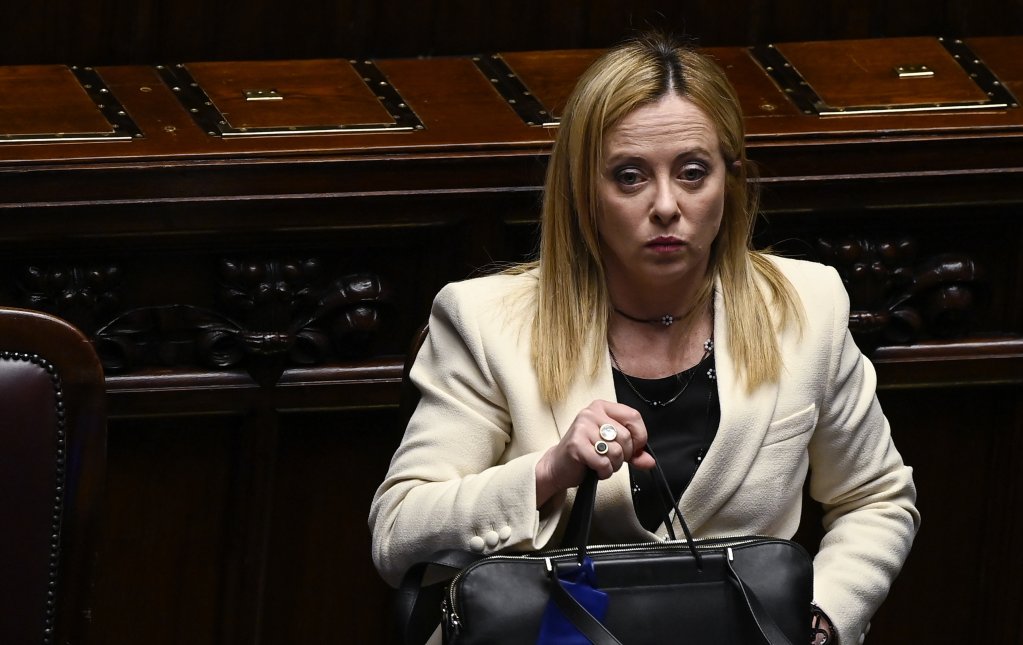
Prime Minister Georgia Meloni has also said that she would like to get rid of that special protection status, but the Forza Italia party, founded by Silvio Berlusconi, has proposed just reducing the length of the permit offered from two years with renewal to six months.
More arrivals on Monday
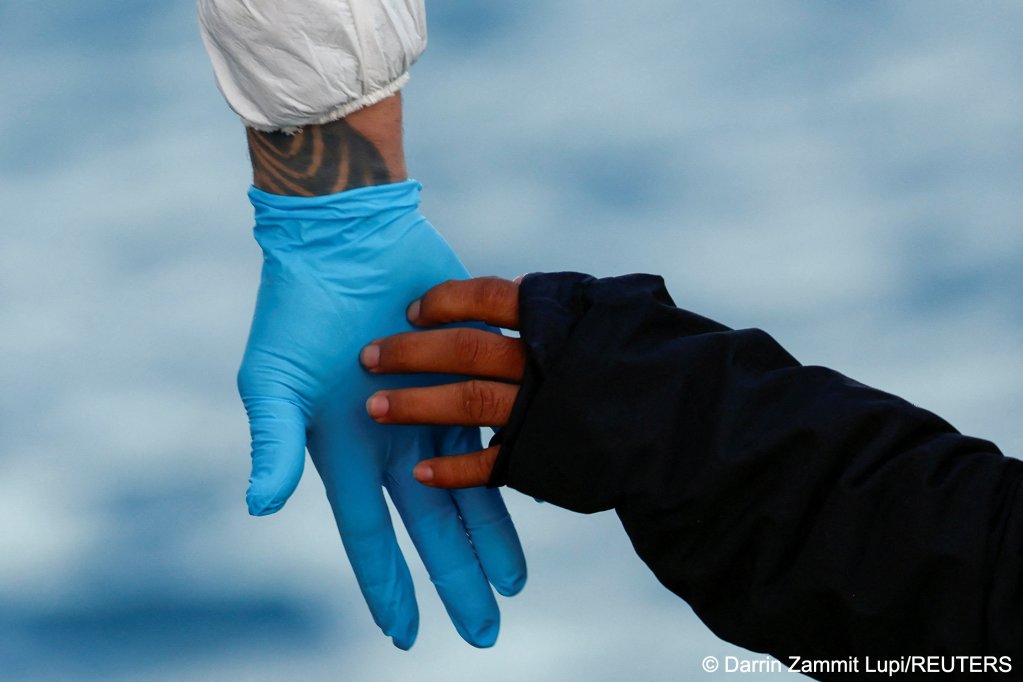
The debate in the Senate comes after hundreds of migrants arrived in Sicily over the weekend and on Monday, with some arriving on Italy's shore unaided while many were rescued by authorities at sea.
A group of 200 brought in by the Italian coast guard had been rescued from Malta’s SAR, reported AP. Further migrants were brought in later by a Frontex vessel, docking at the port of Catania. An Italian naval vessel meanwhile also transferred around 300 rescued migrants to the Sicilian port of Augusta, AP added.
The private rescue ship Life Support, operated by the Italian humanitarian medical charity EMERGENCY, also rescued 55 migrants on Sunday, but has only been assigned a port of safety in north-west Italy, meaning it will have to journey up the coast for several days before they can disembark.
EPP calls for greater solidarity with Italy
Meanwhile, as politicians are trying to agree on ways to address the increase in migrant arrivals, Italy also declared a state of emergency last week in order to deal with the situation.
The small island of Lampedusa is finding it hard to cope, report authorities. According to AP, the first reception center on Lampedusa is currently holding around 800 migrants, nearly double its declared capacity. Last week, reported numbers there were well over 1,000, before the authorities made several transfers to Sicily and the Italian mainland.
In Brussels meanwhile, the leader of the European People's Party Manfred Weber called on Europe to show greater solidarity with Italy, as reported in various news agencies, including dpa and ANSA.
"We are facing another major migration crisis in Europe. That is why the EPP fully supports the Italian government in making this issue a priority at the European level," Weber told the Italian newspaper Corriere della Sera.
'Tunisia is not a safe country'
Weber is urging other European states to not leave Rome alone to deal with the situation by pushing for readmission agreements to be concluded faster with countries of origin. The politician says that this way, "if a migrant is not entitled to protection, he must return home."
Weber hopes that a pact with Tunisia, which has become the most important transit country for migrants crossing the Mediterranean so far this year, would help speed up returns.
Speaking to the private German news channel RTL, he said that "an agreement with Tunisia would allow Europe to control the numbers of migrants coming in and reduce the death toll in the Mediterranean."
However, a coalition of NGOs and humanitarian organizations have denounced this kind of agreement, saying that Tunisia should no longer be considered safe.
On Monday, a joint statement by Civil Search and Rescue Organizations and migrants solidarity networks stated that "Tunisia is neither a safe country of origin nor a safe third country… given the Tunisian ongoing authoritarian state transformation and the extreme violence and persecution of the Black population in Tunisia, as well as of people on the move, political opponents and civil society actors."
The open letter called on the European Union and its member states to "withdraw their migration control agreements with the Tunisian authorities and express our solidarity with the people concerned." The letter was signed by 66 different organizations.
With Reuters, AP, dpa