
He once had to flee his homeland but now he is on track to become Germany's youngest grandmaster: Hussain Besou's talent and ambition could catapult him into the highest echelons of chess. Later this month, the 11-year-old Syrian will play for the German national team in Croatia as the youngest national player ever.
When his family settled in the western German town of Lippstadt in 2016 as refugees, the first thing Mustafa Besou did for his then four-year-old son Hussain was to buy a chess board and find a youth chess club.
The reason soon became apparent for the club coaches: Although he couldn't communicate with them, Hussain easily beat all the other children on the chess board. As he hadn't yet learned enough German to be able to understand the coaches, they recommended Hussain attend a club at state level.
There, his desire to win impressed his coaches as much as his talent.
"Hussain strictly refused to turn around his board and would rather stop playing completely," his chess teacher Andreas Kuehler told news agency Reuters, recalling an exercise when players were asked to switch sides in the middle of the game and take over their opponent's strategy.
Growing up in Saudi Arabia
Born in 2011 in the Saudi capital Riyadh, where his father had moved several years before, Hussain Besou are up watching his grandfather and his father play chess. In 2016, when Hussain was four years old, he started asking his father to teach him the rules, Reuters reported.
After learning the ropes, Besou quickly surprised everyone with his talent: "He started correcting us and telling us what we should have done to win," his father Mustafa recalled.
At the age of five, he beat his father for the first time.
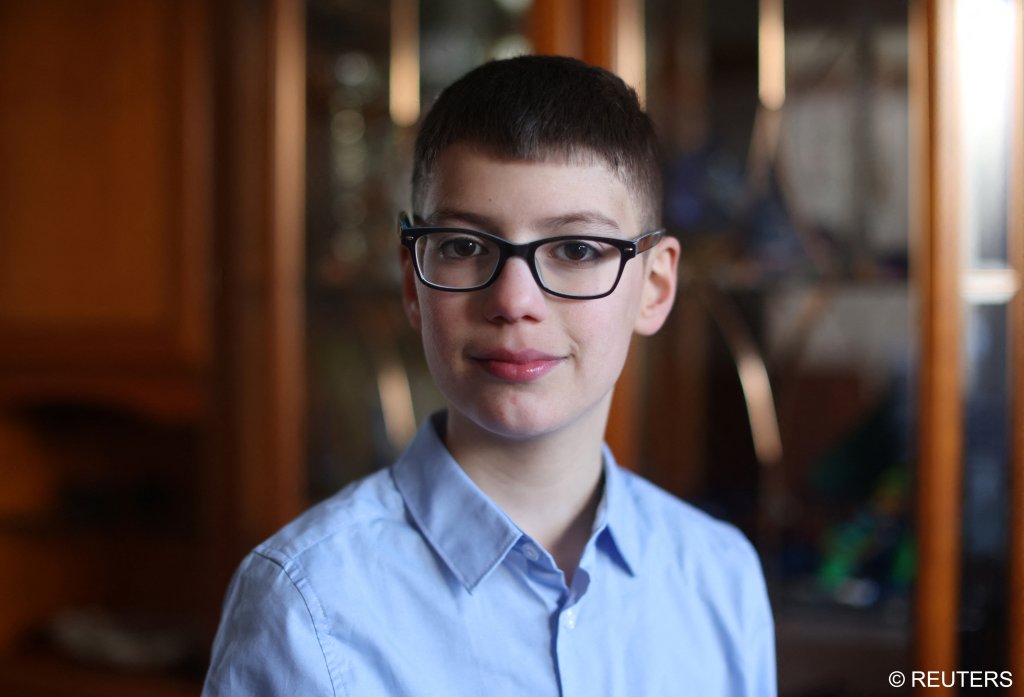
"By then I couldn't teach him anything," Mustafa Besou told German news outlet Welt.
In 2016, Hussain's family decided to leave Saudi Arabia; with the war in their native Syria beginning to affect the political landscape across the Middle East, they were afraid they might be deported back to Syria. However, that gambit seems to have paid off:
Today, 11-year-old Hussain is about play for the German national chess team at the Mitropa Cup, which will be held in Croatia later this month. This feat makes him the youngest German national player in the 146-year-history of the German Chess Federation.
German national youth trainer Bernd Voelker calls Hussain's grasp of the queen, bishop, tower and the other chess pieces "extraordinary."
Success upon success
Soon after enrolling at the state chess club of North Rhine-Westphalia, Besou began signing up for -- and winning -- tournaments. In 2020, he clinched first place in Germany's Under 10 Competition; last year, he finished third in the World Under 12 Championship.
These competitions also helped him improve his German, which he now speaks fluently. To cover the travel cost for the tournaments and training, his family launched a crowdfunding campaign. They hope Hussain will eventually find a professional sponsor.
"People only see success as if it's magic, (but) there is a lot of work and costs behind it," his father Mustafa told Reuters. At the same time, he says he also appreciates the support his son has received in Germany.
His son's talents would have gone unnoticed if he was in Syria, he believes: "He would have needed someone with authority supporting him in order to excel and even then, he could only have reached a certain point."
'If I lose, I'll try to win next time'
For Hussain, the game's similarity to math is what makes it fun, Reuters reported him as saying. When asked what the biggest challenge in chess is for him, Hussain replies that staying focused throughout a game can be tough, as it can take several hours.
Despite not yet having full German citizenship yet, Hussain will represent the German team as the youngest player in their history this month at the tournament in Croatia.
Given that he will be playing against older opponents, national youth trainer Voelker, who personally selected Hussain, said all that is expected of him is to gain experience during the tournament.
Hussain himself sees the age difference as an opportunity to work on his skills: "If I win, then thank God for that. If I lose, then I will try to win next time."
And what's next for the outstanding talent? Hussain said his dream is to become grandmaster by the age of 14 -- which is something only one German player has pulled off before.
This article is based on a Reuters feature