
The UN Migration Agency IOM said it is "extremely concerned" about the "increasing number of stranded migrants living in precarious conditions in Assamaka, in the northern Agadez region of Niger."
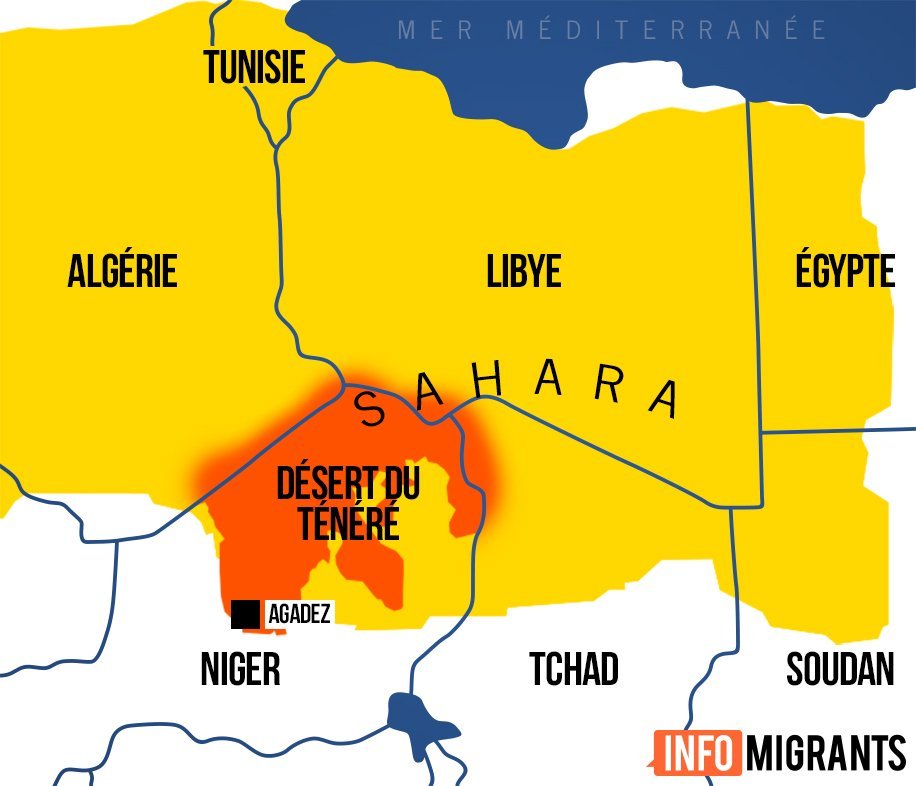
Around 7,700 migrants are currently stranded in Niger and are in "dire need of food, clean water, shelter, medical assistance and protection," stated a press release from the UN Migration Agency IOM on April 6. The majority -- at least 5,000 -- are stranded in the town of Assamaka, the first village after the Niger border with Algeria.
Algeria pushes hundreds of migrants over the border every week, according to reports. The majority of them are sub-Saharan Africans, but sometimes Syrians and even Bangladeshis are among them. From the border, migrants need to walk at least 15 kilometers through the desert to reach a town or a help center.
According to the UN agency, the number of migrants currently stranded in northern Niger increased by 35% in 2022. During that year, IOM said they assisted more than 17,000 migrants in the region. Numbers, they say, continue to grow in 2023 too.
Also read: Migrants expelled from Algeria to Niger, the long wait to return home
'We have become like cattle'
Many of the stranded migrants have been returned from bordering countries in north Africa, like Algeria and Libya.
"We have become like cattle," said one man, Herman, from Ivory Coast, who was inside one of the IOM’s transit centers, talking to AFP.
The IOM has already established seven transit centers along migration routes in the Agadez and Niamey regions in order to provide help to vulnerable migrants. The majority of those being assisted by the IOM come from Mali, Guinea, Nigeria and Sierra Leone.
However, the increase in numbers means it is difficult for any of these centers to adequately meet all the needs. The agency says it is only equipped to help 1,500 migrants, but currently some 3,500 migrants are waiting for assistance outside of the transit center.
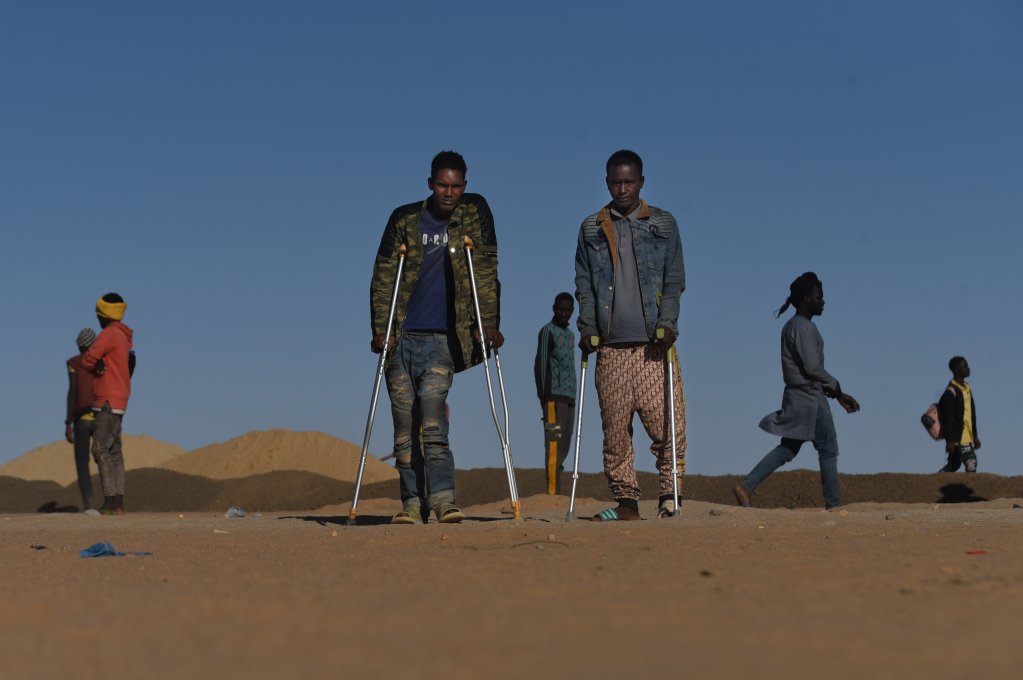
"A long line of people appears in silhouette, walking along the flat desert in northern Niger," begins the AFP feature about the situation. "The strong walkeers are at the front. The weakest at the rear."
Also read: 'We were abandoned in the desert at 2am'
Admission criteria to enter transit centers
The most vulnerable are given access to the centers first, says the IOM. Admission criteria priortizes migrants with specific needs linked to their age, gender, medical and mental conditions, as well as other risk factors; for instance if someone has already experienced a violation of their rights, perhaps through imprisonment, torture or another form of violence, sexual or otherwise.
Once admitted to the transit centers, migrants are given access to services which help them. The IOM also offers them access to voluntary return programs which would help the migrants who join them reintegrate in their country of origin, or their new host country.
"Saving lives is the highest and most urgent priority," said Sophie Nonnenmacher, IOM Niger's Chief of Mission in the press release. "Protection services to stranded migrants must continue, at a stronger pace, to address migrants’ immediate needs and prevent loss of lives."
Since 2016, the IOM has worked alongside the Government of Niger to help 92,500 stranded migrants. IOM is now working with the Economic Community of West African States (ECOWAS) to obtain more support for the migrants, since many of them come from West African countries originally.
Told to pay for own journey home
One man, named as Abdoul Karim Bambara from Ivory Coast, told AFP that the IOM told his group they were "not recognized as migrants by the IOM and so we had to pay for our own transport to return home."
Because most migrants are stripped of their posssesions before being ejected from Algeria, they have little money, or even sometimes phones to arrange that journey home. Some of them become stranded in northern Niger for months.
AFP writes that in Assamaka itself, water tanks are running "nearly dry," food rations are "insufficient" and there is little shelter from the burning sun. Temperatures can hit 48 degrees Celsius at their hottest. The situation is being made worse by the sheer numbers now hoping to share resources in this under-resourced place.
Many of the migrants are suffering from illness and infections. Some have scabies or are suffering from infected wounds, reports AFP. Everyone is hungry. One man indicates a fly-covered lump of sticky rice to reporters. "Would you eat that?" he asks. "We are falling sick from that."
Protests and riots
People who can’t get into the centers are angry. Some throw stones at each other and fights are common, reports AFP. Recently, the death of a Cameroonian ignited a riot which was put down by tear gas, reports the agency. Some protestors even ransacked the IOM transit center.
"We are all traumatized. People can no longer control themselves, they are losing their minds, there’s nothing here. People are dying," a man named as Aboubacar Cherif Cisse from Sierra Leone told AFP.
At another transit center in Arlit, 200 kilometers away, another Sierra Leonian, Mohamed Mambu asked "if there was enough to eat, people wouldn’t fight, but there is no food – what can they do? If they have nothing, they will fight each other just to stay alive."
Assamaka’s residents are also finding the arrival of so many migrants difficult. According to Francois Ibrahim, who works with the NGO Alarme Phone Sahara, some migrants have resorted to stealing residents animals and killing them for food.
MSF describe situation as 'unprecedented'
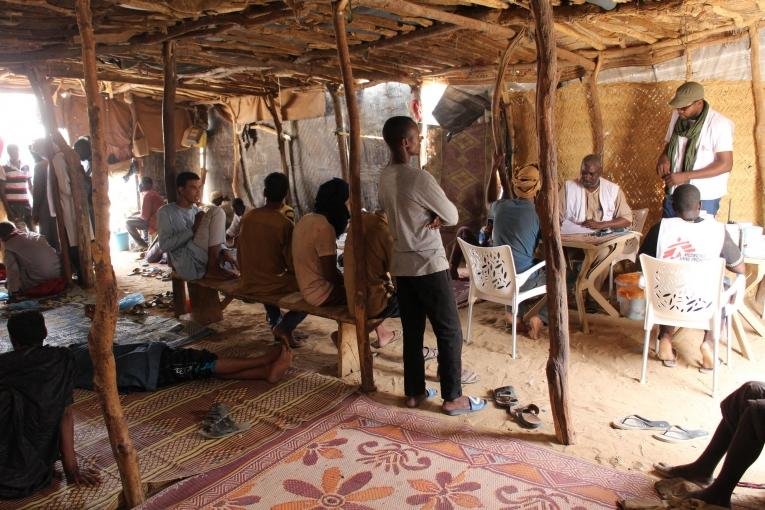
Recently the humanitarian medical charity Doctors without Borders (MSF) also sounded the alarm in this part of Niger. They described the situation as "unprecedented" and confirmed that their three transit centers were also overwhelmed by the numbers of arrivals.
Many migrants cannot leave the area by road, since armed Jihadist groups block the way towards the south. That means migrants have to be flown out of the area for their own safety, but one of the mangers at a transit center in Arlit said that flights are often cancelled.
According to one local mayor in Arlit, Abdourahamane Maouli, the road between Assamaka and Arlit is one of the best protected in the region, and "that’s why the migration flow heads this way." He thinks that because of its relative stability compared to other parts of Niger, the region is now paying the price.
Some in Niger are calling on the European Union to help. Saying that since Libya desceneded into civil war in 2011, northern Niger has become the last gateway to Europe. They hope the EU will step up and take responsibility and not continue to outsource their migration policies to African territory.
With AFP
Also read: Niger president calls for new pact with Europe to help manage migration