
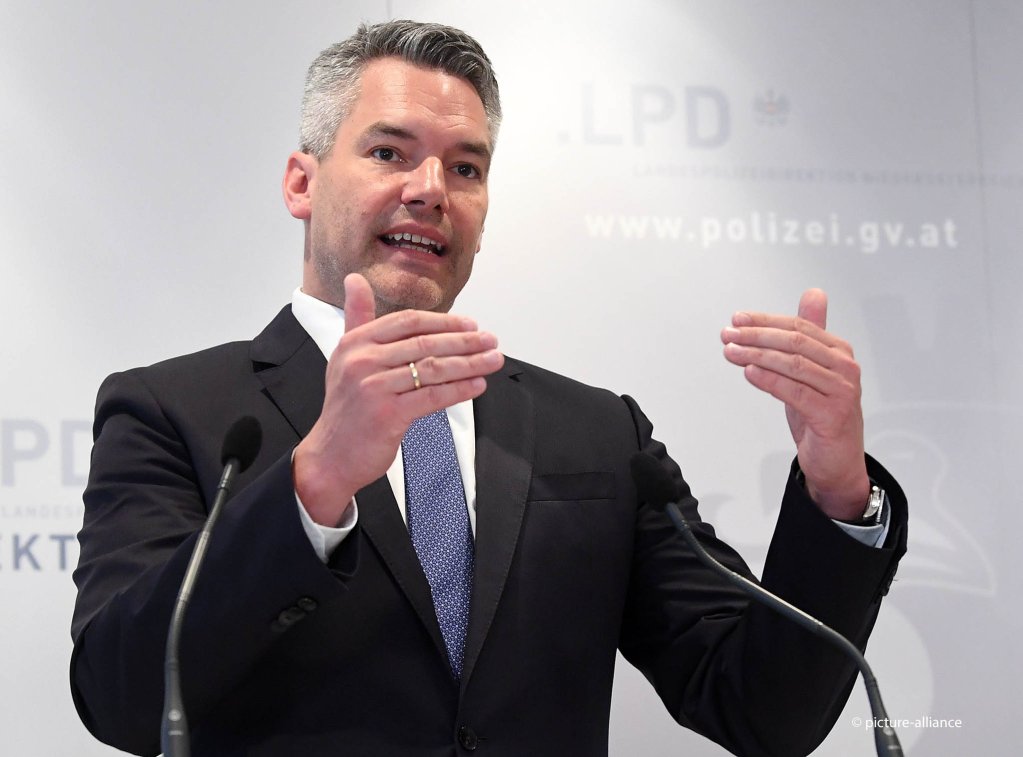
Austria's Chancellor Karl Nehammer visited Sweden and Denmark last week in a bid to form an alliance with Copenhagen and Stockholm to push for tighter migration controls within the EU.
Austria’s conservative Chancellor Karl Nehammer, from the ÖVP (Österreichische Volkspartei – Austrian People’s Party), visited Scandinavia on Thursday and Friday last week. His visit was intended to strengthen ties with the governments in Sweden and Denmark, reported the Austrian Press Agency (APA).
Among other issues, the three countries talked about forming an alliance in order to pressure Brussels into tightening controls on migration for those wishing to enter the bloc.
On Thursday (March 30) Nehammer met his Swedish counterpart Prime Minister Ulf Kristersson from the liberal-conservative Moderate Party. Kristersson leads a coalition government and depends on the far-right and anti-migration Sweden Democrats for votes, along with two other center-right parties. Sweden currently holds the rotating EU presidency.
"Sweden is for us an important partner in the fight against illegal migration, also as it holds the EU Presidency," explained Nehammer in a tweet following the visit. "We have come up with measures on the European level and have trodden the asylum brake harder. These steps now have to be implemented fast," commented Nehammer.
Also read: Could Sweden's tough migration stance spill over into the EU?
Sweden: Tough on migration
The migration policies of the Swedish government, which took power in October 2022, have been on the right of center. Kristersson promised a tougher line on migration than his predecessors. Migration, criminality and integration were central themes at the election and also of the right-wing populist Swedish Democrats party, which won a record number of seats at the election.
The Sweden Democrats now occupy 73 seats in the parliament, increasing their share by 11, becoming the second largest party after the Social Democratic party, which has 107 seats. Kristersson’s party is the third largest party with 68 seats in parliament.
According to APA, Vienna and Stockholm are hoping to collaborate more closely on economic themes but also work to make sure that Europe’s migration policies evolve to meet the changing situation.
Also read: As Sweden assumes EU presidency on anti-immigrant course
Working together
Nehammer’s visit to Scandinavia continued on Friday (March 31) when he met up with Denmark’s social-democrat Prime Minister Mette Frederiksen. Although Frederiksen is on the left of the political spectrum, her government has also talked tough on migration.
Nehammer tweeted photos from that meeting on his Twitter feed, saying that "a strong and reliable partnership bound the two countries. We hope to continue this work on both a bilateral and EU level. Thank you to Prime Minister Mette Frederiksen for a good exchange," commented Nehammer.
European asylum system 'broken', says Denmark's Mette Frederiksen
Denmark recently spoke out in favor of the building of more fences to protect Europe’s external borders and declared the European asylum system "broken." Since 2016, Denmark and Sweden have had bilateral border controls between their countries. Denmark has also considered sending asylum seekers to Rwanda in a bid to copy Britain's new policy.
Back at home, reported the European news portal Euractiv, Nehammer has also talked tough on migration. He has told his voters he wants to make Austria less attractive to migrants, "by cutting social support payments in a migrant’s initial years following their arrival," reported Euractiv.
In Denmark, says the European portal, "similar policies are already in place." Sweden is one of Austria’s biggest trading partners in Scandinavia.
After the meeting in Copenhagen with Nehammer, Denmark’s Mette Frederiksen declared: "We are like-minded countries in many issues, including migration." Nehammer, reported Euractiv, went even further, saying "we are allies in fighting illegal migration."
As more migrants and asylum seekers are registered in Europe, leaders all across the bloc are wondering what kinds of policies to apply. Frederiksen observed that Austria was one of the "hardest hit" countries as "increasing numbers arrive in Europe," reported Euractiv.
'Remove incentives to embark on dangerous journeys to Europe'
Frederiksen told reporters that the bloc as a whole needs to "remove incentives to embark on dangerous journeys to Europe."
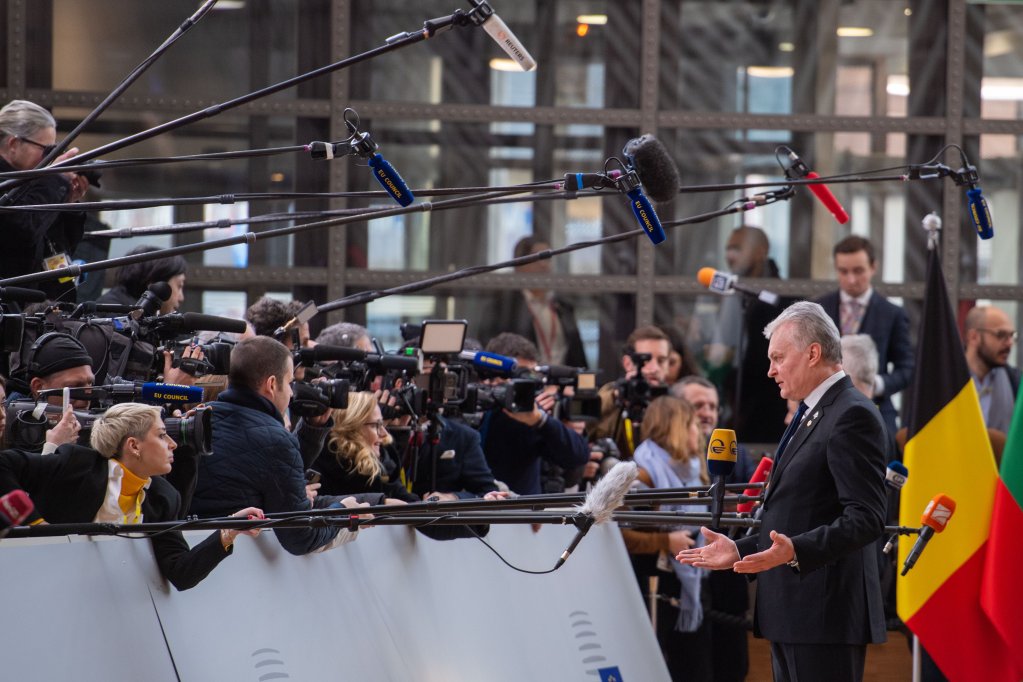
EU leaders are due to meet in Brussels in June, in part to evaluate the bloc’s migration policies. Denmark and Austria have already sent a letter to the European Commission asking it to take "urgent action" regarding migration.
In February 2023, Denmark and Austria joined the leaders of Lithuania, Greece, Slovakia, Estonia, Latvia and Malta to address a joint letter to the President of the European Commission Ursula von der Leyen and President of the European Council Charles Michel. In it, they urged the EU to "tackle the problem of irregular migration to the EU," stated a press release from the President of the Republic of Lithuania, on behalf of the "President’s Communication Group."
In the letter, the EU leaders stated that "irregular migration is once again becoming one of the EU’s most pressing issues, with national and local authorities confronted with a sharp increase in the number of migrants crossing borders illegally and in the number of asylum applications."
Stronger borders
The alliance called on the EU not only to protect the EU’s external borders, but make the borders barriers "more effective through the targeted use of EU funds." They stressed that the "current European asylum system and the extremely low rate of return are pull factors for third-country nationals who are not in need of international protection." This, they said, "encourages life-threatening journeys to Europe."
They asked that the EU address the "root causes of irregular migration by promoting economic and social opportunities in countries of origin and key host and transit third countries."
Also read: EU countries adopt solidarity mechanism on migrants
The press release stated that the EU’s budge for the protection of its extenal borders for the period 2021-2027 was earmarked at €6 billion.
Kristersson said on Thursday after his meeting with Nehammer that he believed things were “finally moving” in the bloc and that there was a "momentum in the EU," although he didn’t clarify, presumably he meant in the direction that the three countries are now hoping for, to get tougher on those coming in and the benefits they receive on arrival.
According to a European Commission document published in March 2023 on the state of play of the New Pact on Migration and Asylum. The European Council is expected to adopt the asylum and migration management proposals after the meeting in June 2023.