
Earlier this month, the European Commission urged EU countries to increase the deportation of failed asylum seekers. As return programs play an increasing role in EU migration policy, counseling becomes an important part of preparing for the move to return.
Earlier this month, the European Union's (EU) top migration official told reporters that increasing deportation of failed asylum seekers is essential to managing orderly migration.
According to EU Home Affairs Commissioner Ylva Johansson, only 21% of people not eligible for international protection in the EU were returned to their country of origin.
"To protect the right to apply for asylum, we have to show that we are appropriately dealing with those who do not qualify for international protection. We need migration, but it has to be in a legal and orderly way," Johansson said in a news report by Associated Press (AP).
Asked to leave
Over 340,000 foreign nationals were asked to leave the European Union in 2021, according to the latest data provided by the European Commission.
The same year, the European Commission implemented the EU Strategy on voluntary return and reintegration which outlined various measures to facilitate the voluntary return of migrants from Europe. But many of those who are asked to leave do not actually do so, for a variety of different reasons.
According to the Organisation for Economic Co-operation and Development (OECD), a group of 38 countries promoting development goals, return migration occurs in different ways and may be "spontaneous, initiated by the migrant and without state involvement, or organized and enforced by state authorities."
The OECD cited counseling as integral to making an informed decision on available options and taking ownership of the voluntary return process.
Mobility is multi-directional
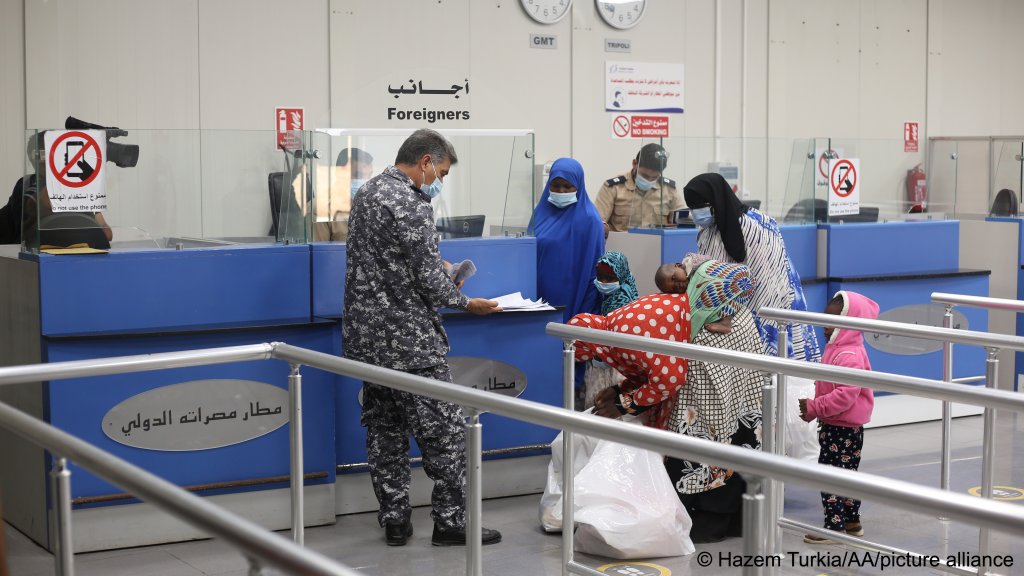
Migration experts have pointed out that various factors make mobility a complex phenomenon. Migrants might move through different countries, or return to their country of origin for short or long stays, or for good. This means that migration does not always start with moving from one country of origin and resettling in another.
"The return of migrants to their countries of origin, or third countries, and their reintegration into the societies and communities that receive them, are natural features of international mobility," Welella Negussie, IOM Project Coordinator, told InfoMigrants.
In 2019, to improve the experience of returnees from Germany, IOM Germany piloted the Virtual Counselling (VC) project funded by the German Federal Office for Migration and Refugees (BAMF).
The project allows migrants living in Germany to contact IOM Staff via online messaging services in more than 20 countries of origin and receive up-to-date information on return and reintegration programs and the types of support these programs offer. Practical aspects related to return and reintegration are also discussed.
Flexible assistance
"The aim is to provide flexible assistance to migrants in countries of return that lack the financial means necessary for return, including those who are obliged to leave the country and those with little prospect of obtaining protection under asylum law, to help them with voluntary return,” Negussie explained.
Native speakers at IOM offices in the participating countries provide comprehensive information on the situation in the countries of origin which includes a culturally sensitive overview of the reintegration opportunities in their country of origin.
"This can include, for example, information on financial assistance for a business start-up, support for housing or medical needs, psychosocial counseling or job counseling," Negussie added.
Building a business in Gambia
Musa Coker returned to Gambia after seven years in Germany with assistance from the IOM Voluntary Return Program. In a video interview shared by IOM, Coker said that one of the reasons he decided to return was to be with his mother and his son. Coker is now operating a taxi and plans to rear livestock. The business management knowledge that he learned in Germany is helping him establish his business.
"I can’t say that I have everything, but I thank God because I have peace, no stress, and am living with my family peacefully," he said.
According to IOM, more than 80% of the returnees from Germany they surveyed said they were satisfied with the assistance they had received.
How can return be 'voluntary'?
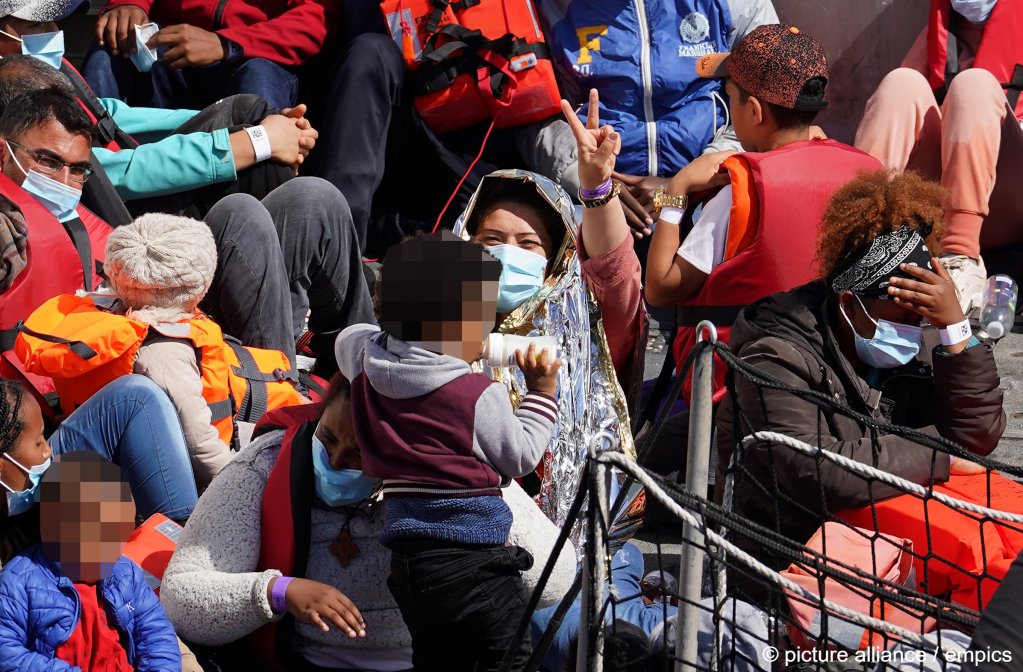
Rights groups and think tanks, however, caution against the increasing role voluntary return and reintegration is playing in European asylum and migration policy, saying that government investments in return assistance programs are deportation packaged in a more humane way to counter public criticism.
The rights-based NGO, Pro Asyl, on their website cited a case where a woman sued the European Court of Human Rights (ECtHR) after her father had been shot dead when he had returned to Iraq. Her father’s application for asylum in Finland was denied despite supporting incidents of violence targeted against him in Iraq.
Instead of waiting for his deportation, the father signed a "voluntary declaration" and left Finland. A month later he was killed.
The research project Return Watch (Rückkehr Watch) criticized return and reintegration policies of the German government as a way "to get as many refugees and migrants as possible to leave, as quickly as possible, as cheaply as possible, as smoothly as possible – and in a manner that is accepted by the public."
Have the original reasons for flight changed?
According to a statement on the Return Watch (Rückkehr Watch) website, the group asks: "How can reintegration and a new start succeed in precisely those circumstances that were themselves the cause of flight and migration in the first place?"
Citing documented experience reports of returnees from Morocco, Afghanistan, Iraq and Northern Iraq, Nigeria, and Mali, Return Watch concluded that voluntary return programs hardly differ from deportations in terms of implementation and "the support for voluntary return and reintegration support is often not used voluntarily, but rather out of necessity and a lack of alternatives."
"Ideally, the right to protection is at the heart of the asylum system," said the group.
In response, IOM Germany told InfoMigrants in an email that "the notion that return and reintegration policies are a way to get as many migrants as possible to leave quickly may be an oversimplification of the full picture."
"There is clearly a difference between migrants who seek out return options and choose to return voluntarily, and those who opt to do so by, for example, enrolling in a program providing return assistance in the face of constrained options. Empowering migrants to make informed decisions, even in the face of constrained options, is preferable to no choice at all, and is a necessary precondition to a safe and dignified return," IOM concluded.