
Four people died after their boat sunk in the middle of the Channel on December 13. Undeterred by this latest tragedy, migrants in the Loon-Plage camp in northern France are determined to reach the English shore.
Passing on the small road zigzagging between factories in an industrial zone near Dunkirk, one could think of the area as a wasteland. After nights and days below zero, the informal Loon-Plage camp has turned into an ice-skating ring. A few tents, crushed by a cold wind, pop up here and there. Shopping carts migrants usually use to carry their belongings are trapped by a thick layer of ice. Rats run around the bushes. A backhoe loading sand in the factory nearby breaks through the morning silence.
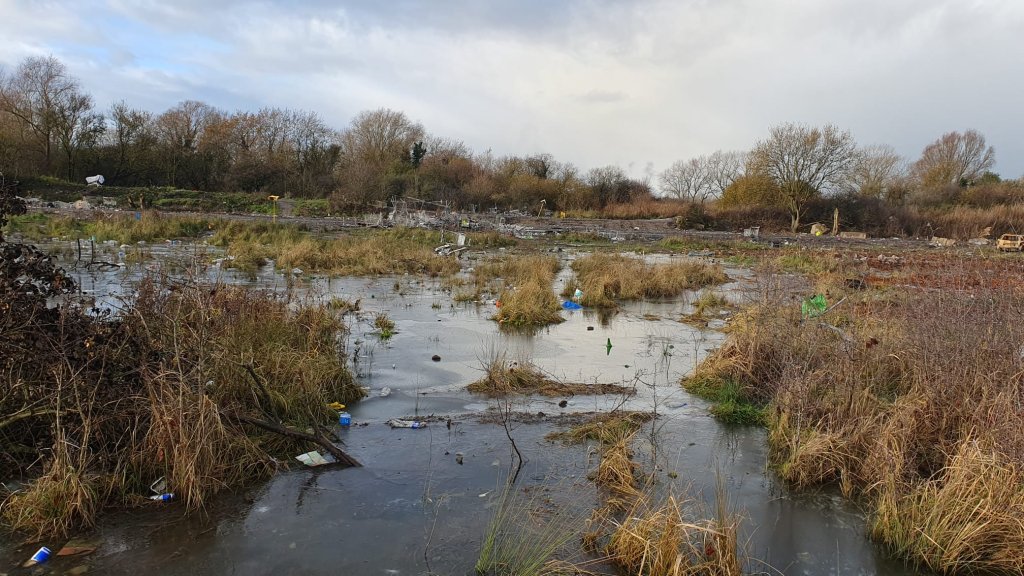
In early December, 400 people lived here. But the area, breezing with cold air, is now deserted. Migrants moved to the more protected small forests nearby. About a hundred people survive there still.
But in the last few days, many left for good. "On Tuesday evening, there were so many people at the bus stops, hundreds of people," Amélie Moyart, Utopia56 coordinator for Grande-Synthe, told InfoMigrants. From those bus stops, 20 minutes away from the camp, many walk to the beaches -- Ambleteuse, Wimereux, Leffrinckoucke -- where they take the sea to reach the UK. In the night of December 13, "a dozen frail boats tried to cross the Pas-de-Calais strait," the Channel prefecture said.
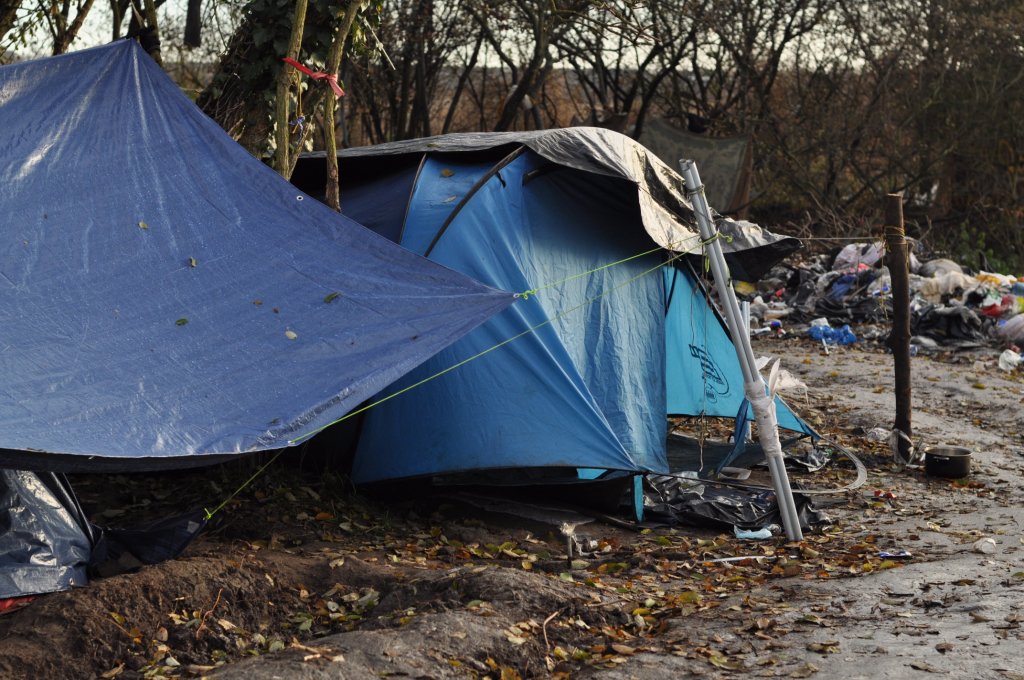
At the end of the iced lot, a solitary figure raises next to a small blue tent. Hussain, 17, puts his black beanie on and pulls up his scarf. The young Sudanese from Darfur tried to reach England four days ago, with 30 other people. "But the motor died, we had to go back." Hussain has tried six times to cross the channel, unsuccessfully. He also tried to jump on trucks crossing the tunnel, but that failed, too. "I tried everything," he sighs, hopeless.
Tuesday night, December 13, he stayed at the Loon-Plage camp, but six of his friends left. "Two arrived safe and sound, they called me when they arrived at the hotel they’re staying at. I am still waiting for news from the four others.”
Four dead in the capsize
That night, a boat, departing from the French coast, sunk off the Dungeness city coast, west of Dover. According to British officials, four people died and 43 were rescued, most by a fishing boat passing nearby. A few hours earlier, at 2:53 am Paris time, Utopia56 received a distress call from a boat at sea. "We're in a boat, we have a problem. Please help us. There are kids and families in the boat. The water is coming in from the back of the boat."
"Although it’s impossible to say for sure that those messages came from the wrecked boat, all elements, be they the rescue boat locations and intervention hours, point to it," says the organization, which received five distress calls that night. So far, they have not had any update from those callers, Amélie Moyart says. "They must be asylum seekers of the Loon-Plage camp. Because the number they had and called is the one we give there."
Hussain knows about the capsize. "We either die from the cold in the camp or we die drowning in the sea anyways," he says.
Crossing the Channel in the winter is risky: the water temperature is below 10 degrees Celsius. Someone plunged in a water that cold dies in less than two hours, according to the maritime prefecture. But last winter, and this one especially, "there have been as many attempted crossings as any other period in the year," claims a police officer patrolling on the Leffrinckoucke beach, near Dunkirk. "Some days, even when it’s really cold like today, there are six, seven departures. That’s new. But what can you do?" he adds. "People travelled for thousands of kilometers and, arriving here, there are only a few dozen left. And we tell them they can’t?"
"Police surveillance doesn’t deter asylum seekers," Moyart says. "Crossing the Channel is the last step. Even terrified, in the cold, they will take the sea. And for as long as there won’t be a worthy welcome in France and safe routes towards the UK, there will be tragedies."
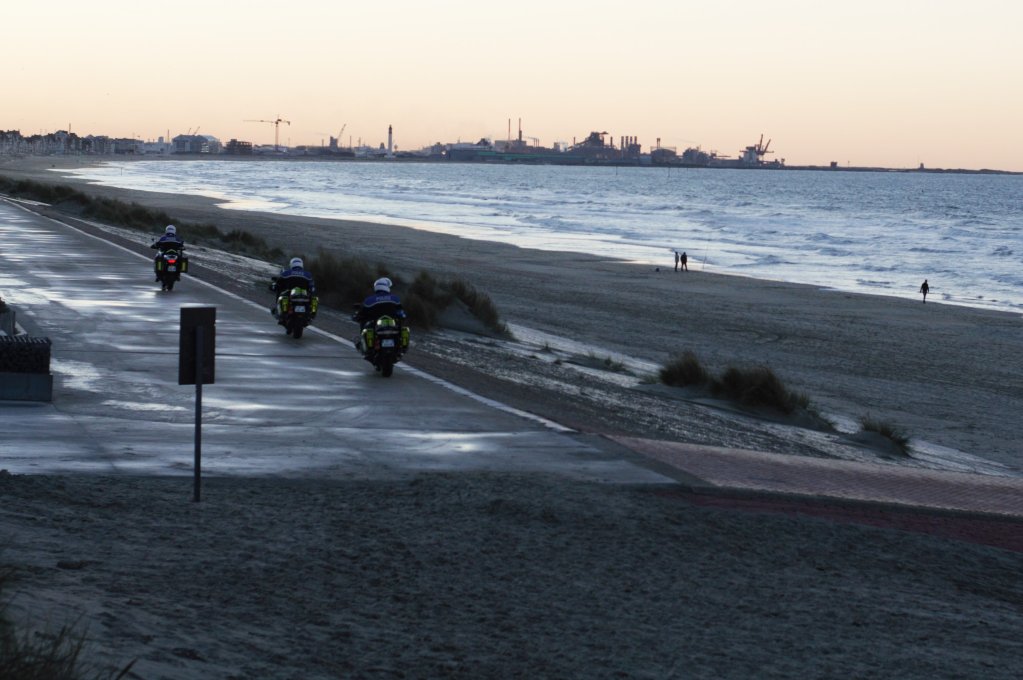
On November 24, 2021, 27 people died drowning in the Channel after a capsize. Following this tragedy, French and British officials agreed to deploy more police and surveillance at the border. A year later, those measures have not prevented more from drowning at sea. Since the beginning of the year, more than 44,000 migrants arrived in the UK after crossing the Channel on small boats from the French coast. A new high from previous years.
'They’re scared for me'
Ismat, 16, left from Afghanistan through the Balkan route, and he will not give up either. “When they learned about the capsize, my father, who lives in Iran, and my cousin in the UK called me. They said: ‘Don’t do it, it’s too dangerous,’ they’re scared for me. But I will still do it.” The teenager has been sleeping at Loon-Plage for the past five days. Not on the deserted, iced lot but nearby, without a tent, next to a dozen other Afghan asylum seekers. All his belongings are in a single trash bag filled to the brim he holds from the tips of his fingers. This morning, looking for warmth, he joined the hundreds of others in the woods, where the Red Cross and other organizations have come for the day.
Like most other migrants, Ismat does not count on staying long here. “Before taking the sea, I was a bit scared. But since I tried, once, I saw what it was like, I feel better. I know I can do it,” he says, keeping his smile. On his cheeks reddened by the cold, a few scars mingle with his freckles, standing atop a shy ginger beard.
Shamsul, 34, another Afghan migrant who has been at Loon-Plage for two weeks, was not aiming for the UK initially. After leaving his country to Russia in June 2021, this former telecommunications engineer moved to Poland, where he lived and worked for 17 months. "I was rebuilding my life, I had friends, but my asylum request was rejected."
Dejected, Shamsul left for France, where he wanted to stay. "Once again, I was told no. Since I was registered in Poland, I fell under the Dublin protocol, so it was impossible for me to ask for asylum elsewhere. And the only escape for me now was the UK." On the other side of the Channel, Shamsul knows nobody. But he will find work “easily,” he believes. “And maybe there I will finally be respected.”
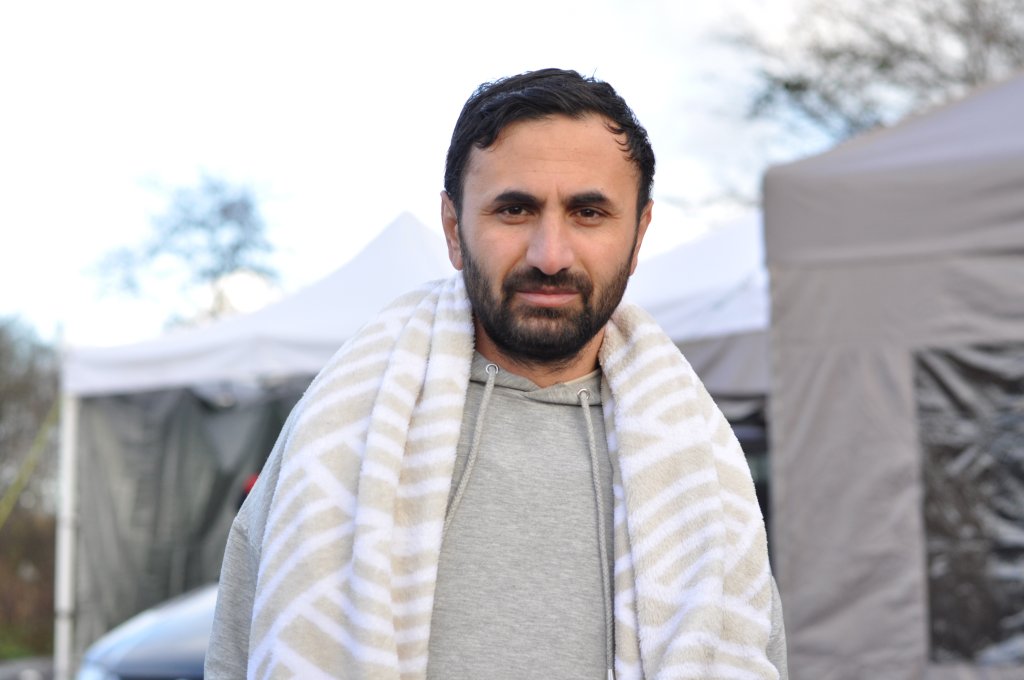
The road there is "dangerous, I know, this new capsize proves it. But I’m ready to take that risk," he says, holding his plastic bag with his kaki sleeping bag tight. More than the dangers of crossings, it is what comes after that Shamsul is worried about. "I heard things, that migrants were departed to Rwanda, is that true? What am I going to do if I’m deported there? I won’t have any money to come back," he says.
"I was also told that from 2023 onwards, all migrants coming from the Channel would be deported [editor’s note: that information is true for Albanian migrants: the British government announced they would deport, in the coming months, "thousands" of Albanians arrived irregularly to the UK]. If that’s true, I have no choice, I must hurry up and take the sea."