
The volunteer rescuers of the National Society for Rescue at Sea (SNSM) carry out thousands of operations each year off the French coast, particularly in the Nord and Pas-de-Calais regions. Faced with an increasing number of migrants attempting to reach England on fragile boats, SNSM is turning to new practices. An interview.
With the number of migrant boats in the Channel multiplying and the methods of smugglers diversifying, the National Society for Sea Rescue (SNSM) has decided to adjust to the circumstances. The organization, which consists solely of volunteers and steps in more than 6,000 times a year off the French coast mainly to help migrants, has been recently trained in mass rescue.
A year after the death of 27 migrants in a shipwreck in the English Channel, the organization is sounding the alarm on the situation on the northern coast, where rescue operations are beginning to mirror those practiced in the Mediterranean Sea.
InfoMigrants recently spoke with Alain Ledaguenel, president of the Dunkirk station, in the Departement Nord region, where 32 volunteers, including 25 lifeguards, work.
InfoMigrants: What does "mass rescue" mean?
Alain Ledaguenel: A mass rescue is, for example, an rescue operation of a boat with 50 people on board.
Before 2019, we mainly rescued migrant boats which were four or five meters in length, with around ten people inside. During these rescue operations, if the weather permitted and if the migrants were still in the boat when we arrive, we would approach them from the side and bring them on board our boat.
Read more: A 'disaster waiting to happen': Fears of new migrant shipwreck loom large in Dunkirk
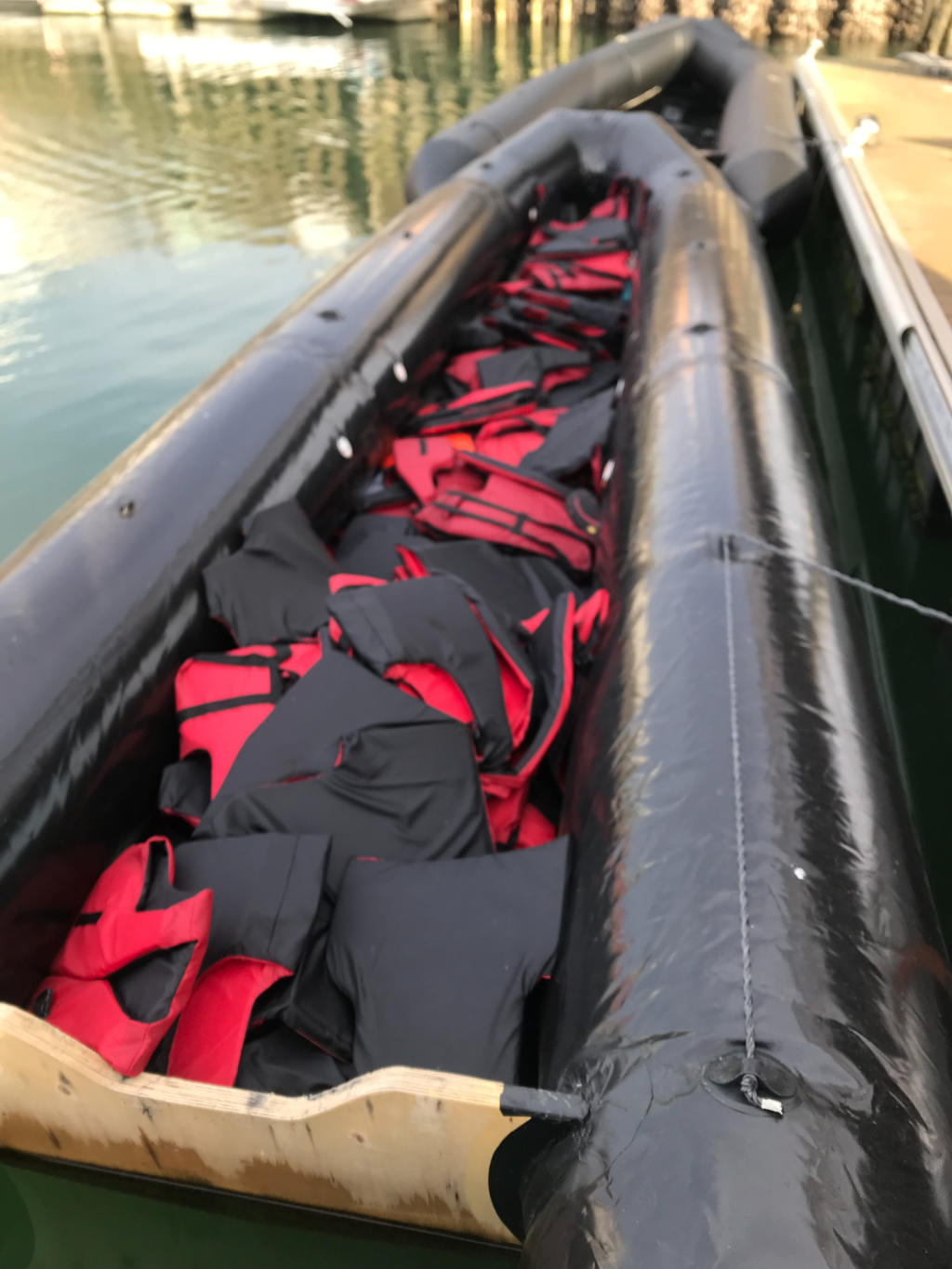
Since 2019, the types of boats used for these crossings have changed over time: we are now dealing with 'long boats', 'narrow boats' [long and narrow boats, editor's note]. There are about fifty people on board. Recently, in just two operations, 91 migrants were saved. [Between the beginning of the year and November 2022, 600 people were rescued at sea by the SNSM Dunkerque, editor's note.] The situation has changed. It is no longer technically possible to approach them from the side, because they risk rushing and putting all us in danger.
What are the particularities of these new migrant boats?
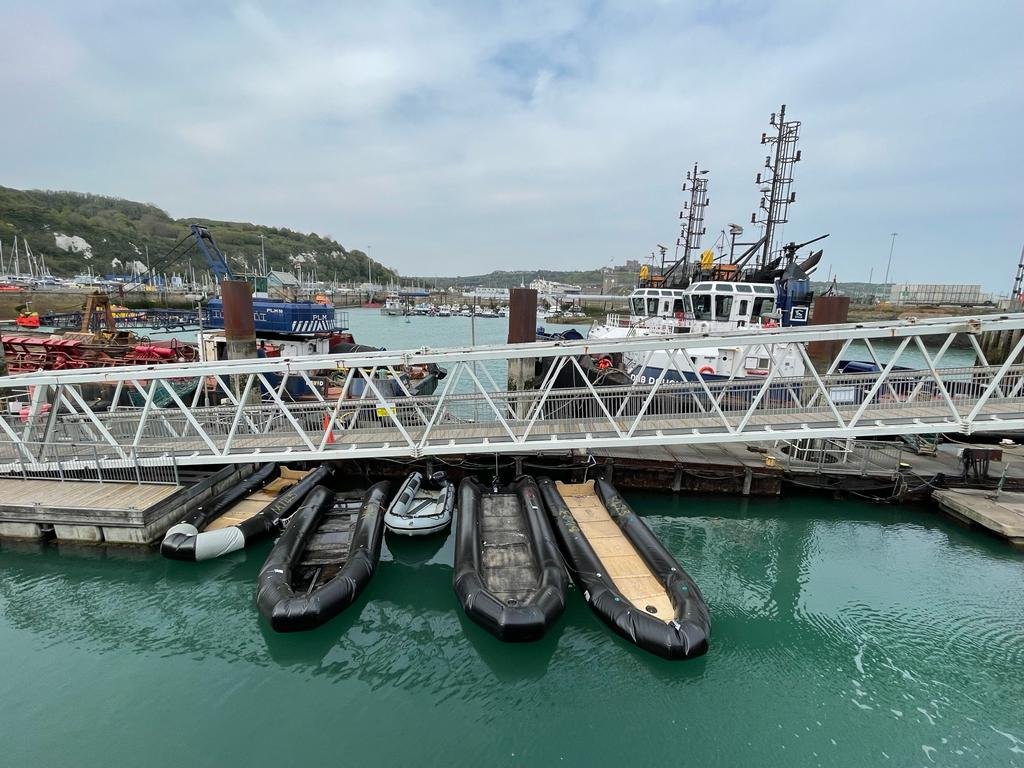
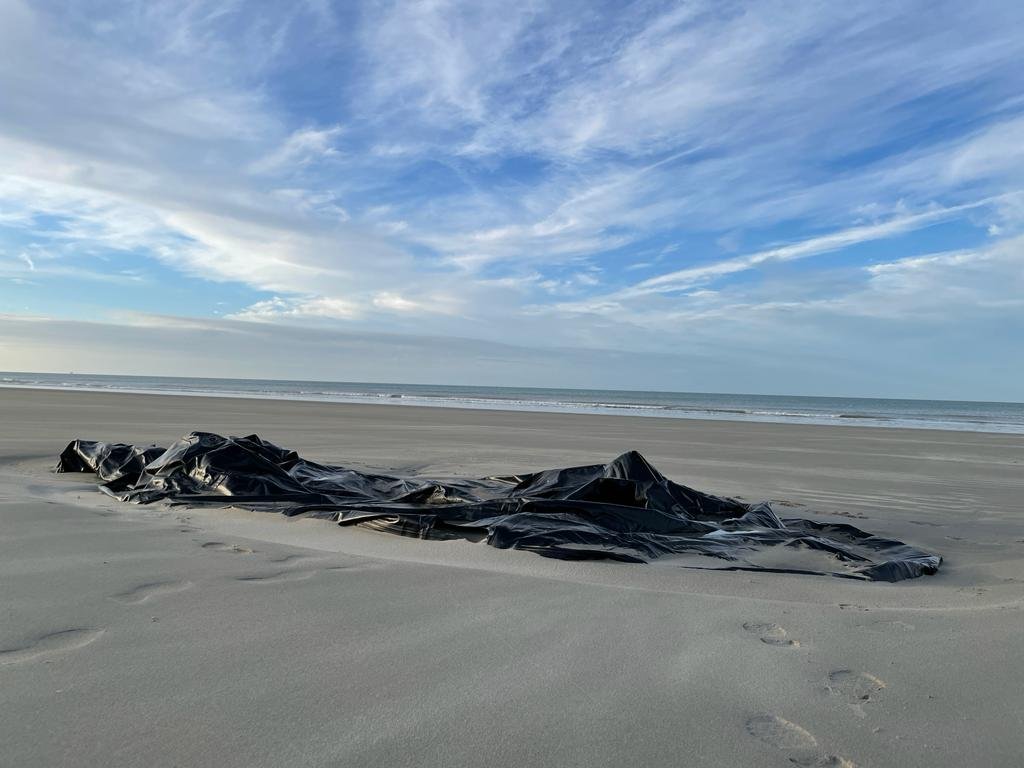
These are very poor-quality inflatable boats which are made in China. They look like they are made of tarpaulin but that is unlikely. I wouldn't cross the Seine in one of them. They are made of tubes inflated with air, a poorly assembled floor, and a stern on which an engine is fixed. These are usually bad Chinese copies of well-known brands. They break down quickly and, in addition, the migrants do not know how to drive them.
It should be noted that off of Dunkirk, we are no longer in the English Channel but in the North Sea. The sea there is complicated, it can become rough when there's wind, and it is much colder.
Engines can come loose and fall into the water. There may also be technical problems, such as tubes that do not resist pressure and deflate. Floors can also sag and people can fall through.
Read more: Made in China: How smugglers import boats to continue with irregular Channel crossings
How does the rescue of these boats differ from other rescue operations?
These rescues are complicated because these boats are fragile. For example, it is impossible to tow them because of their poor quality: their handles come off.
When we approach these kinds of boats with many people on board, we put two or three rescue swimmers in the water. Their mission is to grab the front of the migrant boat and attach it to the back of our boat, using snap hooks. Two other rescue swimmers are positioned to left and right of the migrant boat to secure the operation. Then we hold the front of the migrant boat which is connected to the rear platform of our boat and transfer the passengers, one by one, to our boat. Transferring 50 people takes 5 minutes, it happens extremely quickly.
Once the passengers are on board, they have to be sorted. The women and children are placed in the passenger compartment [the SNSM boat is designed to transport a maximum of 20 people, editor's note]. They are given something to drink, as well as blankets. The men are distributed throughout the boat but they do not enter the compartment. It is necessary to distribute them and forbid them from moving. Mass movements on the boat can be dangerous and they have to be avoided.
Read more: UK arrests suspect in connection with 27 Channel deaths
How is the Dunkirk station equipped?
Like the stations of Boulogne-sur-Mer and Calais, the largest rescue means we each have a 17-meters-long boat. The three boats have a lifespan of 30 years and they are all reaching the end. They should be changed in the next few years because the mechanics wear out and there are no longer enough spare parts for the engines. Except the new boats are not ready.
In the meantime, there are mass shipwrecks and we have to respond. We need a boat capable of bringing 80 to 100 people to safety, because we are sure we will receive these kinds of calls for help soon. As the size of the boats increases, we even expect to see, one day, boats in distress with hundreds of people on board, like in the Mediterranean Sea. [By November 2022, nearly 42,000 migrants managed to reach British shores since the beginning of the year, an absolute record compared to 28,500 people in 2021, editor's note.]
We now carry an inflatable life raft on our boat that we can throw into the sea if we are not able to bring all the castaways on our boat. We are clearly in a situation of extreme urgency.
Read more: Channel migration: 'France and UK should strike a deal instead of resorting to police surveillance'
Do you only rescue migrants who are reported to be in distress at sea?
Yes. We only act if we receive a distress call by the CROSS (Regional Operating Surveillance and Rescue Centres) which will trigger our mission. Before, we used to accompany migrant boats which were not in distress toward the Franco-British maritime border [the border is located in the open sea, about 15 kilometers from Calais and 30 kilometers from Dunkirk, editor's note]. Today, state boats sometimes take on this role. Migrants can only be intercepted on land: as soon as they ... are on the water, the police do not touch them.
A deputy from the far-right Rassemblement National party, Alexandra Masson, declared on October 31 that the role of SNSM was to "save lives at sea" and not "go looking for more migrants [. . .] The SNSM shouldn't become SOS Méditerranée". What is your reaction to these comments?
I will only say that, for us, it is obvious that a shipwrecked person, whoever he is, is above all a shipwrecked person and that we must save a human life in danger, regardless of the color, religious or political affiliation of the individual. We are not going to ask for people's documents before saving them.
Read more: French, UK coast guards lacked cooperation as 27 migrants drowned: Reports