
In the commune of Montreuil in the eastern suburbs of Paris, the 115 emergency shelter number receives hundreds of housing requests per day that cannot be met. Most calls come from homeless families. 115 responders are on the frontline of a crisis they cannot remedy. InfoMigrants reports.
Oumar* takes his 57th call of the day: "115 93 hello!" On the other end of the receiver, M., a 33-year-old asylum seeker, whose claim was rejected in October, has been waiting on the line for two hours and 45 minutes.
"I’ve been calling every day for almost two months," she says.
"Where are you?"
"In Montreuil."
"Where exactly?"
"Next to the Carrefour, Porte de Montreuil."
"How’s your health, madam?"
"No, no. I’m not well, I’m suffering from the cold. My daughter was coughing and had a fever all night."
"You left for the hospital?"
"Yes, sir, I went to the ER."
"I’m making an emergency shelter request."
"Thank you."
"Good luck, madam."
"Thank you."
Terse lines flash on Oumar’s computer screen about M.’s file: "sleeps in train stations," from a previous phone conversation. Another, dated a few days later: "Nights in buses because she doesn’t feel safe in train stations." Despite daily requests, this woman and their one-year-old baby never secured a place in a shelter.
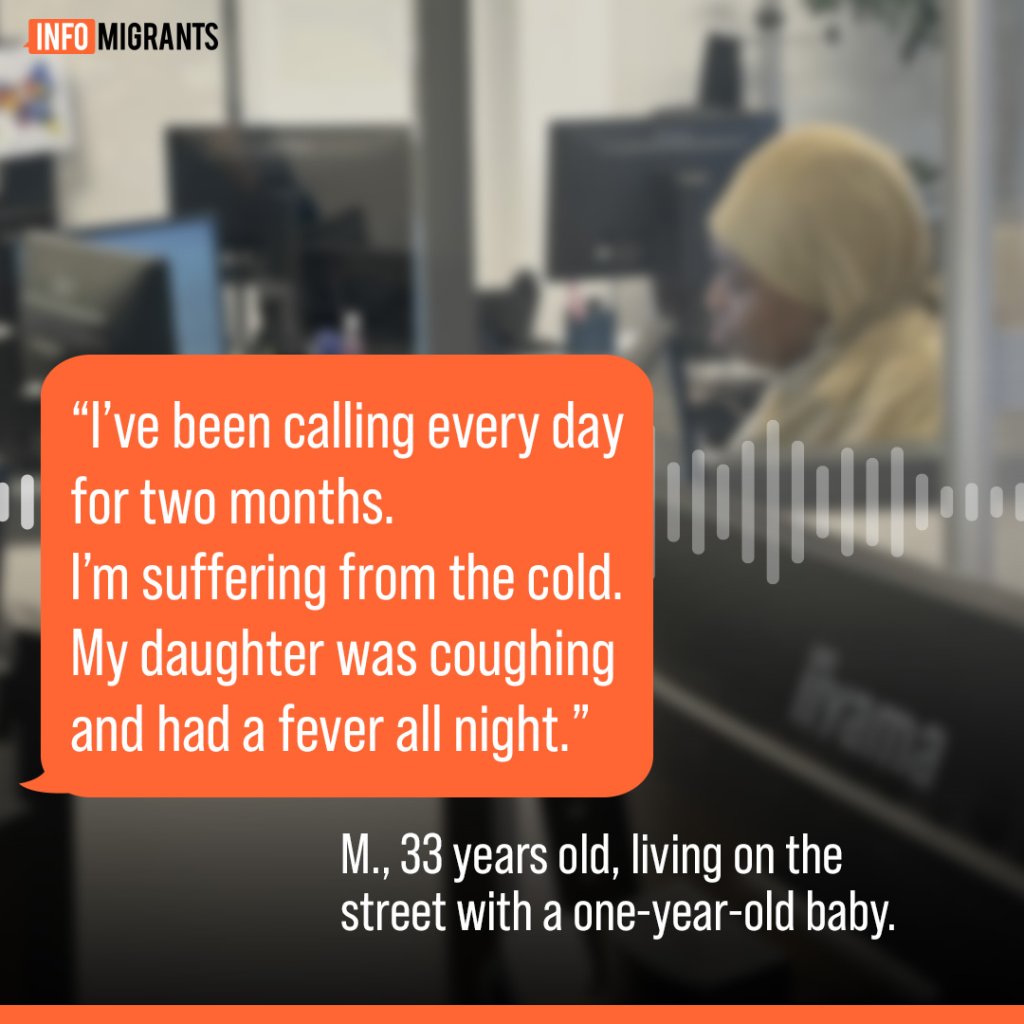
There was a time not so long ago when M., a lone mother with an infant child, would have been priority on the list of people on the street asking for shelter. Not anymore. M. is just a mother among others sleeping in train stations or hospital ERs in Seine-Saint-Denis, for lack of a better place. In this region, France’s poorest, 85% of shelter requests recorded by the 115 are from families with children.
On Monday, Nov. 28, the service picked up a record 739 requests of people with or without children. None could be fulfilled.
Prioritizing priorities
"The 115 emergency number historically would help lone people on the street but for the past 10 years, we’ve witnessed an explosion of requests from families," says Valérie Puvilland, operational director in the integrated welcoming and orientation service (SIAO), which encompasses the 115 service. "We are forced to prioritize priorities. Priority situations are now pregnant women and women who just left the maternity clinic."
Calls from lone men have become rare, although they are the majority demographic on the street. Many do not even bother calling anymore. "They know there won’t be any spot."
The duration for which people are sheltered varies widely. "They are supposed to stay three months but it sometimes is only for two, three days," says Puvilland, "after that, people change hotels if there’s room elsewhere, or return on the street. Some families can change hotels 30 times in three months, moving across the Ile-de-France region."
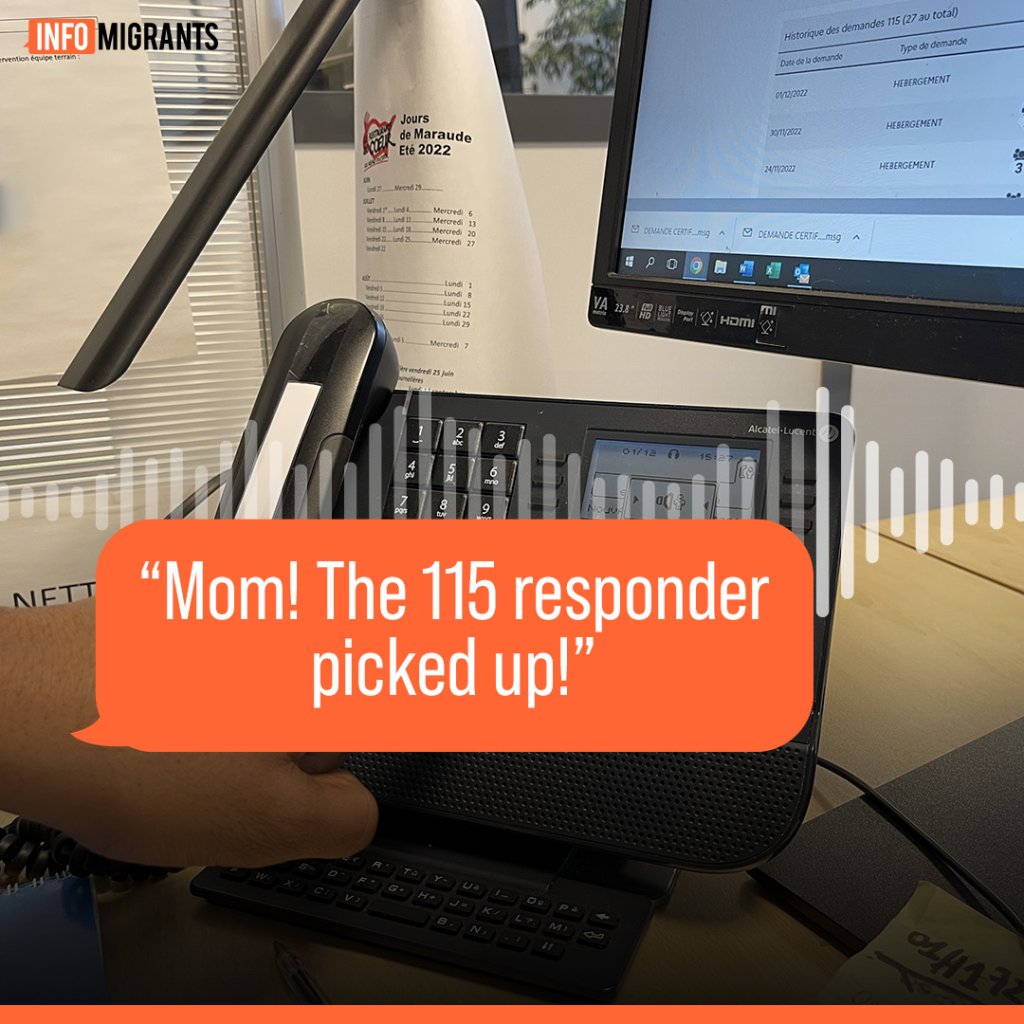
During the pandemic, the number of available spots in the region rose from 9,000 to 12,000. The government says it is moving away from a needs-based shelter spots management by focusing on long-term housing. But in the reorganization, it looks like 500 short-term spots could actually be lost. Meanwhile, the number of people on the street has kept growing.
“It’s a laudable effort, but long-term housing solutions have more criteria and require the presence of a social worker with the person requiring housing," Puvilland told InfoMigrants. "But there is a shortage of social workers. What we need are immediate housing solutions, without criteria."
The 115 service does not ask about people’s administrative situation, but they say migrants are numerous among the "varied" callers. Most of the callers’ names are African or Arab. Sometimes, people require translation. The 115 translation service can nevertheless be difficult to use. Oumar, the 115 responder, speaks Arabic and English. "That comes in handy," he says.
'This person will probably not have a spot tonight either'
"I like to help people in distress," says Oumar, who has worked in the call center since January. "It’s sometimes hard. We're on the frontline. That’s stressful."
The social worker’s task is difficult. When he’s hung up, after the endlessly repeated words of encouragement and calls for patience, Oumar sighs, disheartened. "This person will probably not have a spot tonight either," he predicts.
At his level, he can only classify the emergency of the situations on a scale of 1 to 5. Oumar, like the other listeners we followed, always selects "1", the highest emergency. "This is my only power. I have them on the phone, I know their situation, but I cannot make any decision."
When people get connected after a long wait, some may have fallen asleep with their phone on. In those moments, Oumar tries to do his part by waiting a bit longer than the time they’re told. "Usually, we have to hang up after 30 seconds, but I wait 40 to 50 seconds. And I record their number to see if they have a file, in which case I personally request an intervention."
In one of those calls, he waits more than a minute before the feeble voice of a six-year-old boy reacts to the hopeful hellos of Oumar: "Mum! The 115 responder picked up!"
'I feel terrible during each call'
The only 24 employees of this team cover all 24 hours of the day, trying their best in an austere office, against all odds.
"It’s very hard for me to go from one call to another. It’s awful, especially when we don’t have any answer to give. I feel terrible during each call," says Imane*, 36, ground team coordinator for the 115 service in Seine-Saint-Denis. Imane is mostly involved in distribution rounds for the homeless, but since 2017 she sometimes helps the "understaffed" call center.
"We don’t have time, we’re worried about doing more harm," Imane says. "The people on the phone are always crying, anxious, stressed out. We hear the kids crying behind. Sometimes, the kids themselves are calling. And when someone’s angry, it’s the 115’s fault, not the State. We get all the blame. It’s hard for the responders, sometimes they go on sick leave."
Those who manage to keep on with their hands tied become informal “coaches” for other responders.
For hours, responders go through emergency after emergency. "My son gets out of school at 5 pm, I’m going to get him at the bus stop, but where do I take him then? I have nowhere to go," a woman cries out before bursting into tears. Another calls because she’s in a woman’s shelter that won’t let her husband join her and her daughter. "He sleeps in a train station in Sevran. Please, help him." A man in his thirties, whose family was just evicted from a hotel, begs for someone to do something for his three children who "don’t go to school anymore." Soon after, the line cuts in the middle of a sentence.
The responders repeat "I hear you," "be strong" and give out addresses for day shelters, knowing that they will not be of any help for the cold night.
At 8 pm every day, the number of available spots in the region comes down like a sentence. On Thursday, December 1, there were 11. A lone man, a family of six and a family of four will have a roof over their heads that night. 487 others, including 172 families, who requested shelter in Seine-Saint-Denis will not. And that's excluding the calls the responders could not pick up for lack of time.
About 1,000 calls go unanswered every day.
*People’s last names were anonymized for confidentiality.
Adapted by Arno Pedram