
Nearly 200 unaccompanied migrant minors sleep in a makeshift tent camp set up under a bridge in a suburb of Paris. In the absence of support from the French government, NGOs like Utopia 56 provide help these young foreigners, who are considered adults, so they don't have to fend for themselves in the streets of Paris.
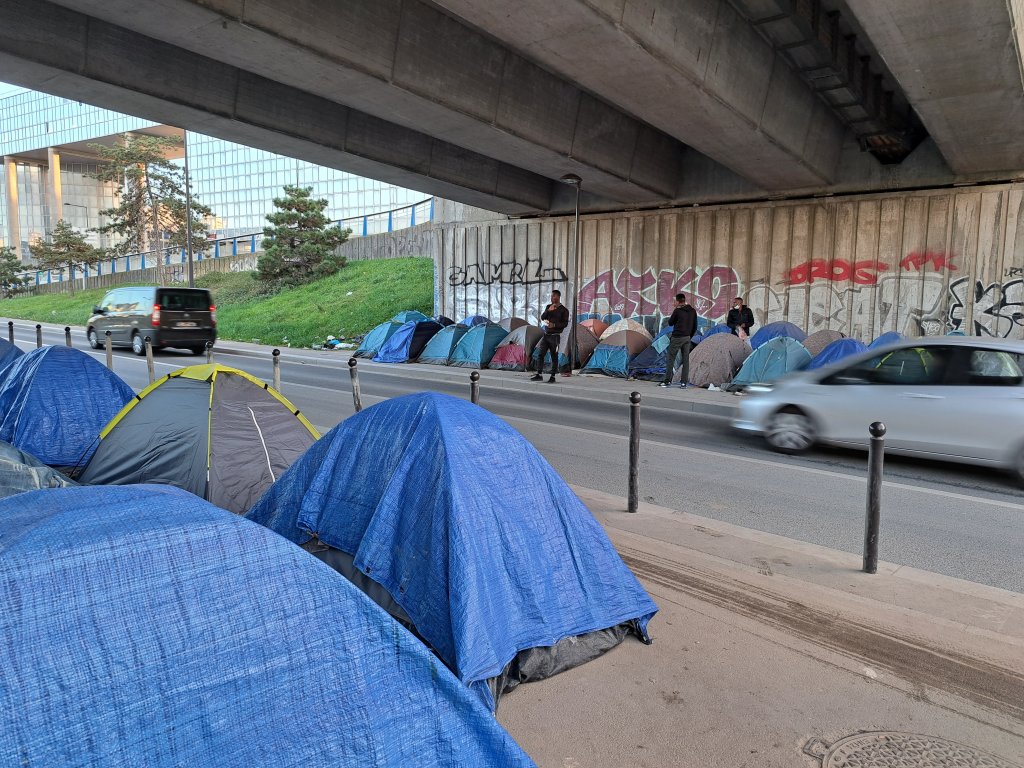
The latest arrivals no longer even have room to pitch their tents under the two bridges that have been serving as shelter for unaccompanied migrant minors gathered in Ivry-sur-Seine since June. The tents now stretch along the sides of the road that runs perpendicular to the two bridges overhead. When it rains, the small areas of lawn become waterlogged and muddy.
Mana, 16, has caught a cold. He spends the evening coughing and goes away to discreetly spit under a tree. His tent is exposed to all kinds of weather conditions. On the inside, it is empty except for a damp, pink blanket. "It never dries out. I sleep on it, I have nothing else to cover myself with," said the young Cameroonian, his chin hidden inside his coat. Others dry the material they use as mattresses by draping it over their tents.
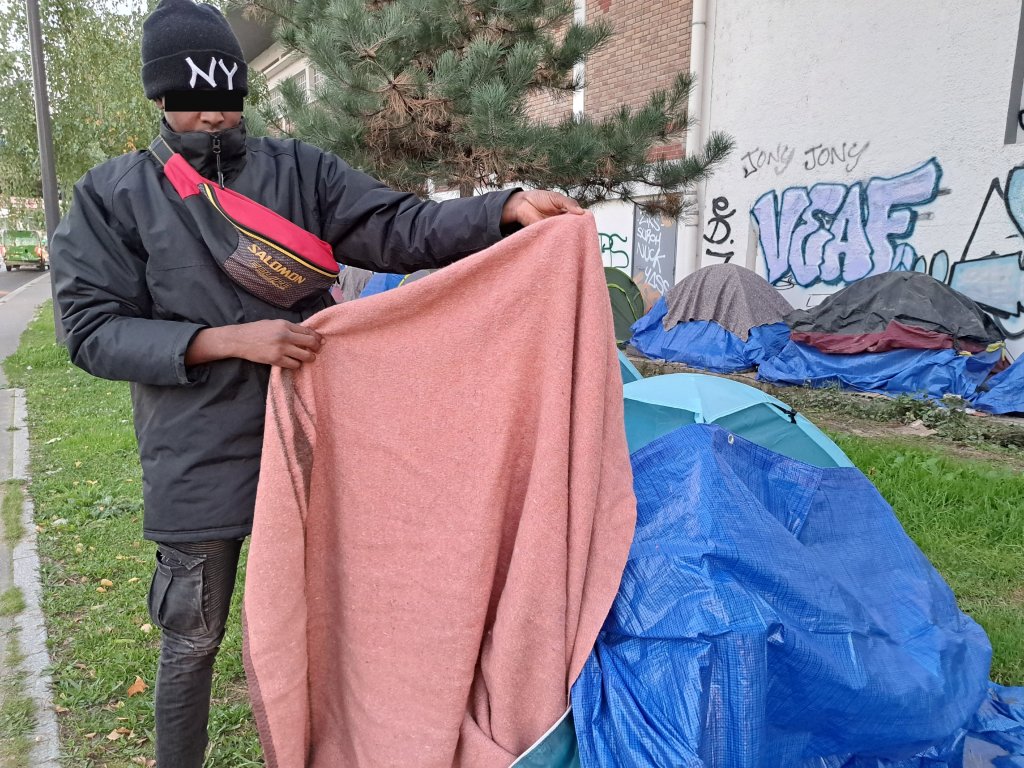
Here, over the course of several weeks, this camp of unaccompanied minors has grown from a group of 40 to nearly 200. Mainly invisible to local residents, the only people who bear witness to the camp are a few joggers, cyclists, and scooters that speed by on a road splitting the camp in two.
'I sleep badly. I have headaches'
Mana and most other inhabitants of the makeshift tent camp are young Africans. But there are also some Afghans who the French administration did not recognize as minors after a quick assessment. They have filed legal appeals and are waiting to see a juvenile court judge. Considered adults until then, they have to fend for themselves without any support from Childhood Social Assistance (ASE).
Every night, the sound of cars passing by at high speed resonates under the two bridges. The Parisian A4 motorway, humming on the opposite river bank, creates additional noise. "I cover my ears with my hands, but it's true, I sleep badly. I have headaches," Ibrahim* tells InfoMigrants.
The 16-year-old Ivorian goes to school every morning, without his teachers or his classmates knowing his living conditions. "My mom wouldn't sleep if she knew, so no one knows. Only the high school social worker knows."
Ibrahim launched an appeal procedure. Despite his administrative situation, he is one of the rare unaccompanied minors here who has managed to resume schooling in the 3rd UPE2A class. With the help of the Association for Solidarity with Unaccompanied Foreign Minors (ASMIE), the Hector Guimard trade school for building and public works, located in the 19th arrondissement of Paris, agreed to enroll him in a class reserved for students who have recently arrived on French territory.
Read more: At this Parisian school, undocumented minors find their way back to education
The good news came at the beginning of September when Ibrahim was staying in a social hotel in Melun, more than 40 kilometers southeast of Paris' city center. He was among those who camped at the Bastille this summer before being relocated by French authorities after the camp was evacuated at the end of September. He finally gave up on Melun because he was afraid of missing school. "I don't have a Navigo pass to go back and forth and I don't want to have a problem with the controls," he explains.
The teenager searches in his tent. He pulls out a stack of brand new colored notebooks, one of which is filled with neat, round handwriting on the first page.
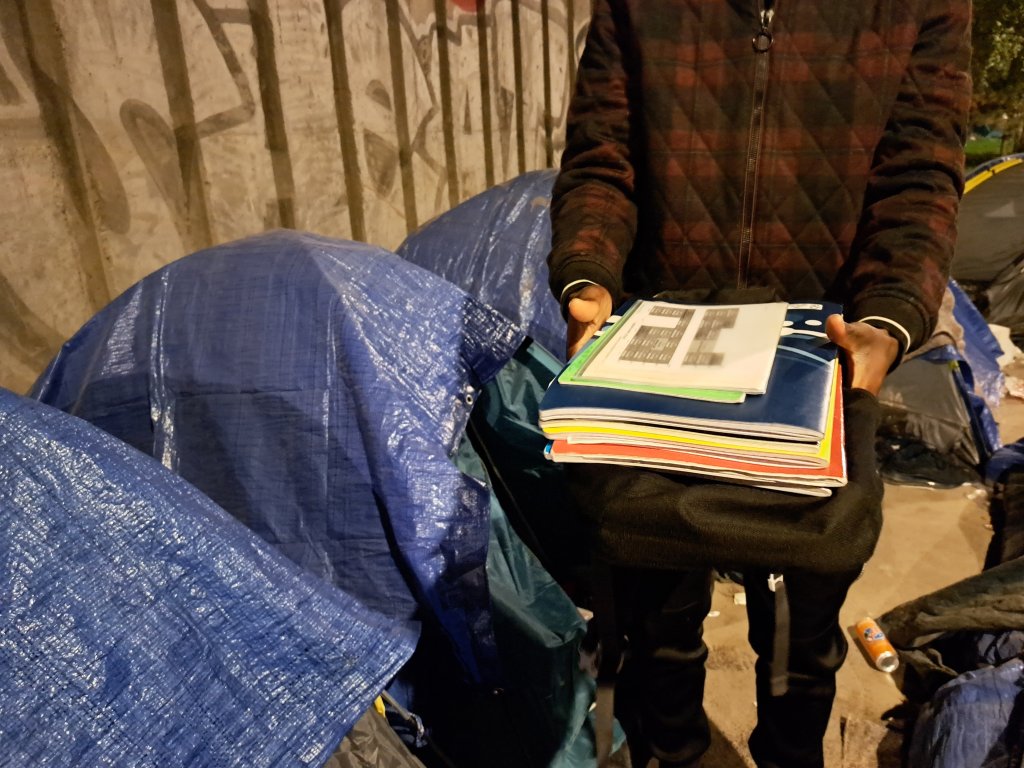
"There are many young people here who dream of going to school," says Agathe Nadimi, founder of Midis du Mie, a non-profit supporting unaccompanied minors. She came to distribute sweaters, pairs of socks and sandwiches this evening with two other volunteers, as well as to assess the health and the administrative situation of the camp dwellers. Nadimi is worried about Mana's cough, so she tries to find him an appointment at a medical center in the city of Paris.
'The young people are not well'
"The place is 'fearful', hidden under a bridge, extremely noisy and dangerous with the expressway nearby," Nadimi tells InfoMigrants. "The young people are not well and many are coughing. Some are completely lost, left to their own devices, they have not even submitted an application for the minority assessment system. I don't understand why there isn't a real shelter," she says indignantly.
Other than an accommodation center with around 40 beds in Paris for young people, the reception capacities of NGOs are very limited. Organizations like said Les Midis du Mie or the TIMMY can only accommodate a few minors.
Also read: Terms and acronyms that asylum seekers need to know in France
Utopia56 has been directing new teenagers to the Ivry-sur-Seine camp every day since June 10. This evening around 9 pm, seven newcomers arrive with pieces of cardboard under their arms. Some have been sleeping in Parisian metro stations the previous nights.
Most of them were notified only a few hours earlier that they were not recognized as minors and that they had to leave their hotel room immediately.
An eighth young foreigner was to come with them, but he felt so bad that a volunteer accompanied him to the psychiatric emergency room. "We only have three tents for them, we will have to find someone who will agree to share their tent," says Priscavine, who did not want her family name to be published, from the support center for volunteers at Utopia56.
Similar scenes repeat themselves every night. Each week, Utopia56 installs an average of 20 to 30 tents. On some days, the non-profit receives up to a dozen young people from the street, who come to the improvised office on the paved square of Paris City Hall (Monday to Sunday at 6 pm), before being redirected to the tent camp.
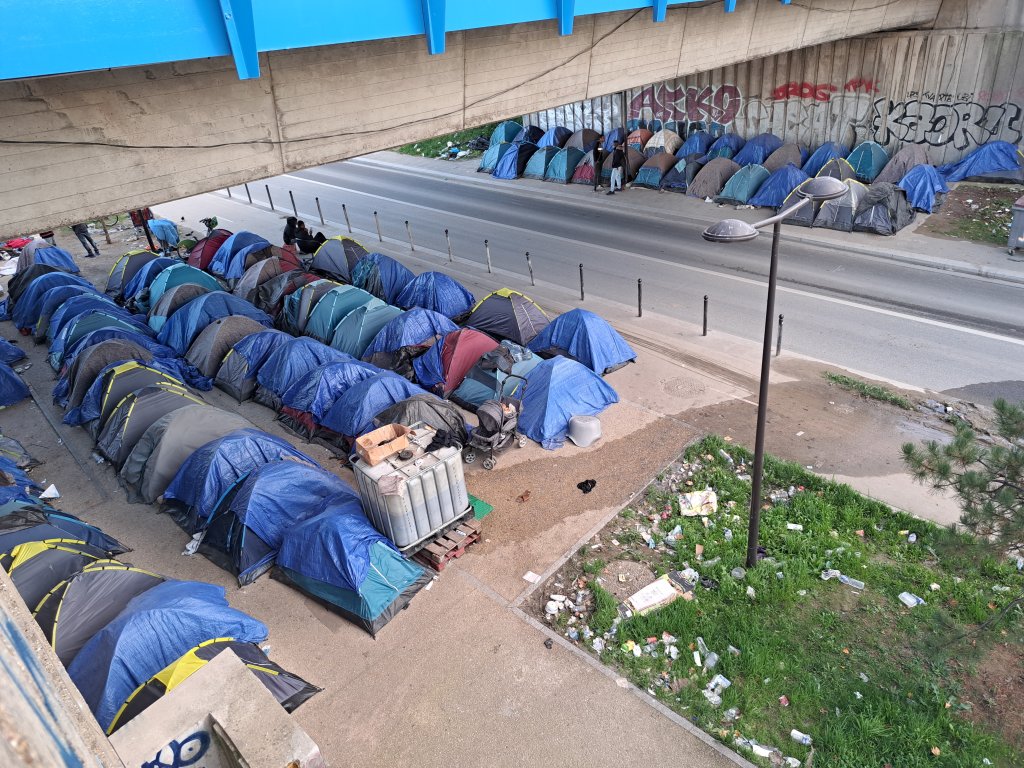
"They are in a state of extreme fatigue. We are waiting for them to be quickly sheltered because these are not decent living conditions," says Priscavine. "Unfortunately, we have to make choices in precarious conditions. Last week, we received 300 accommodation requests for families including 122 children, and 33 children under three years old."
Stagnating water, smell of urine
Since the installation of the first tents four months ago, Childhood Social Assistance has only taken in 60 of these young people, and only those who were recognized them as minors. The same amount of space was freed up under the bridge.
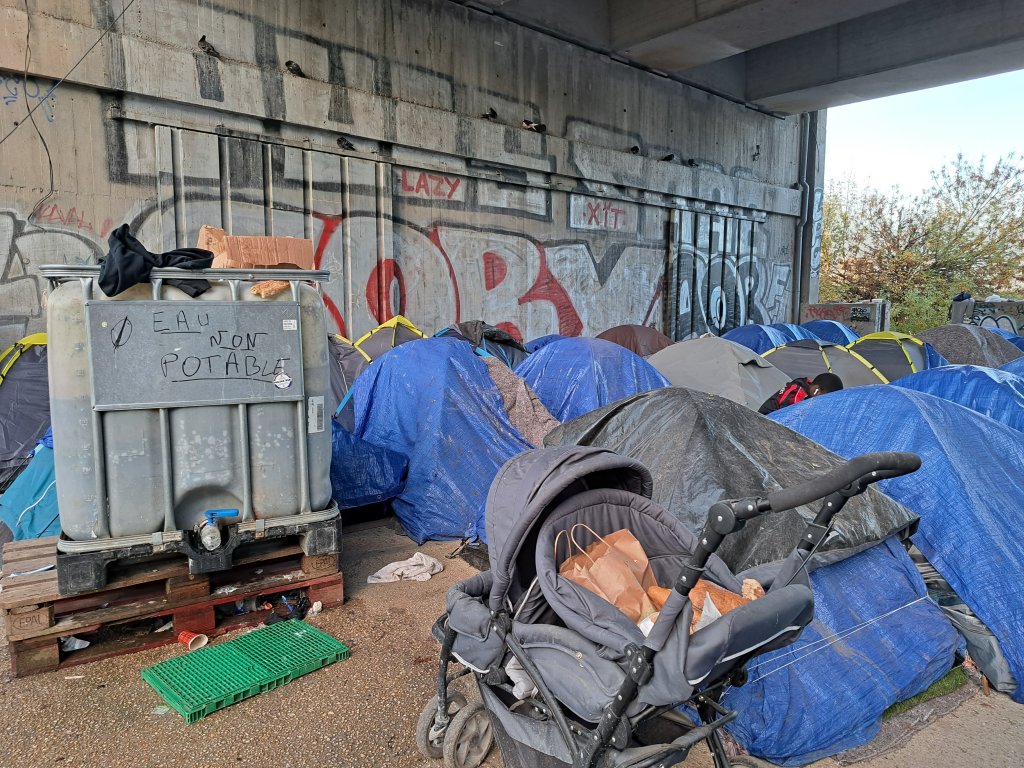
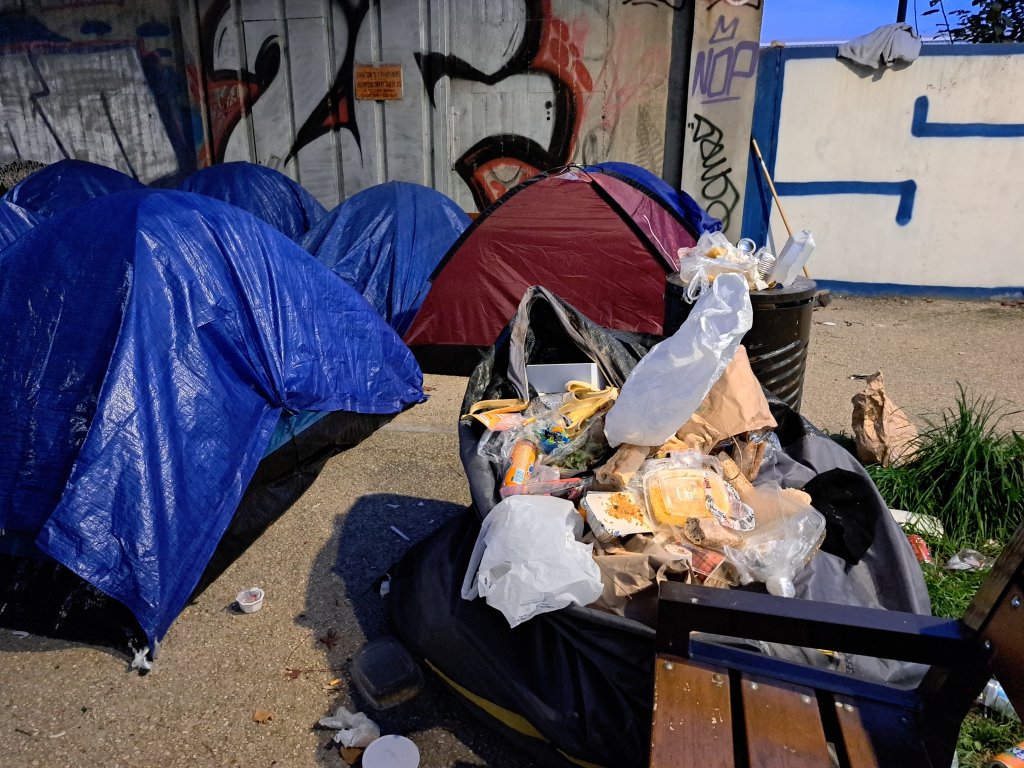
Following the extension of the camp, local authorities installed mobile toilets, but the smell of urine is spreading nearby nonetheless. A water tank is re-supplied several times a week, but mold appears on the surface. "We avoid drinking it, we walk a little further where there is a tap near a restaurant along the Seine," says a young person who is preparing to wash his hands with water from the tank.
While a volunteer from Utopia56 is helping two newcomers set up their tents, a migrant already living in the tent camp approaches them and tells them "Welcome to the streets". A young Algerian, one of the two newcomers, doesn't seem happy about the ironic remark.
As night descends on the makeshift tent camp in Ivry-sur-Seine, Mana is disturbed by a young Afghan he finds dismantling his tent in order to take it. Mana calmly explains the tent belongs to him, but he's willing to share it. The young Afghan accepts the invitation.
Read more: Underage migrants: how can you protect yourself on the streets of Paris?
*name has been changed