
This year, Romania became very attractive to Bangladeshi workers, after quotas for migrant workers were doubled. But on arrival, many find out the work promised is non-existent. The Bangladeshi embassy in Romania estimate at least 6,000 of 7,000 recent arrivals have made onward journeys without papers towards Western Europe.
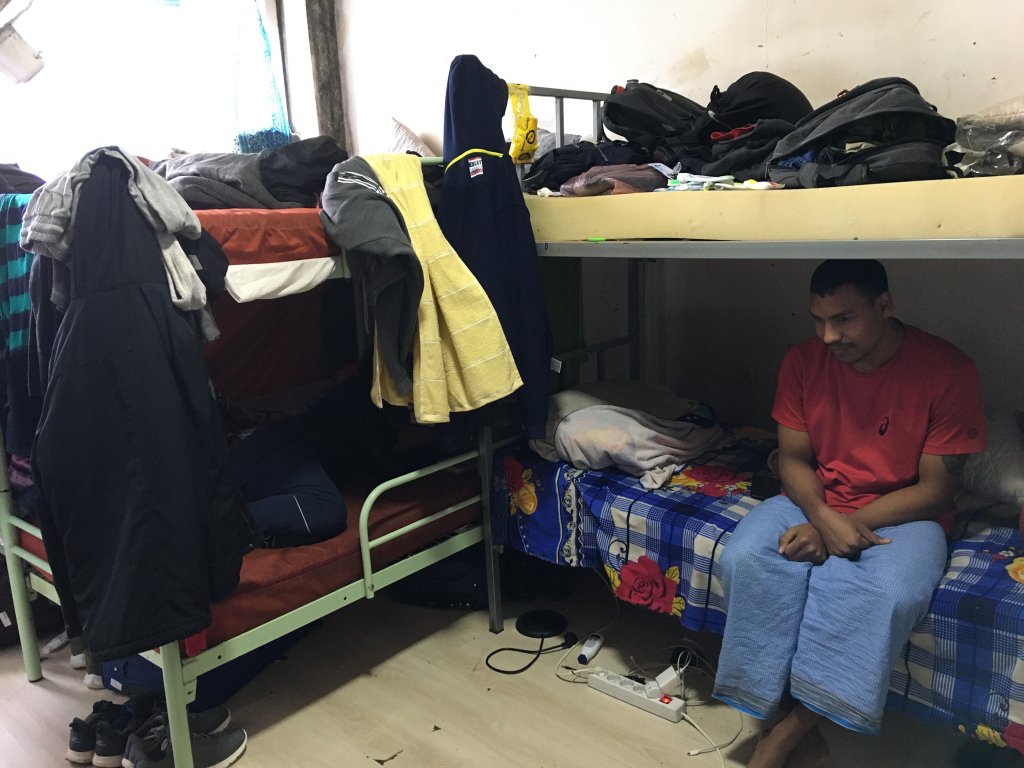
Ahmed* came to Romania as an electrician. He told InfoMigrants: "Each of us [migrants from Bangladesh] has already spent BDT 700,000-800,000 (€ 7,000-8,000) [in order to get here]. No one is ready to go back to their countries after spending so much money. Some of them have taken loans from the banks back at home. We came here to work and live legally. But the adverse situation is forcing us to rethink the situation. Everyone says that the Bangladeshi migrants always plans to do the 'game' [crossing borders into the Schengen zone without the correct papers]. But no one wants to know why."
The Bangladeshi embassy in Romania estimates that at least 6,000 of the 7,000 Bangladeshi migrants who arrived in Romania legally this year are now already in Western Europe or are en route without papers in a bid to resolve the dilemma Ahmed raises.
In fact, the numbers of Bangladeshi migrant workers, like Ahmed, heading to Romania have increased this year. This is partly due to the fact that Romania doubled its quotas this year for migrant workers from 50,000 in 2021 to 100,000 in 2022.
Also read: Bangladeshi migrants in Romania, part 1
Back in Bangladesh, visas and work permits for Bangladeshi migrant workers to Romania are issued by the Romanian embassy in Delhi, India's capital, because Bangladesh doesn't host a Romanian embassy. However, because of the increasing numbers of Bangladeshi workers heading to Romania, sometimes the Romanian embassy in Delhi sends delegats to Dhaka, the capital of Bangladesh, to deliver the visas.
Heading for the 'Balkan route'
Migrant workers are typically offered jobs with contracts of one or two years, but initially they are issued with a three-month visa. After arriving in Romania, they have to submit many documents including the original contract with the company in order to apply for a temporary residence permit or TRC**.
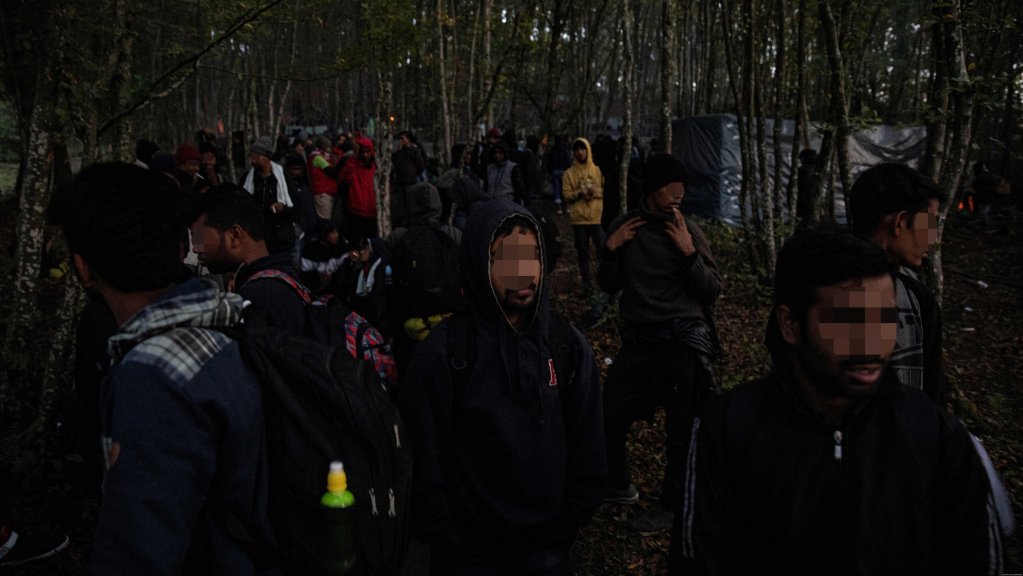
But on arrival in Romania, many Bangladeshi workers have been complaining that having both a legal work permit and visa does not seem to be enough to ensure residency in Romania. This situation, coupled with the fact that they say the jobs they were promised often don't materialize is prompting thousands to choose an unconvential method towards what they hope might be better job prospects in western Europe.
That is, they are heading west without the correct permits, and increasing the numbers of undocumented migrants along the so-called Balkan route. Although it is a member of the EU, Romania is not in the Schengen area, Europe's visa-free travel system.
Human trafficking rings work across the irregular routes to Europe. Migrants who take these risky journeys do so in exchange for more money they haven't yet earned. The process of trying to dodge the authorities and cross borders undetected has been nicknamed 'the game'.
Also read: Why are migrants from India trying to reach the EU via the Balkan route?
From worker to asylum seeker
Rakib* contacted InfoMigrants several times since his arrival in Romania in July. Despite having a permit as a construction worker, he says he has had to do all kinds of heavy work. As a result of one of these jobs, he fell ill, experiencing severe vomiting and back pain because of the hard labor he was expected to do.
In a Facebook message sent to InfoMigrants in July, Rakib wrote, "It cost me more than BDT 600,000 (€ 6,000) to come to Romania. To earn at least that amount of money is my first goal. As soon as I can save the money, I will go back to Bangladesh. I have no desire to try the game."
Many migrants like Rakib find that once they have been recruited, it can be difficult for them to change jobs once in Romania, even if the promised work has not materialized. In fact, Rakib says he wanted to leave the company he was working for to find work at a shop or restaurant. But the company that had recruited him did not give him that clearance, let alone arrange a TRC. Once the 90-day visa expired on October 22, he became an illegal immigrant in Romania.
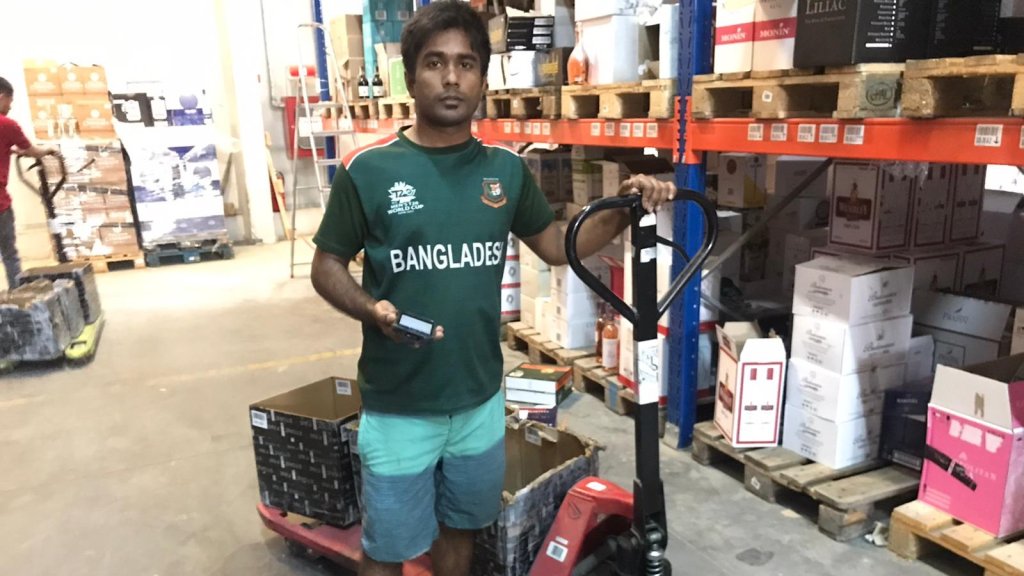
In October, Rakib sent another message saying, "I got a job in another factory, but it had no permit, they were illegal. I repeatedly requested them to apply for my TRC, but they said, 'your visa is almost over, we can’t do anything now.' I can't even ask the embassy’s help. BDT 700,000 (€ 7,000) has been spent. If I go back to my country now, it's game over for me."
Rakib felt there was no other option for him but to contact smugglers and attempt the 'game'. He is now residing as an undocumented migrant in Milan, Italy.
Many migrants, like Rakib, have already left or are on their way to Italy or other EU countries. To avoid deportation, they throw away their passports and other documents that could prove their identities.
EU in sight
Daud Ali, Bangladesh's Ambassador to Romania, said that according to the information he has received from the Romanian Embassy in Delhi, a total of 7,152 Bangladeshis had been granted visas this year by September 30. On August 16, Romania's Interior Ministry told InfoMigrants that there are currently 1,676 Bangladeshis with legal residence permits in Romania.
Ambassador Ali acknowledged that in some cases migrant workers fall victim to the system. He told InfoMigrants, "Apart from a handful of Romanian-owned companies, most of the worker supply companies are run by Bangladeshis who come to Romania from other EU countries. They want to bring as many workers as they can from Bangladesh, because they get a huge amount of money as commission."
A further problem, explained the ambassador, is that in order to change job, workers need a new work permit. And for that they need a no-objection certificate or NOC from their previous employer. Most companies do not want to give NOCs to the workers because that might create a problem in future when asking for permission to bring more foreign workers. Facing such complications, the workers sometimes choose a different path."
Also read: Why many Bangladeshi migrants get arrested in Romania
The 'game' as the end goal?
However, some believe that Bangladeshi migrants are just using Romania as a new, cheaper route in to the Schengen Zone.
Abdus Salam, manager of Asia Continental Group, a recruitment agency in Bangladesh, complained that many migrants go to Romania with the express intention of playing the 'game'.
Salam gave an example of sending Bangladeshi workers to the port of Constanta in Romania. He said, "We had sent 51 workers to work for a company, 14 of them escaped. We had to pay a fine of $5,000 per person. But the remaining 37 workers are doing well for themselves, and the company is happy with them as well."
Arrests, detention, deportation
Many migrants attempt to enter the Schengen zone via the Romanian-Hungarian border. The Romanian border town of Timisoara has become a migrant hotspot. Rings of human traffickers there promise to help migrants avoid border patrols.
Hungary's right-wing government has been cracking down on illegal immigration for the past few years. Several measures taken by Hungarian Prime Minister Viktor Orbán's government have drawn criticism even from the European Union. The situation at the Schengen border is becoming stricter day by day.
In the first eight months of 2022, Romanian police detained 3,888 migrants while trying to cross the Hungarian border. In August, the Romanian government detained and deported three workers to Bangladesh. They were also banned from entering Romania for next five years. However, thousands of others do make it through.
Labor market might shut down
There are fears, that if the situation is not brought under control quickly, the exodus of Bangladeshi migrant workers might have an adverse effect on the Eastern European labor market. Ambassador Ali said the Romanian government has contacted him several times in this regard.
The ambassador told InfoMigrants, "I am being warned by different corners. The government is telling me that despite giving us so many visas, our workers are not staying in Romania. If it continues, the number of visas issued to Bangladeshis may drastically decrease or even entirely halt."
In most cases, the embassy in Bucharest is not responsible for verifying the Romanian companies. If a company hires less than 25 workers, it doesn’t require the embassy’s prior permission. Mr Ali said that some agencies are taking advantage of this provision. Even while hiring 50 workers, on paper they show the number as less than 25 to avoid scrutiny.
The ambassador suggests that the situation could improve greatly if the embassy were to be given the authority to inspect every single work permit.
*Not their real name, a pseudonym is used to protect their identity
**Initially, all migrant workers get a three-month Romanian visa and work permit. To stay in Romania, they then have to apply through the company for a temporary residence permit - TRC before the three-month visa expires. But many are forced to choose another way, as they do not get the TRC in time.