
German NGO Pro Asyl has awarded its annual human rights prize to Polish refugee aid workers. The recipients called the situation at the Belarusian-Polish border a "state of emergency that threatens to become permanent".
"Marta Górczyńska and the Helsinki Foundation for Human Rights have been … campaigning every single day and very concretely for a human rights-based refugee policy," Pro Asyl explained its decision to award its €5,000 human rights prize to human rights lawyer Marta Górczyńska and the Polish organization Helsinki Foundation of Human Rights.
"The massive deterioration of the human rights situation in Poland, for people fleeing war and persecution, I would not have thought possible," Górczyńska said during the award ceremony on Saturday (September 3) in Frankfurt.
Also speaking at the ceremony, Germany's federal human rights commissioner Luise Amtsberg said that the border region between Poland and Belarus had become a lawless space. People are stuck without tents, food or medical care "between geopolitical power struggles," Amtsberg said during her laudatory speech.
Awardee Górczynska campaigns for the rights of refugees in Poland and fights against rejections and violence at the border. For the past ten years, she has been with the Helsinki Foundation, which is part of a network that has been present in the forests of the Polish-Belarusian border region since last summer.
Górczynska said the situation of migrants coming to Poland via Belarus was a "state of emergency that threatens to become permanent."
Read more: 'Green Light' initiative: Help for migrants in Poland-Belarus border area
'Brutally sent back'
Even families with children who have fled the wars in Syria, Afghanistan or Yemen are brutally sent back by Polish border officials "without access to a fair asylum procedure, without drinking water, without food, without a roof over their heads," Górczynska said in Frankfurt.
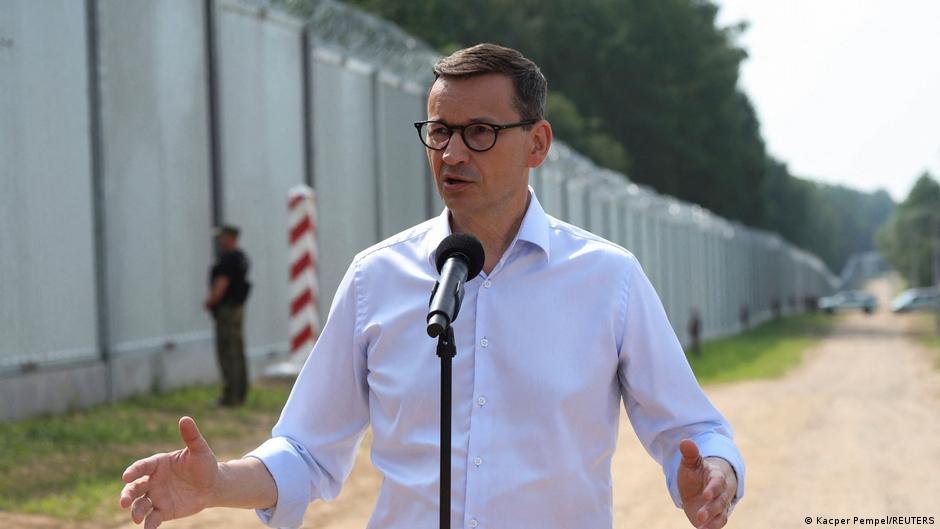
The situation on the border with Belarus, where Poland erected a border fence to keep out migrants mainly from Middle Eastern countries, stands in stark contrast to the situation on the Polish-Ukrainian border, where solidarity with Ukrainian war refugees remains strong.
Pro Asyl was founded in 1986 and focuses on the protection of asylum seekers and refugees. According to news agency dpa, it is independent from the German government and is financed through donations and membership fees.
Also read: German rights group calls for halt in deportations to Poland
Migrants still trapped at Polish-Belarusian border
The humanitarian crisis at the Polish-Belarusian border started last summer when thousands of migrants and asylum seekers became trapped.
A humanitarian crisis unfolded as they were trying to reach Poland, Lithuania and Latvia -- all members of the European Union -- via Belarus, and remained stranded on the EU's external border for weeks in freezing conditions. Along the Polish-Belarusian border region alone, at least 19 people presumed to be migrants have died on both sides of the border since September 2021.
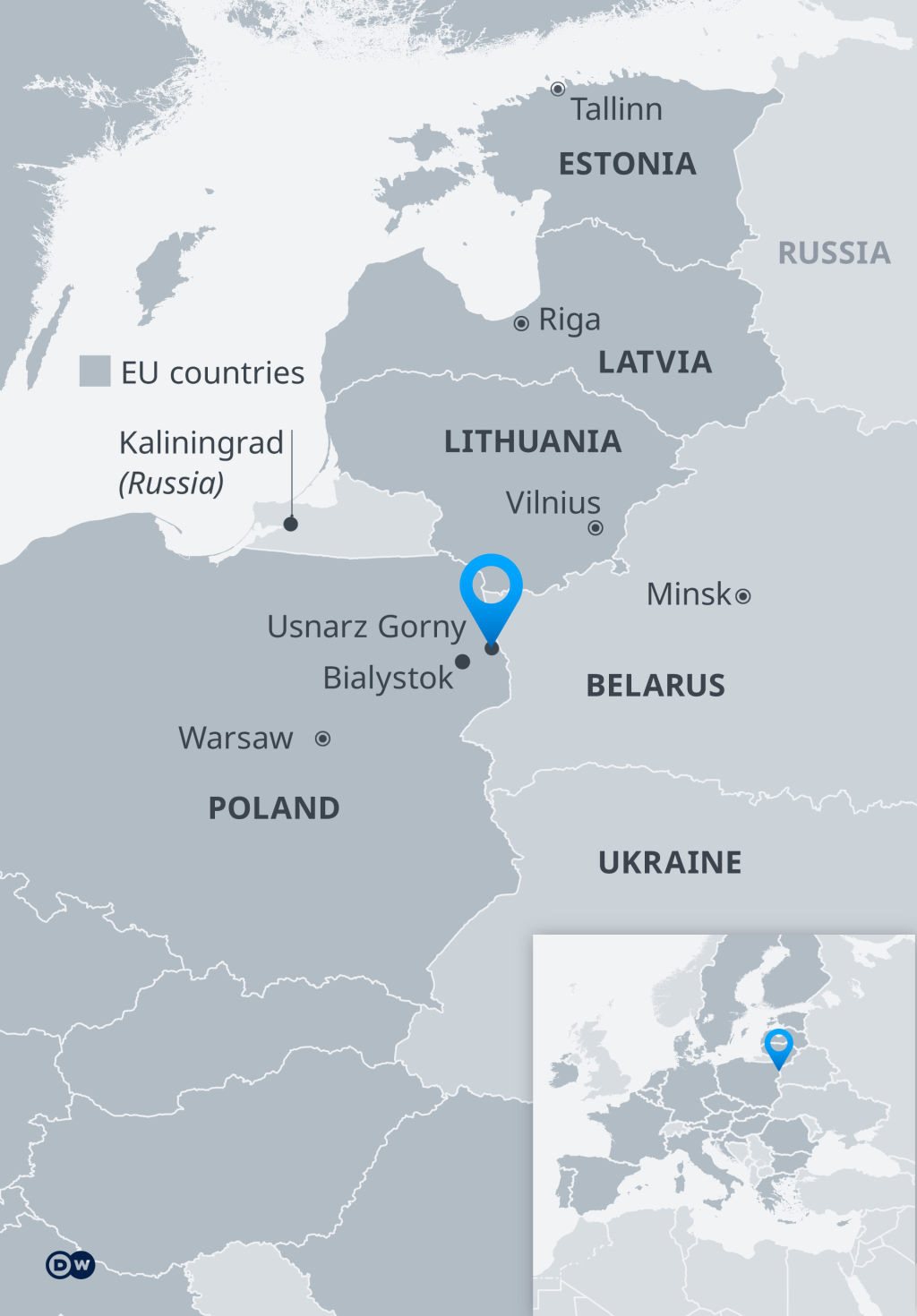
The EU accused Belarusian ruler Alexander Lukashenko of engaging in "hybrid warfare" against the EU by encouraging migrants from countries like Iran and Afghanistan to travel to the capital, Minsk, and ferrying them over to the EU's external borders.
Human rights groups have repeatedly voiced their criticism in particular at Poland and Lithuania, highlighting the brutal treatment of migrants along the border region including reports of pushbacks using violence. There have also been claims that there are most likely people among the migrant groups who are genuinely trying to escape war and persecution, which would automatically give them the right to seek asylum under international law.
Polish officials, meanwhile, recently said they have been observing a rise in African nationals traveling first to Russia and then to Belarus in the hope of entering the EU using irregular means.
With dpa