
Abdelkarim Bendjeriou-Sedjerari from Algeria will not receive refugee status in Germany, a German administrative court has ruled. The asylum seeker says he fears for his life in his home country because he is gay.
The administrative court in Frankfurt on Tuesday (August 23) said that it has rejected the lawsuit of Abdelkarim Bendjeriou-Sedjerari, a 35-year-old LGBTQ+ man who had gone to court to fight against the rejection of his asylum application by Germany's Federal Office for Migration and Refugees (BAMF).
This means that pending a decision by the foreigner's office, Bendjeriou-Sedjerari could face deportation.
Bendjeriou-Sedjerari had advocated for the rights of LGBTQ+ refugees and spoke about their persecution in Algeria in the media and at public events.
"I am afraid for my life, I don't know what will happen. I can be followed again. I can be murdered -- it's very easy," Bendjeriou-Sedjerari told Hessian Broadcasting (HR), which is part of the ARD network, after the court ruling.
His family returned to Algeria in the 1990s after failing to secure asylum in Germany. According to HR, he speaks fluent German and is currently doing an apprenticeship as an electrician.
Why did BAMF reject the asylum request?
Bendjeriou-Sedjerari's first asylum application was rejected in March 2020. The BAMF at the time had argued that the risks for LGBTQ+ persons in Algeria were not substantial enough to expect a "persecution relevant in the context of refugee protection."
Bendjeriou-Sedjerari also took legal action against the second decision, again at the administrative court in Frankfurt, in February 2021. He no longer wanted to live in hiding, he recently said at court. His lawyer claimed that 80 LGBTQ+ persons were arrested in Algeria since his client's first asylum application was rejected. Given his client's heightened visibility, he was facing violence or detention.
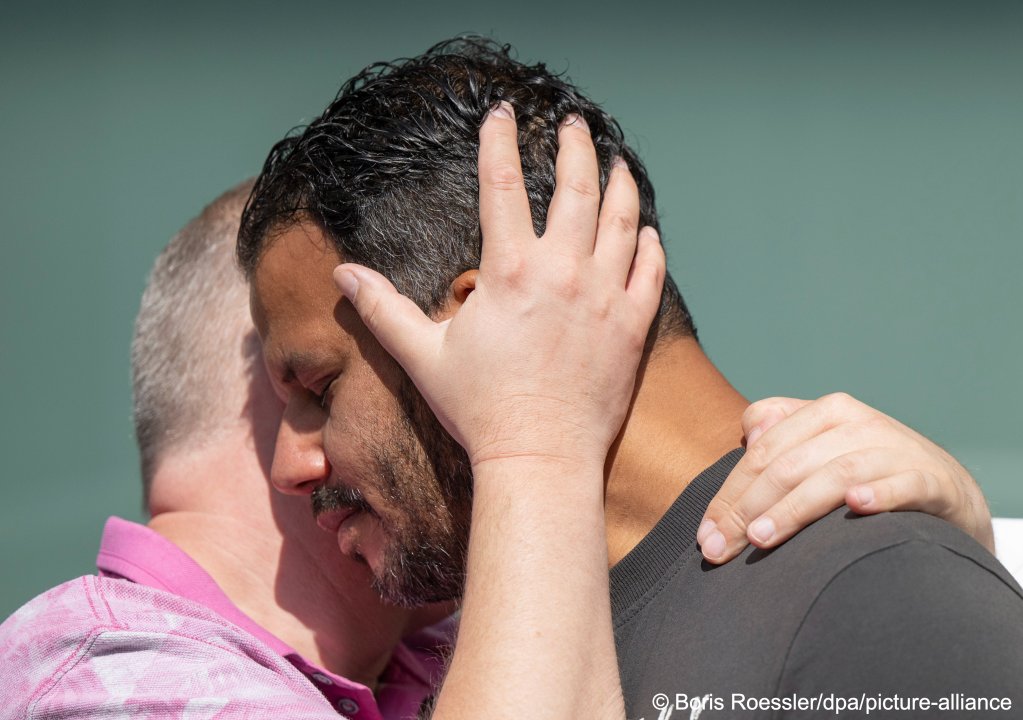
The judge of the administrative court, who made this week's decision, argued that the prerequisites for an additional asylum procedure weren't available. There was no difference between last year's realizations and those of 2020, the court said. According to HR, the judge was the same as the one who rejected the first asylum application in 2020.
Risk of assaults
Knud Wechterstein, coordinator for LGBTQ+ refugees at the Aids-Hilfe Frankfurt (Aids support Frankfurt), told HR that homophobia is widespread in Algerian society. Moreover, assaults with psychological and physical violence including murder are not uncommon. For those affected, according to Wechterstein, it is impossible to seek protection from the police, as there is a threat of renewed attacks or arrest.
Algeria is "a conservative, strongly heteronormative society," the administrative court has now also conceded. However, the public display of affection is "unusual and frowned upon" even among heterosexual couples, the court argued.
Bendjeriou-Sedjerari wants to keep fighting, his lawyer said. According to news agency dpa, he first has to request permission to appeal the ruling. "What should I do? Give up? Then I might as well shoot myself in the head," Bendjeriou-Sedjerari told HR.
With dpa