
More than four million people – mostly women and girls – have fled Ukraine since the Russian invasion. For the more than 700,000 refugees now living in Germany, finding a job brings both challenges and rewards.
Having fled Ukraine alone or with their children, many refugee women are now shouldering the responsibility of supporting their family on one income – and that means getting a job.
Germany has made the process as fast and simple as possible, but finding work still has its challenges, especially if you don’t speak the language.
However, there have been some success stories. In a recent video report for DW’s business magazine 'Made in Germany', Marta Grudzinska spoke to some Ukrainian women who have managed to find employment, and a reason to hope.
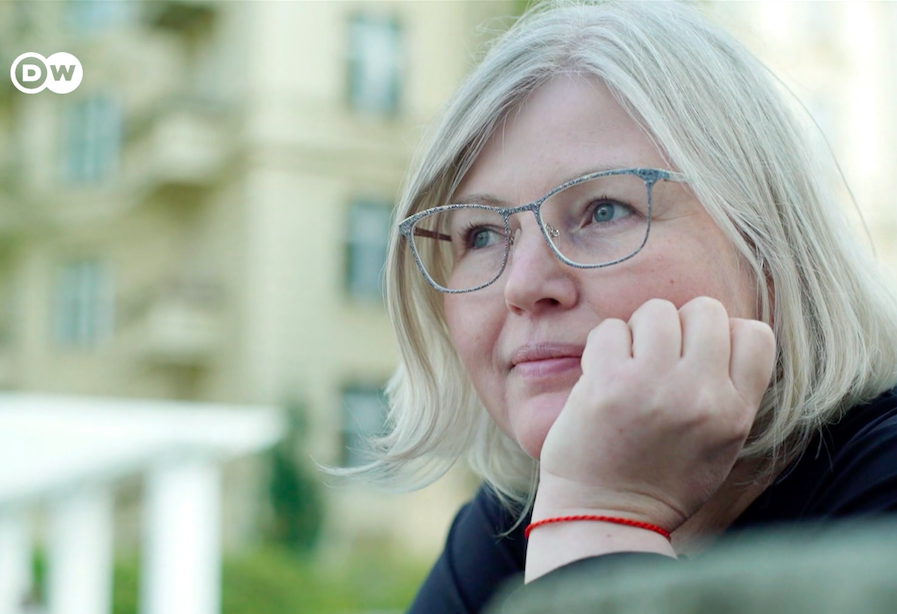
Olga, from the city of Kyiv, fled to Germany just before Russia invaded, along with more than 720,000 others. They left behind their homes, friends, and often well-paid jobs.
"We prepared a special war luggage, at the end of January, in order to run with that," Olga says. "This was very, very emotional. I spent some time in a big shop, Ashan. This feeling of standing in front of a shelf and choosing what you have to buy in order to have products during the war...!"
Before the war, Olga worked as a chief financial officer for a company importing and distributing German motor oils in Ukraine. "Now I'm an accountant and I have a good opportunity here to calm my brain, because of this whole situation, and a good opportunity to be useful."
Opportunities and challenges
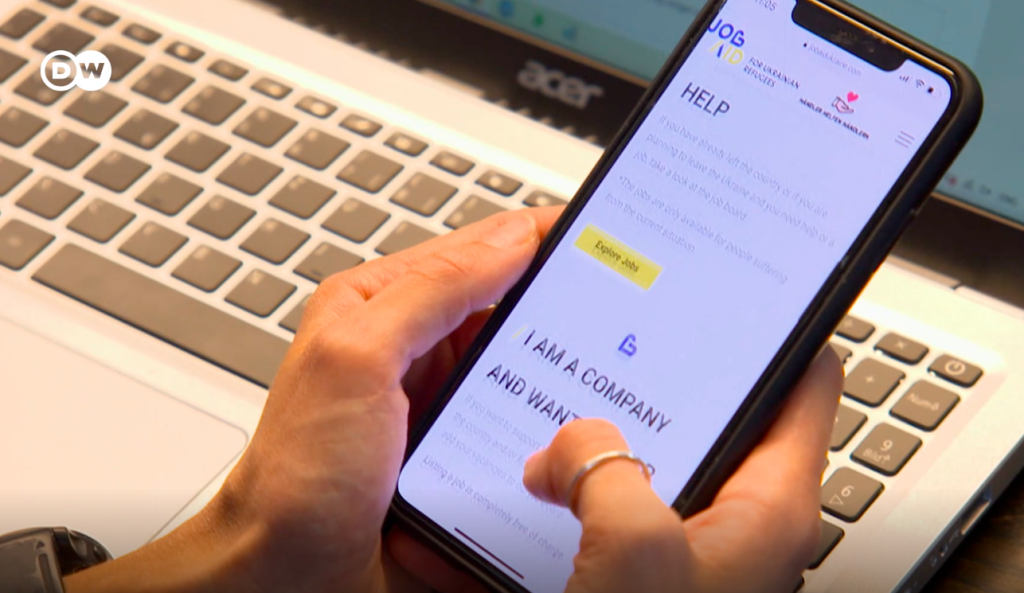
Like Olga, Polina and Masha also fled to Germany from Ukraine. The Russian invasion caught Masha, a ballet dancer, by surprise while she was on a short vacation in Barcelona. Polina fled western Ukraine with her 11-year-old sister. Now they both help other Ukrainians to find work at Job Aid for Ukrainian Refugees, a platform helping to link jobseekers from Ukraine with vacancies in Germany and beyond.
Germany has a huge labor shortage – in the last financial quarter of last year there were 1.69 million job vacancies throughout the country, mainly in small businesses. The demand for skilled labor, especially in IT and nursing, but also in many other sectors, has meant that refugees from Ukraine have relatively good prospects of finding work.
There are still hurdles to overcome, and as Job Aid's website says, even for well-trained professionals these are often high. As well as legal restrictions and recognition of qualifications, there is also the language barrier, Masha explains.
"With a lot of jobs it's actually hard because it needs to be in German, even if somebody doesn't speak German or English at all. I think this is the main problem," says Masha.
"Also it's sometimes hard to connect the correct refugee with (the right kind of) professional, because in Ukraine they've got some level of profession, but it's not the same in Germany.”
Perfect match
The job platform has been around for close to two months. Since then, the team has help to fill more than 5,000 jobs across Europe.
Marcus Diekmann is one of the initiators of the project. The idea came immediately after the outbreak of war and was implemented within just five days. Job vacancies are not only in Europe, but all over the world.
"The biggest challenge is that it’s highly educated men and women who come to us, and (we have to) find the right job for them according to their training," says Diekmann.
"(We have to make sure) that the IT expert is not placed in a nursing home but can find a real job in their profession, and someone who's a great nurse then gets the job in nursing. That's the biggest challenge."
We must have hope
Irina has been working in Berlin for two months. She found the position in the restaurant while fleeing to Germany with her husband and son. When she was safe, she brought her family over. It has been a big responsibility for the 29-year-old, who is originally from Odessa.
"This job is very important as my husband and I have to support a family of seven," Irina says. "This includes a mother, sister, aunt and grandmother."
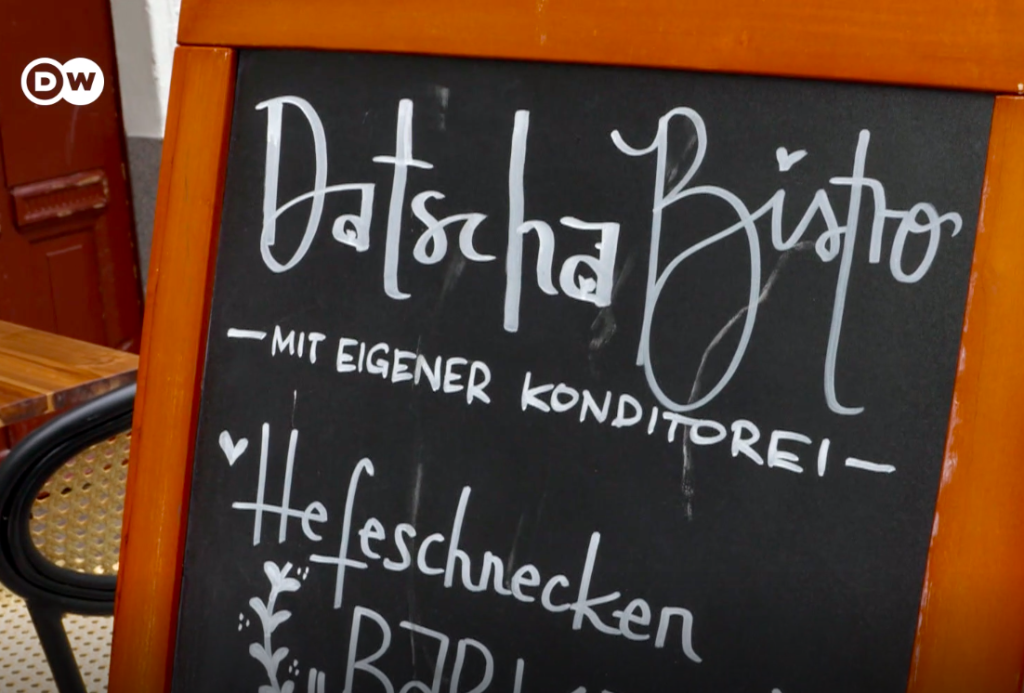
Most of the 190 people employed by the Berlin restaurant chain 'Datscha' speak Russian or Ukrainian. Even before the war, the company was specifically looking for employees in Ukraine. That makes it easier for Ukrainians like Irina, who don't speak German. Restaurants have been looking for employees especially since the COVID-19 pandemic.
For many of the refugees who have managed to find jobs in Germany, work is much more than just a source of income.
"It helps to understand that life goes on," says Olga. "Yes, we are in a problem, in a huge problem. We are in pain, but we have to keep living. We must have hope that one day the situation will end. This is important."
When it does end, these women hope to go back to their homeland, to rebuild their country.
This article was mostly based on a video report by DW's Marta Grudzinska, 'How can Ukrainian women find work in Germany?', first published on May 17, 2022.
- Job Aid Ukraine is a free service for Ukrainians with any qualification or skill level. You can even search for apprenticeship opportunities.
- Two other German government services for qualified professionals are: Make it in Germany and Recognition in Germany.