
Small-scale protests continued in northern Greece over the weekend against the transfer of migrants from the islands to the mainland. The Greek government is intending to transfer 20,000 migrants from the islands by the end of the year.
Inhabitants of two towns in northern Greece took to the streets Sunday to rally against the transfer of migrants from the Greek islands to the towns of Yannitsa and Serres.
"They should leave. We have had enough," said one protestor in Yannitsa, not far from Thessaloniki, to the Greek broadcaster Skai.
The demonstrators were angry that the authorities were attempting to transfer a group of 60 migrants from the islands of Lesbos and Samos to centers near Yannitsa. Some of the protestors hid their faces behind balaclavas or scarves tied just under their eyes. Many carried Greek flags, some emblazoned with the virgin sun which is the symbol of the northern Greek region Macedonia, of which Thessaloniki is the region’s capital.
According to one report of the protest, there were only about 100 protestors in the town of Yannitsa, with the counter-demonstration numbering a few more.
Blocking buses
One resident reportedly told Skai that the town had already received 60 migrants and they have already had “a lot of problems.” The protestors wanted to block the pre-dawn arrival of the migrant buses. However, after some time this group of migrants did manage to leave the bus to check in to local hotels.
Further east, along the border with northern Macedonia, there were also protests in the town of Serres against the arrival of 20 migrants.
According to the French news agency Agence
France Presse (AFP) about 900 migrants in total were transferred from the
islands to the mainland over the weekend. The Greek authorities are aiming to
transfer 20,000 people before the end of the year, in an attempt to ease the acute over-crowding of the island
facilities.
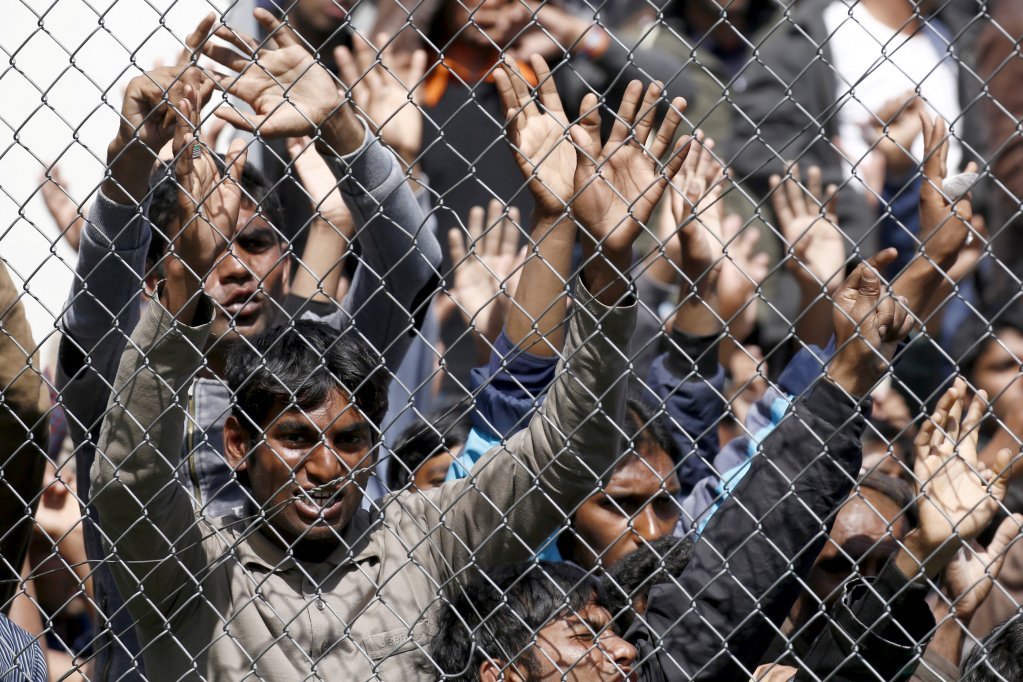
 According to the UNHCR’s latest figures for October 2019 there are 34,000 migrants and asylum seekers distributed across five islands in the Aegean. 37% of the migrants come from Afghanistan, 19% come from Syria and 8% from Iraq. About 39% of those present on the islands are men and 21% women, around 35% are children, the majority under 12-years-old.